Your First Job Isn’t Coming From a Degree Alone
Here’s the truth: employers don’t care about your marks sheet. They care about what you can actually do. You can have a fancy degree from a fancy college, but if you can’t use a spreadsheet, edit a video, or write code, you’re competing against thousands of other graduates who look exactly like you on paper.
This is why a free digital skills course for students has become non-negotiable. Not optional. Not “nice to have.” Essential.
The gap between what colleges teach and what jobs demand is massive. Most students graduate without knowing how to use basic tools that every employer expects. Microsoft Office? Adobe Creative Suite? Data analysis? Video editing? These aren’t luxury skills anymore. They’re baseline.
Let’s be honest: you’re probably scrolling through job portals right now and seeing the same requirement repeated over and over: “Must have digital literacy.” That’s not a preference. That’s a filter. Without it, your application gets deleted before anyone reads your name.
Key Takeaways
- A free digital skills course for students matters because employers increasingly treat basic digital literacy as a filter, not a bonus.
- The core skills are spreadsheets, documents, email, safe internet use and simple presentations, since these are used in almost every entry-level job.
- Free does not mean low quality, but you must commit regular time and finish what you start.
- Practice on a real computer is what builds confidence, because reading about a tool never replaces using it.
- A community learning centre or POD with a trained educator gives structure, feedback and a place to practise if you have no computer at home.
Why a Free Digital Skills Course for Students Is Worth Your Time
Most people don’t realise that the best online courses for job readiness don’t cost thousands. They cost zero. Or close to it.
The real cost is your time and your commitment. That’s it.
Here’s what changes when you actually complete a digital literacy course:
- You stop being invisible in job applications. You have real skills to list.
- You can confidently say “yes” when an interviewer asks if you know a software tool.
- You finish work faster because you know shortcuts and efficient workflows.
- You earn more because skilled workers always do.
- You stop depending on colleagues to do basic tasks for you.
The Digital India programme has made it clear: digital skills are the foundation of India’s future workforce. Whether you’re in tier-1 cities or tier-3 towns, this is the reality you’re facing.
The question isn’t whether you need these skills. The question is: when will you get them?
What Actually Works: Learning Where You Are
You don’t need to travel to a fancy training centre in another city. You don’t need to pay subscription fees every month. You need access to a computer, an educator who knows what they’re doing, and a structured course that teaches real, job-ready skills.
This is where a Point of Digital Learning (POD) changes everything. It’s a community learning centre run by trained educators. Could be in your neighbourhood, your school, or a local community hub. Real people teaching real skills to real students like you. Trained educators also know how to adapt to different learning styles, something the special education in India guide goes deep on.
Think about it: learning happens faster when you’re in a room with other students. You can ask questions immediately. You get feedback on your work. You’re not staring at a screen alone at 2 AM wondering if you’re doing it right.
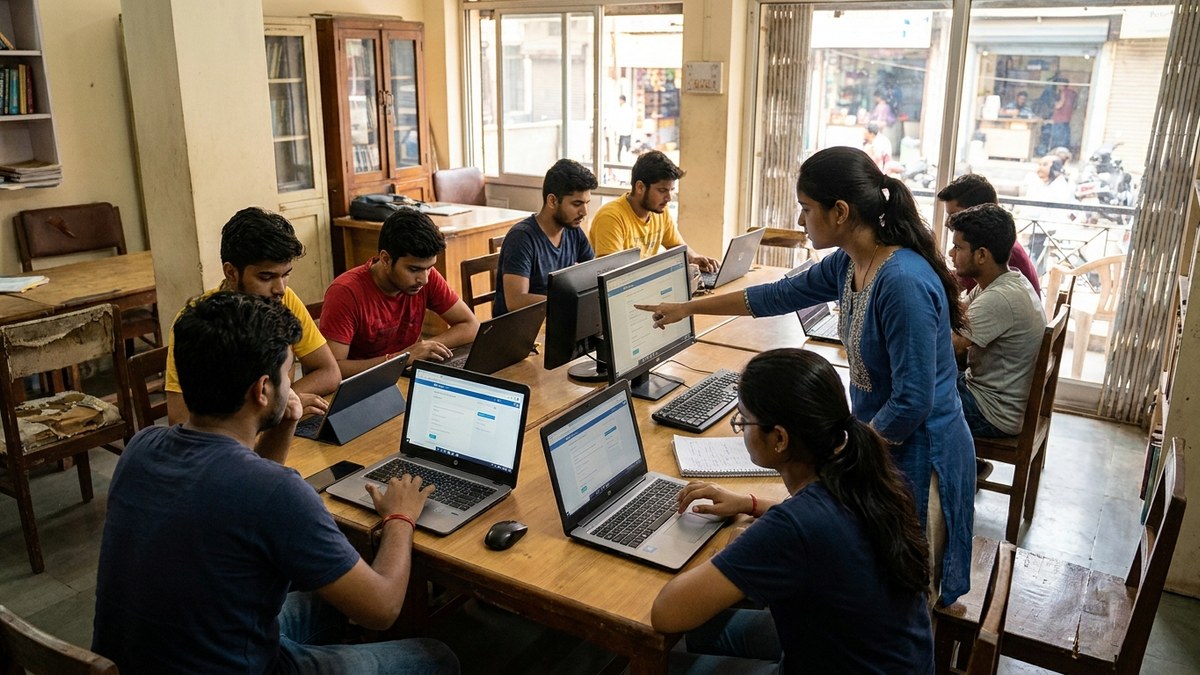
The Digital India initiative has expanded access, but the real game-changer is when you have a trained educator guiding you through each step. They know what employers want. They know what mistakes to avoid. They know which skills matter most for your career path.
The Hardware Problem Nobody Talks About
Here’s what stops most students: they don’t have a decent computer at home.
You can’t practice digital skills on a phone. You can’t learn video editing or graphic design or coding on a tablet. You need a real machine with real processing power. But laptops are expensive. Desktops are expensive. Most student families can’t justify the cost.
This is exactly why APNA PC exists. It’s a complete bundle. Rs.30,000 gets you a Mini PC with i3 7th Gen processor, 8GB RAM, 128GB SSD, plus monitor, keyboard, mouse, webcam, and headset. Three years warranty. Installation included. Everything you need to learn, practice, and perform.
That’s not a computer. That’s your entry ticket to the job market.
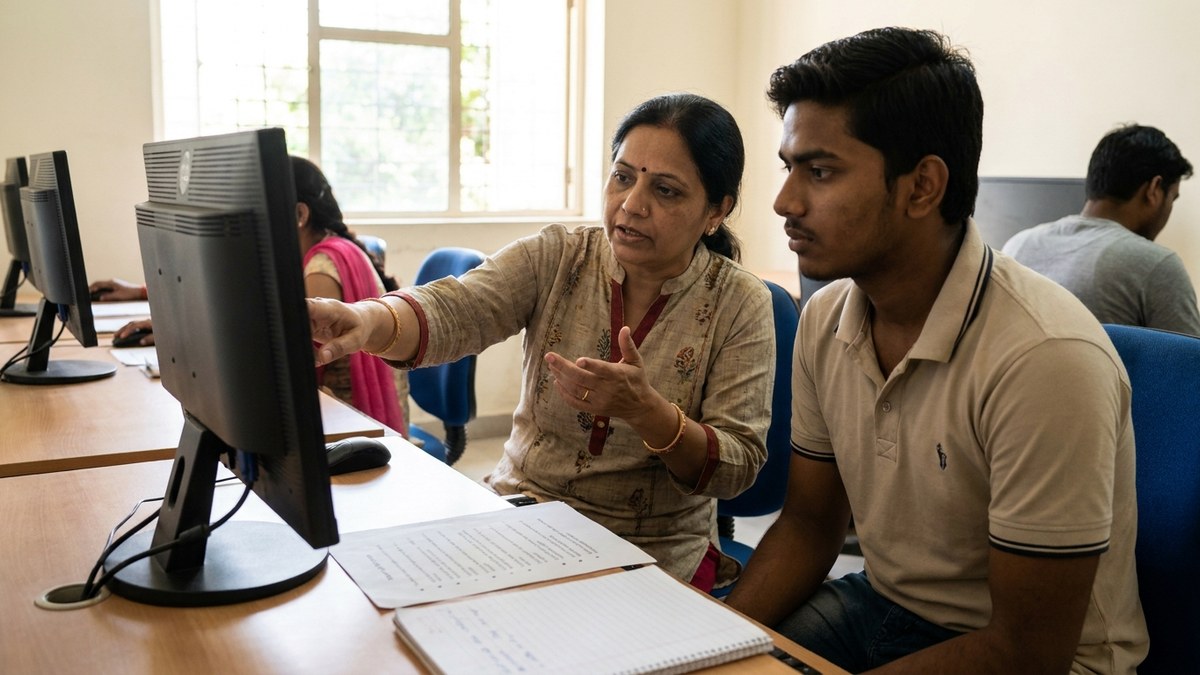
When you combine APNA PC with a structured digital skills course at a POD, something shifts. You’re not just learning theory. You’re building muscle memory. You’re creating a portfolio. You’re getting comfortable with tools that will be part of your daily work life.
What Skills Actually Matter Right Now
Don’t waste time learning outdated software or trendy tools that disappear in six months. A free digital skills course for students should nail the fundamentals that every employer expects before it touches anything flashy:
- Office productivity: Excel, Word, PowerPoint. Non-negotiable.
- Communication: Email, video conferencing, presentation skills.
- Basic design: Canva, simple graphic creation.
- Data basics: Understanding spreadsheets, simple analysis.
- Online research: Finding information efficiently, evaluating sources.
These are your foundation. Once you own these, you can learn specialized tools for your specific career path. But everyone needs these.
This connects directly to employability skills for the AI age. The jobs that survive automation are the ones where humans combine technical skills with creativity and problem-solving. You need the digital literacy foundation first.
How Long Does a Free Digital Skills Course for Students Take?
You don’t need a year-long course. Three to six months of consistent practice is enough to finish a free digital skills course for students and walk into interviews job-ready. That’s it.
Imagine where you’ll be in six months if you start today. Now imagine where you’ll be if you don’t. That gap is your entire career trajectory.
Most students wait. They think they’ll learn these skills “eventually.” They think their college will teach them. They think they have time. Then they graduate and suddenly they’re competing for jobs they’re not qualified for.
Don’t be that person.
Start your free digital skills course today. Find a Point of Digital Learning near you. Get access to APNA PC if you need it. Commit to three months of real practice. Then watch what happens when you apply for jobs.
Your future employer is looking for someone exactly like you. But only if you have the skills to prove it.
Get started with APNA PC and structured digital skills training now.
Frequently Asked Questions About Free digital skills course
What should a free digital skills course for students include?
A good course covers typing, documents, spreadsheets, presentations, email and safe internet use. It should have practical exercises, not just videos, so you can show real work in an interview.
Are free digital skills courses worth it for getting a job?
They are worth it if you complete them and can demonstrate the skills. Employers care about what you can do, so a finished project in a spreadsheet or document is more useful than a certificate alone.
Where can Indian students learn digital skills for free?
Government platforms such as Skill India Digital, school and library computer labs, and community learning centres offer free or low-cost options. Pick one with a clear syllabus and practical tasks.
Can I learn digital skills on a phone alone?
You can start on a phone, but a computer is better for spreadsheets, documents and forms. A shared family computer or a nearby learning centre gives you the keyboard and screen that job tasks assume.
How long does it take to become job-ready in digital skills?
It depends on your starting point and how often you practise. Regular short sessions over a few weeks can cover the basics, but daily hands-on practice matters more than total course length.
Digital India, a flagship programme of the Government of India run through MeitY, aims to make digital skills and services accessible to citizens across the country.