
The Multi-Grade Classroom Crisis Nobody Wants to Admit
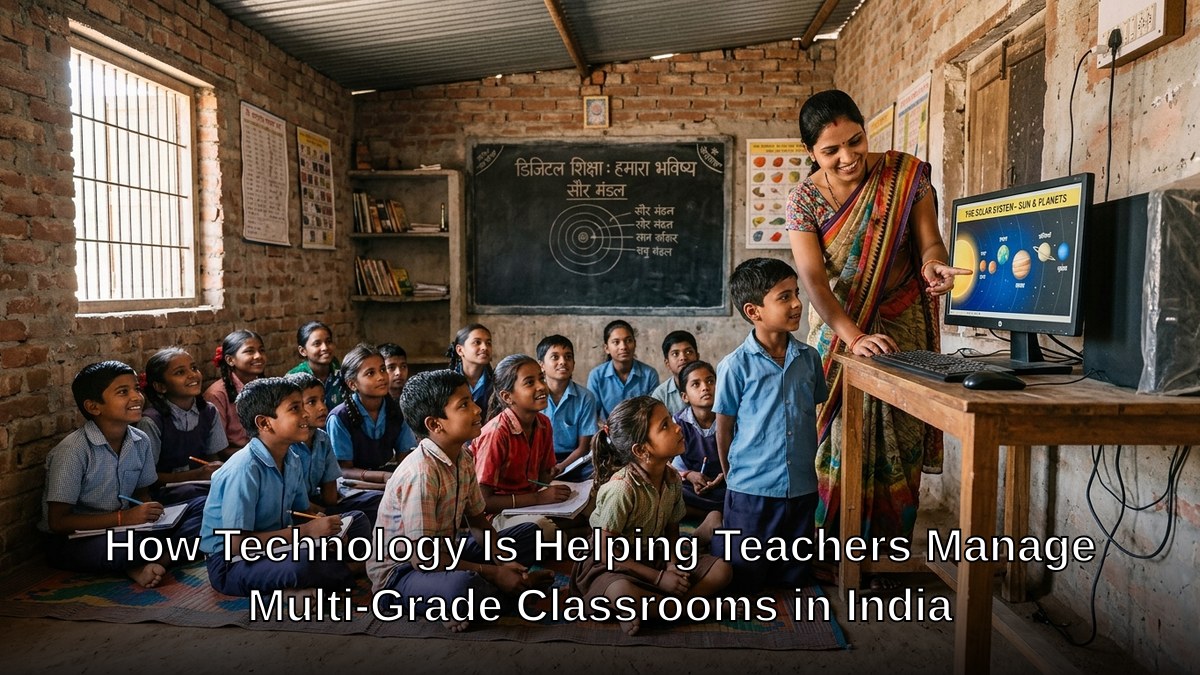
You are teaching Class 3 and Class 5 together. One child is learning to read. Another is solving fractions. You have 45 minutes and two completely different learning needs. This is not a hypothetical problem for teachers across rural and semi-urban India. This is your Tuesday morning.
Let us be honest: the multi-grade classroom technology gap in India is real, and it is crushing teachers. Most people do not realise that over 40% of schools in rural India operate with multi-grade classrooms, yet teacher training and resources assume a single-grade model. You are expected to manage this alone, with chalk and a blackboard.
Here is the truth: technology is not a luxury for these classrooms anymore. It is survival.
Why Multi-Grade Teaching Demands Digital Solutions
Traditional teaching methods fail in multi-grade environments because they demand sequential attention. You cannot teach fractions to Class 5 while Class 3 is still learning basic addition. The moment you turn to one group, the other falls behind. Classroom management becomes impossible. Teacher burnout becomes inevitable.
Digital classroom tools India are changing this equation. Not because they are magic. Because they allow independent, self-paced learning while you focus on personalized instruction for different age groups.
Consider what happens when you introduce structured digital content:
- Class 3 students work through interactive phonics modules while you conduct one-on-one reading sessions with struggling learners
- Class 5 students solve adaptive math problems that adjust difficulty based on performance while you teach new concepts to the advanced group
- Both groups stay engaged. Both make measurable progress. You actually have breathing room
This is not theory. This is what happens when multi-grade teaching solutions are implemented properly.
The APNA PC Solution for Points of Digital Learning
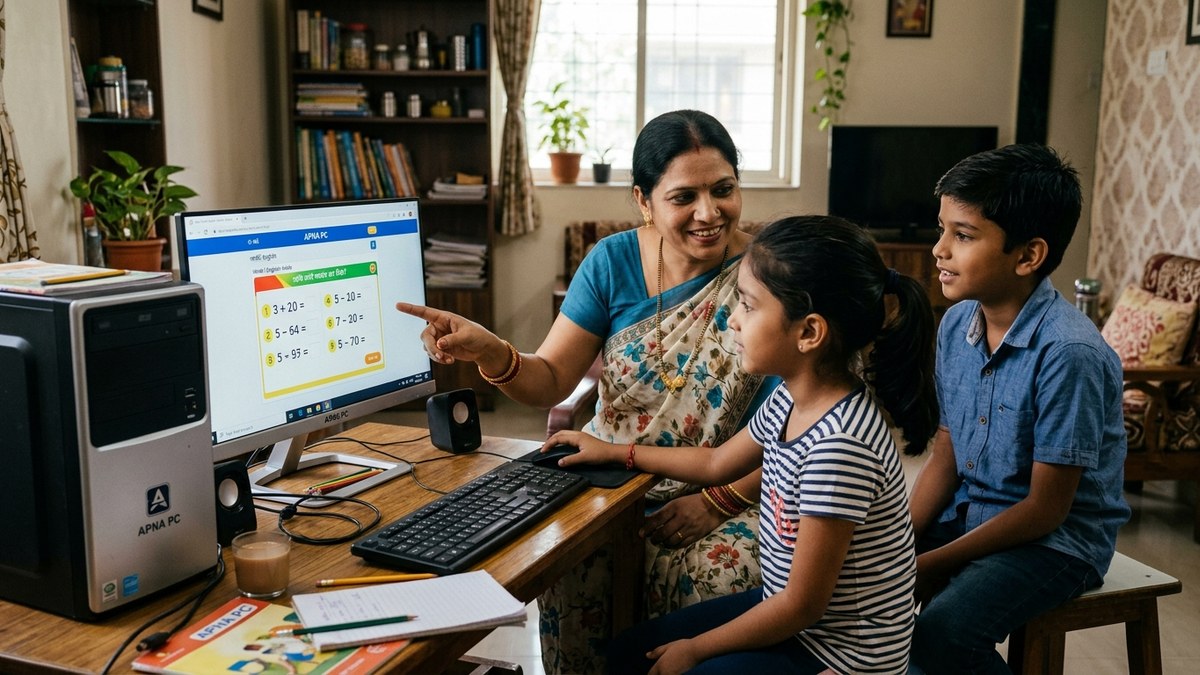
Most people do not realise that a Point of Digital Learning (POD) does not require expensive infrastructure. A POD is a home or community learning centre run by a trained educator. It can be your living room. It can be a small rented space in your village. What it needs is the right hardware and software.
APNA PC changes the game for educators managing multi-grade classrooms. This is a complete bundle at Rs.30,000 that includes everything: education software, 3-year warranty, professional installation, Mini PC with i3 7th Gen processor, 8GB RAM, 128GB SSD, monitor, keyboard, mouse, webcam, and headset.
Why this matters for your classroom:
- Pre-loaded education software means zero setup time. You start teaching immediately
- The Mini PC runs smoothly with 20+ students accessing content simultaneously
- Built-in webcam and headset enable live sessions, recorded lessons, and parent communication
- 3-year warranty means you are not stressed about hardware failures mid-school year
- Installation support means you are not figuring out cables and drivers alone
For a teacher managing Class 2 and Class 4 together, APNA PC becomes the second educator in your classroom. One group works through structured digital lessons while you teach the other. Everyone progresses. Everyone learns.
Real Classroom Scenarios Where Digital Tools Win
Here is what changes when you have proper multi-grade teaching solutions in place:
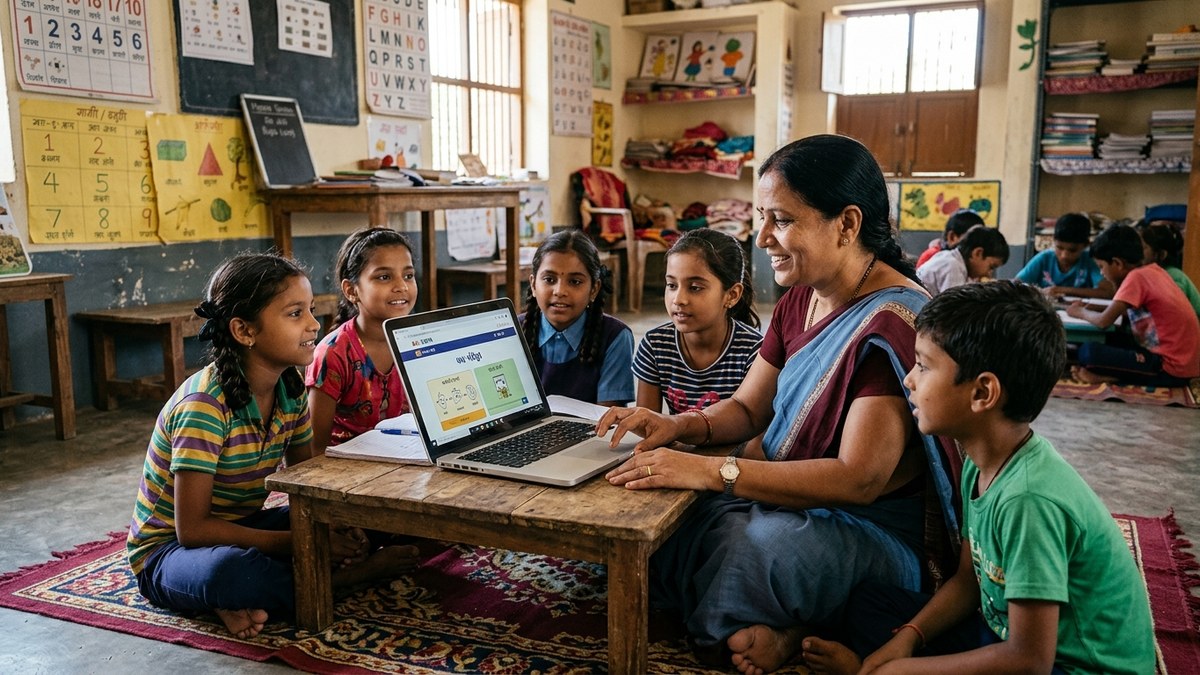
Scenario 1: The Reading Gap Class 3 has six students at beginner reading level and four at intermediate. Traditionally, you choose one pace and half the class suffers. With digital classroom tools, each student gets adaptive content matching their level. You rotate between groups for guided reading sessions. Both groups make real progress in the same 45-minute period.
Scenario 2: The Math Problem Class 4 is learning multiplication. Class 6 is learning ratios. These are not connected concepts. You cannot teach them simultaneously. But with structured digital modules, Class 4 works through interactive multiplication games with immediate feedback while you teach ratio concepts to Class 6. Then you switch. Both groups complete their learning objectives without you splitting your brain in half.
Scenario 3: The Parent Communication Crisis You are teaching 50 kids across four grades. Parents want updates. How do you manage this? APNA PC with webcam and recording capabilities lets you send video progress updates to parents. You build accountability and trust without creating extra administrative burden.
The Government Support You Should Know About
You are not alone in this. The Digital India initiative has allocated resources for digital learning infrastructure. Several states now offer teacher training in digital classroom management. Check with your state education department about subsidies or grants for educational technology.
Additionally, programs like Digital Literacy Mission India provide free training for educators wanting to integrate technology into teaching. Take these courses. They directly support what you are trying to do in your multi-grade classroom.
Research from UNESCO education research confirms that structured digital tools improve learning outcomes in under-resourced classrooms by up to 35% when implemented with proper teacher training.
Starting Your Digital Classroom Journey
Most people do not realise that starting a digital classroom does not mean abandoning traditional methods. It means augmenting them. You still teach. You still connect with students. You just have a tool that lets you do both effectively, even with multiple grades in one room.
APNA PC is designed for exactly this scenario. It is affordable. It is reliable. It comes with support. It works in low-bandwidth environments. It runs education software that is already proven in Indian classrooms.
The question is not whether you can afford to go digital. The question is whether you can afford not to. Your students deserve your full attention. Your sanity deserves a break. Multi-grade teaching solutions make both possible.
Ready to transform your multi-grade classroom? Learn how to set up your own Point of Digital Learning and join hundreds of educators already making this shift.
Start your learning POD today and discover how technology can make multi-grade teaching manageable, effective, and sustainable.
For more insights on building digital learning infrastructure, visit Apni Pathshala where educators share real classroom experiences with technology integration.