
Introduction: The Illusion of Education in India
Every Indian parent believes they are giving their child the gift of education. They save, sacrifice, and invest in schools, coaching classes, and online tools. But beneath this noble intention lies a harsh reality: India does not have an education system — it has a sorting system. Children are not nurtured; they are ranked, filtered, and labelled.
If we want our children to thrive in the world ahead, parents must understand the deep structural failures of the system.
The Great Indian Myth: “Education Is the Great Equaliser”
We are taught to believe that education gives everyone a fair chance. But in India, education does the opposite — it amplifies inequality.
One child grows up with coding workshops and iPads.
Another grows up with load-shedding and cramped living conditions.
One child speaks English confidently.
Another speaks his mother tongue and is silently judged.
Both sit for the same exam.
Both are judged by the same marks.
And we call it merit.
The system pretends to be fair while rewarding privilege.
Marks: A Flawed Reflection of Advantage, Not Ability
India’s obsession with marks hides a bigger truth: marks mostly represent parental resources, not a child’s ability.
Scores are heavily influenced by:
- exposure at home
- language spoken
- financial stability
- educated parents
- quiet study environment
- internet connectivity
- access to help
Children aren’t competing with each other.
They’re competing with circumstances.
Coaching Centres Have Quietly Replaced Schools
If schools truly educated children, coaching centres wouldn’t exist. But today coaching centres have become the real engine of learning — or survival.
They dictate routines, weekends, and sleep cycles.
Children are pushed into cycles of mock tests, worksheets, and exam hacks.
Curiosity becomes collateral damage.
Childhood becomes a casualty.
Coaching is not enrichment.
It’s emergency support for a failing school system.
Failure as Elimination: How Schools Break Children Silently
When children struggle, the system’s first response is blame.
- “Weak child”
- “Not focused”
- “Needs tuition”
- “Not serious”
But failure in India is rarely about ability. It’s about unmet needs. Children aren’t slow — the system is too fast. They aren’t weak — the teaching is too rigid. They aren’t uninterested — they’re overwhelmed.
Most children don’t drop out.
They are pushed out — emotionally and academically.
Language: India’s Most Underestimated Discriminator
English-medium schooling is held up as the gold standard. But in reality, English has become our unofficial caste system. Children who speak local languages at home are constantly playing catch-up. Their intelligence is overshadowed by their accent. Their confidence erodes quietly.
Instead of celebrating multilingualism, we punish it.
Homework: A Burden Designed for Privileged Homes
Homework assumes:
- peace
- space
- educated parents
- internet
- electricity
- time
Millions of Indian children do not have these. Homework isn’t a learning tool — it’s a privilege test.
Parents Must Take Control Before Coaching Centres Take Over
Waiting for the system to fix itself is a losing strategy. Parents must become proactive guardians of their children’s learning.
Real education today must be:
- self-paced
- curiosity-driven
- technologically supported
- emotionally safe
- skill-oriented
- joyful
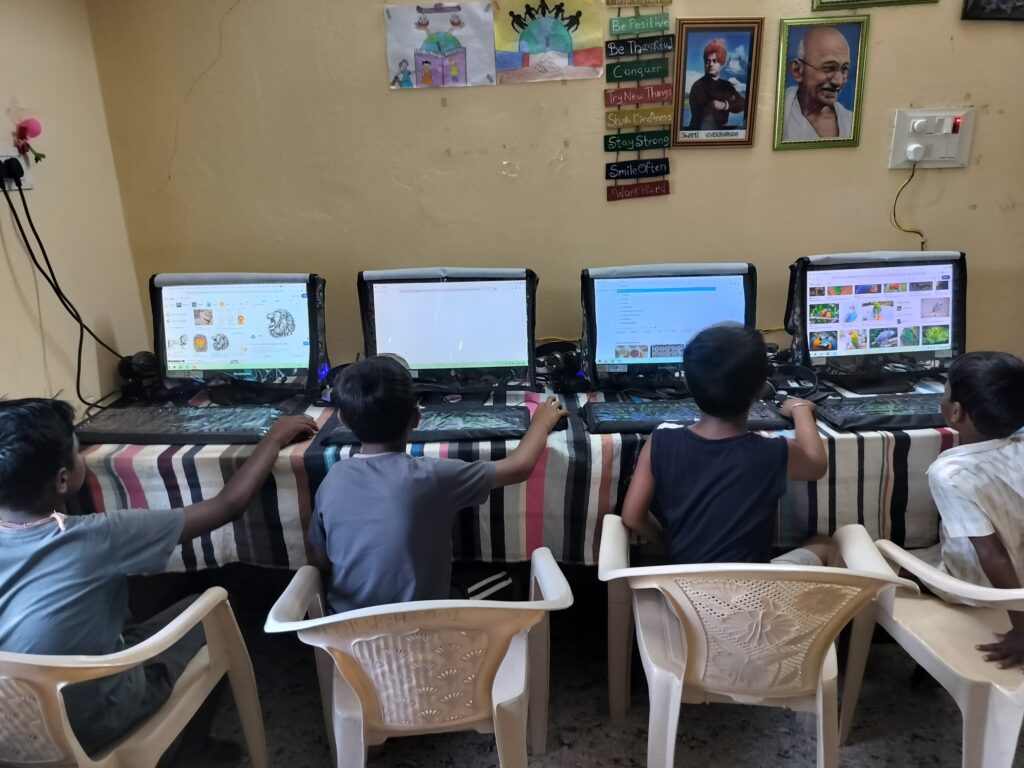
This is exactly what community microschools — small, supportive neighbourhood learning environments — offer. They bring personalised learning to children without the factory-model pressure of schools and coaching centres.
Conclusion: Your Child’s Future Shouldn’t Be Decided by a Broken System
Your child is capable, curious, and eager to learn — if given the right environment. He does not need more pressure; he needs more space. He does not need more marks; he needs more meaning.
If you want your child to learn 10x more at a fraction of the cost and stress, explore the power of community microschools here:
👉 https://www.teachtoearn.in/10x-learning-at-0-1x-cost-the-power-of-community-microschools/