India doesn’t suffer from a shortage of people. It suffers from a shortage of capability-building education. We proudly talk about our demographic dividend, yet quietly run an education system that trains obedience, punishes curiosity, and produces degrees without competence. A young population is either a nation’s greatest strength—or its biggest liability. The difference lies entirely in how we educate them.
Q1. Is India really “overpopulated”?
No. That’s lazy thinking.
India does not have an overpopulation problem. It has a poorly educated population problem. Countries with far fewer people—like Japan, South Korea, or Israel—punch far above their weight because they invest in human capital, not just infrastructure.
People are not a burden. Unskilled, under-educated, disengaged people are.
A young population is an asset only if they are educated well. Otherwise, it becomes a ticking time bomb.
Q2. Why do you say India’s population is actually an advantage?
Because demographics are destiny.
India has one of the youngest populations in the world. While countries like China, Japan, and much of Europe are ageing rapidly, India has decades of productive working life ahead—if we get education right.
A young, skilled, confident population can:
- Create businesses instead of just seeking jobs
- Solve local problems instead of waiting for government schemes
- Compete globally instead of migrating helplessly
But this requires education that builds capability, not just credentials.
Q3. So what exactly is wrong with our education system?
Almost everything that matters.
Our system is designed to:
- Produce obedient workers, not independent thinkers
- Reward memorisation, not understanding
- Standardise children, not personalise learning
- Rank students, not empower them
Worst of all, it kills curiosity early and then wonders why adults lack initiative.
This isn’t accidental. It’s structural.
Q4. Are you saying this is “by design”?
Yes—and this makes people uncomfortable.
A poorly educated population is easier to:
- Manipulate with slogans
- Distract with religion, caste, and fear
- Control with freebies and short-term handouts
Critical thinking is dangerous to bad politics.
An empowered, questioning, self-directed citizen is hard to fool—and even harder to buy for peanuts.
This is why meaningful education reform is always talked about, but rarely implemented.
Q5. Isn’t schooling the reason many Indians succeeded?
That’s a comforting myth.
Many successful Indians succeeded despite the schooling system, not because of it. Ask yourself honestly:
- Did school teach you how to learn—or just what to memorise?
- Did it encourage curiosity—or punish questions?
- Did it help you discover your strengths—or label you with marks?
What actually helped was learning outside school: books, mentors, experiments, failures, and self-motivation.
School was background noise.
Q6. If the system is broken, why do parents still trust it?
Fear. Pure and simple.
Parents know something is wrong—but they are afraid to step out of line:
- “What if my child falls behind?”
- “What will relatives say?”
- “What about exams and colleges?”
So they outsource thinking to schools and coaching classes.
Safety in numbers feels reassuring—but it produces mediocrity at scale.
Q7. What kind of education do students actually need?
Education that builds agency.
Students need to learn:
- How to ask good questions
- How to find reliable answers
- How to teach themselves new skills
- How to fail safely and recover quickly
In other words, they need to become self-directed lifelong learners.
In a world where knowledge changes every few years, teaching fixed syllabi is like training kids for yesterday’s jobs.
Q8. What does “student autonomy” really mean?
It means trusting students.
Autonomy doesn’t mean chaos. It means:
- Giving students control over how they learn
- Allowing them to explore interests deeply
- Letting them progress at their own pace
- Treating them as responsible individuals, not empty vessels
When students own their learning, motivation comes from within—not from fear of exams.
Q9. How does Teach to Earn approach this differently?
We flip the model.
At Teach to Earn, we believe:
- Learning is personal, not standardised
- Technology should empower, not distract
- Adults should mentor, not micromanage
- Students should learn by doing, not by rote
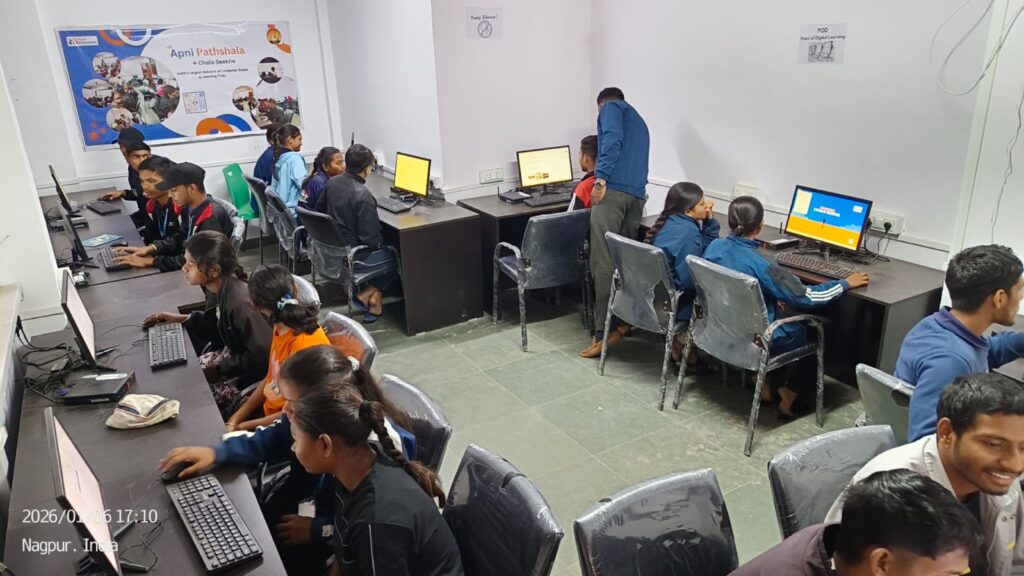
We create safe learning spaces where students:
- Use technology intelligently
- Learn real-world skills
- Build confidence and competence
- Take ownership of their education
No spoon-feeding. No blind obedience. No exam obsession.
Q10. Can this really scale in a country like India?
It has to. We don’t have a choice.
Traditional schooling cannot scale quality. It only scales control.
Technology, community-based learning, and student autonomy are the only scalable answers. When combined thoughtfully, they allow:
- Personalised learning at low cost
- Continuous feedback instead of high-stakes exams
- Learning anytime, anywhere
India doesn’t need more schools.
It needs better learning ecosystems.
Q11. What is the end goal of education, then?
Freedom.
The goal is not marks, degrees, or placements.
The goal is to produce young adults who:
- Can think independently
- Can learn anything they need
- Can adapt to change
- Can create value for society
A nation of such citizens doesn’t need to be “managed”.
It thrives naturally.
Q12. What should parents and students do today?
Stop waiting for permission.
Education reform will not come top-down. It must be built bottom-up—by parents, communities, and students who refuse to accept a broken status quo.
Start small. Start local. Start now.
Help students become independent, self-directed lifelong learners—because in the 21st century, that is the only real competitive edge India has.
And wasting it would be our biggest national failure.