
India’s education system isn’t failing accidentally. It’s succeeding brilliantly—at producing the wrong outcomes.
We have schools everywhere, exams every few months, marks for everything, and rankings for everyone. Yet employers complain they can’t find capable workers. Startups complain graduates can’t think independently. Parents complain their children hate learning. Students complain they feel lost, anxious, and disengaged.
These complaints all point to one truth: the system is structurally broken.
Obedience Was the Goal—Not a Side Effect
From day one, children are trained to obey. Sit still. Follow instructions. Don’t question authority. Those who comply are rewarded; those who question are punished—subtly at first, then systematically.
Curiosity, which should be nurtured, is treated as a nuisance. Independent thinking is labelled arrogance. By adulthood, students don’t just stop questioning—they stop believing they’re allowed to question.
The system doesn’t produce thinkers. It produces followers waiting for instructions.
Memorisation Is Mistaken for Intelligence
Indian education worships memory.
Students who can reproduce textbooks verbatim are celebrated. Students who ask “why” or “how” are sidelined. Exams test recall under artificial pressure, not understanding or application.
In a world where information is free and instantly accessible, memorisation is the least valuable skill imaginable. Yet it remains the core of how we judge intelligence.
We aren’t teaching students how to think. We’re training them how to pass exams.
One Size Fits All—And Fits Almost No One
The system assumes all children learn the same way, at the same pace, with the same interests. That’s convenient for administration—but disastrous for humans.
Children who don’t fit the mould are labelled weak, average, or slow. Their confidence erodes early. Talents outside academics are ignored. Learning becomes a chore instead of a joy.
Factories standardise products. Schools shouldn’t standardise people—but ours do.
Fear Is the Primary Teaching Tool
Fear of exams.
Fear of failure.
Fear of disappointing parents.
Fear of falling behind the herd.
Fear keeps children compliant, but it kills creativity. Students learn early that it’s safer to be quiet than curious, safer to copy than to explore, safer to memorise than to experiment.
Innovation cannot grow in an environment of fear. Yet fear is the fuel on which the system runs.
The End Result: Educated but Powerless Adults
After 15 years of schooling, we produce adults who:
- Wait to be told what to do
- Fear making mistakes
- Struggle to learn independently
- Confuse degrees with competence
This isn’t a student problem. It’s a system problem.
This Is Exactly Why Teach to Earn Exists
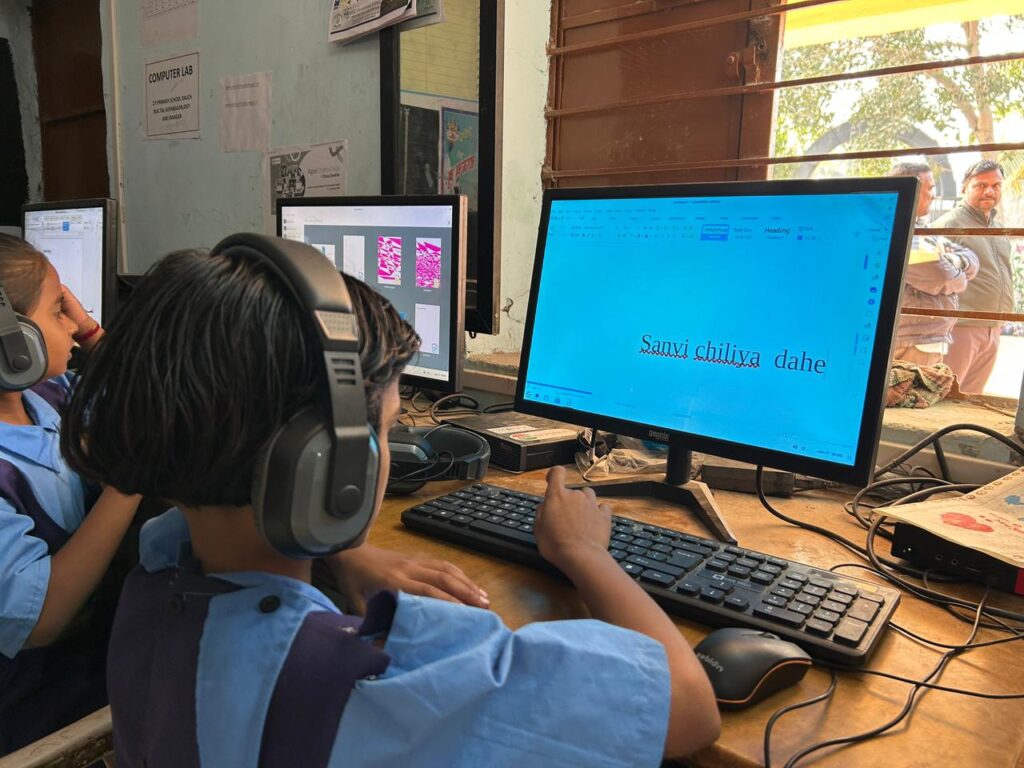
Teach to Earn was created from a simple, uncomfortable insight: education should build agency, not obedience.
Instead of asking, “How do we teach better?” Teach to Earn asks, “How do people actually learn?”
And the answer is clear: people learn best when they have ownership, purpose, and real-world relevance.
Teach to Earn flips the traditional model on its head.
How Teach to Earn Is Different ?
Teach to Earn is built on a few radical ideas:
- Learning is personal, not standardised
- Students learn best by doing, not memorising
- Technology should empower learners, not distract them
- Adults should mentor, not micromanage
- Skills matter more than certificates
Instead of classrooms that enforce silence, Teach to Earn creates safe learning spaces where students explore, experiment, and learn at their own pace. Instead of chasing marks, students build real skills. Instead of being spoon-fed, they learn how to teach themselves.
Learning becomes something students own, not something done to them.
From Passive Students to Active Learners
Teach to Earn focuses on helping students:
- Ask better questions
- Find reliable answers
- Learn new skills independently
- Fail safely and recover quickly
- Build confidence through competence
These are not “soft skills.” They are survival skills for the 21st century.
When students see learning translate into real capability—and even earning potential—motivation stops coming from fear and starts coming from within.
Can This Scale in India?
It has to.
Traditional schooling scales control. Teach to Earn scales learning.
By combining technology, community-based learning spaces, and student autonomy, Teach to Earn enables personalised education at low cost—something conventional schools simply cannot do.
India doesn’t need more buildings called schools.
It needs better learning ecosystems.
Conclusion: From Control to Capability
India’s greatest asset is its people. But an asset mismanaged becomes a liability.
The solution isn’t minor reforms or new textbooks. It’s a mindset shift—from control to trust, from compliance to curiosity, from marks to mastery.
Teach to Earn isn’t just an education model. It’s a statement of intent: we trust students to own their learning.
If India wants to thrive in the future, this shift isn’t optional.
It’s overdue.