
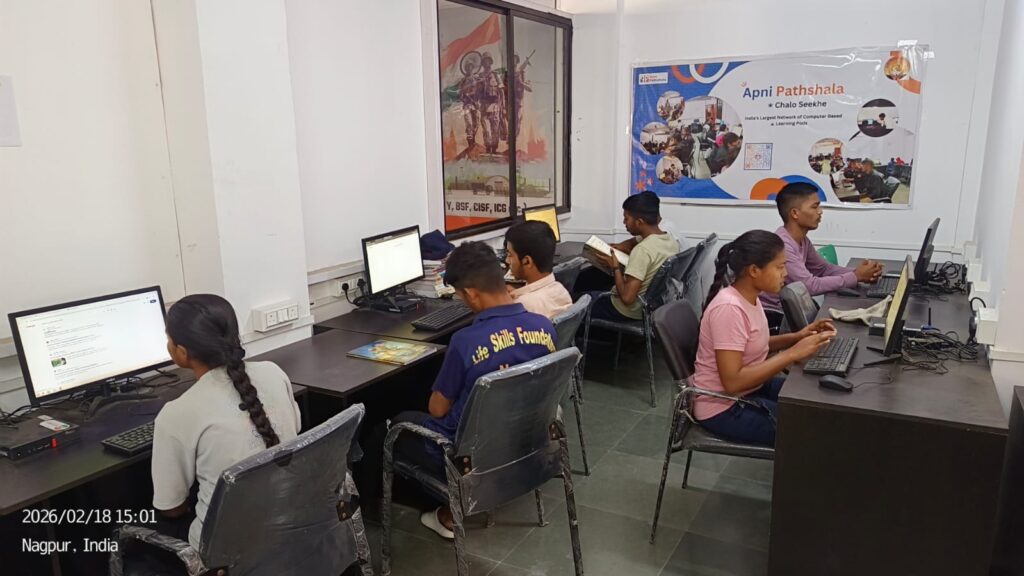
Across the last few TeachToEarn posts, one clear theme keeps showing up: students do better when learning is active, guided, and connected to real life. Marks still matter, but they cannot be the only goal. Skills, confidence, digital discipline, communication, and curiosity are now equally important. Instead of another lecture-style write-up, let’s explore this through a grounded conversation between two parents who are trying to do the right thing for their children in a fast-changing world.
Aarti: Rahul bhaiya, can I ask you something honestly? My daughter studies for long hours, but when I ask simple follow-up questions, she gets stuck. It feels like she is memorizing, not understanding.
Rahul: You’re not alone. My son was exactly like that last year. He could reproduce textbook lines, but if I changed the question slightly, he got confused. That’s when I realized the issue wasn’t effort—it was method.
Aarti: Method? You mean school teaching style?
Rahul: School style, tuition style, even home style. We all push children to “complete” things—complete chapter, complete worksheet, complete revision. But nobody asks if the child can apply what they learned in real life.
Aarti: True. Even I ask, “How many pages done?” more than “What did you understand?”
Rahul: Same happened at my home. We measured progress with pages and marks only. But children need another kind of progress too: how they think, how they explain, how they solve, how they stay focused in digital environments.
Aarti: Focus is a huge issue. The moment laptop opens, ten distractions open with it. I want digital learning, but safe digital learning.
Rahul: Exactly. That’s the central challenge today. We need children to be digitally capable, but not digitally scattered. If a device is just a gateway to random content, it hurts learning. If a device is structured for learning, it accelerates growth.
Aarti: I read your point in one TeachToEarn article—something like “tools should support learning, not steal attention.” That line stayed with me.
Rahul: Yes, and that’s why I liked the recent posts. They’re all saying the same thing from different angles. One post talks about AI as a helper for clarity, another talks about future-ready skills beyond marks, another challenges passive schooling, and another talks about investing in real learner growth. Different topics, one direction.
Aarti: But practically, what can parents do? We can’t redesign the entire education system.
Rahul: We don’t have to redesign everything at once. We can make better daily decisions. Let me tell you what changed for us at home.
Aarti: Please do, I’m listening.
Rahul: First, we changed our daily questions. Instead of asking “How much did you study?”, we ask “What new thing did you understand?” and “Can you explain it in your own words?” That single shift exposed whether learning was real or superficial.
Aarti: Nice. That sounds simple and doable.
Rahul: Second, we introduced mini application tasks. If he studies percentages, he calculates discounts while shopping. If he studies science, he explains one household example. If he studies English, he writes a short opinion paragraph with his own voice.
Aarti: So learning becomes less abstract.
Rahul: Exactly. Third, we made screen use intentional. Device is opened with a purpose, not by habit. We define what app to use, for how long, and what output is expected.
Aarti: That’s where we struggle. We start with study, then somehow it ends in random videos.
Rahul: Happens to everyone. That’s why the setup matters. Children need a learning-first environment—safe, trackable, and distraction-controlled. Not punishment, just structure. When setup is right, discipline becomes easier for both child and parent.
Aarti: What about AI tools? I’m still confused—helpful or harmful?
Rahul: Helpful, if guided. Harmful, if outsourced blindly. Think of AI as a tutor assistant. It can simplify hard concepts, create practice questions, and improve writing quality. But the child must still think, verify, and produce original understanding.
Aarti: So if my daughter asks AI to “write my answer,” that’s wrong. If she asks “explain this concept with examples,” that’s useful.
Rahul: Exactly. We have one family rule: AI can help you learn, but cannot replace your thinking.
Aarti: I like that. Can you share your routine? I need a structure, otherwise every day becomes random.
Rahul: Sure. Weekday routine is simple:
• 20 minutes: concept learning
• 20 minutes: practice questions
• 15 minutes: explanation in own words
• 10 minutes: reflection—what was easy, what was hard
That reflection step is underrated. It builds self-awareness.
Aarti: I never thought reflection mattered for school kids.
Rahul: It matters a lot. Children who reflect become independent learners. They stop waiting for constant external push.
Aarti: I’m also worried about confidence. My daughter knows things but hesitates to speak.
Rahul: Then add teach-back. Ask her to teach one concept to you in 3 minutes. No judgment, no interruption. Just listening. This builds clarity and confidence faster than rote revision.
Aarti: That’s brilliant. It also shows gaps quickly.
Rahul: Exactly. Another thing: reduce comparison language at home. “Look at Sharma ji’s son” destroys learning energy. Children perform better when they compete with their previous version, not with someone else’s report card.
Aarti: True, we accidentally do that under stress.
Rahul: We all do. Parenting in this era is hard. But we can still make better trade-offs. If a child gets 5 marks less but learns to think independently, that child will win long-term.
Aarti: Long-term is key. The world is changing so fast—AI, automation, new careers. Marks-only strategy feels risky now.
Rahul: Exactly. The future rewards adaptable learners. Children need communication, problem-solving, digital fluency, and ethical judgment. These are built through experience, conversation, and guided practice—not by memorization alone.
Aarti: And where does a platform like Apna PC fit in?
Rahul: It fits where most families struggle: implementation. Parents know what ideal learning looks like, but they lack a safe, structured digital environment to run it daily. A proper setup can combine learning tools, reduce distractions, and improve visibility for parents.
Aarti: So it’s not just “buy a device,” it’s “build a learning ecosystem.”
Rahul: Exactly. That mindset shift is huge. Hardware alone doesn’t fix learning. Learning design does.
Aarti: I feel relieved hearing this. For months I thought my child was the problem. Maybe the system and routine were the real problem.
Rahul: Yes. Most children are not weak learners. They are under-supported learners. When teaching style, home routine, and digital environment align, improvement is visible quickly.
Aarti: What should I do from tomorrow morning?
Rahul: Start with five steps:
1) Ask understanding-first questions.
2) Add one real-life application each day.
3) Introduce teach-back practice.
4) Use AI for clarity, not copying.
5) Move toward a safer learning setup with fewer distractions.
Aarti: Done. I’m starting this today. And maybe for the first time, I feel education can be improved without waiting for huge reforms.
Rahul: Exactly. Big change starts with small consistent actions.
Better education is not about rejecting marks; it is about expanding the definition of success. Children deserve learning that is meaningful, practical, and safe. If you want to continue this conversation, read these recent TeachToEarn posts: Education for Workers: Investing in Growth, Not Just Wages and Top AI Tools Every Student Should Know. And if your end goal is to build a focused, student-first learning environment with Apna PC, write to us at contact.teachtoearn@gmail.com.