
Most Indian parents have now accepted one truth: AI is not going away, and children will use it for schoolwork whether we like it or not. The real question is no longer “Should my child use AI?” but “How do I make sure AI use leads to real learning, not just fast homework?” This is where many homes get stuck. Work gets submitted quickly, but when a child is asked a fresh question, confidence drops. Parents feel uneasy, children feel judged, and study time turns into friction. The good news is that this can be fixed with a practical home method. You don’t need expensive coaching, strict bans, or all-day supervision. You need a repeatable routine that protects thinking, writing, and recall while still using AI smartly. Let’s break this through a realistic parent-mentor conversation.
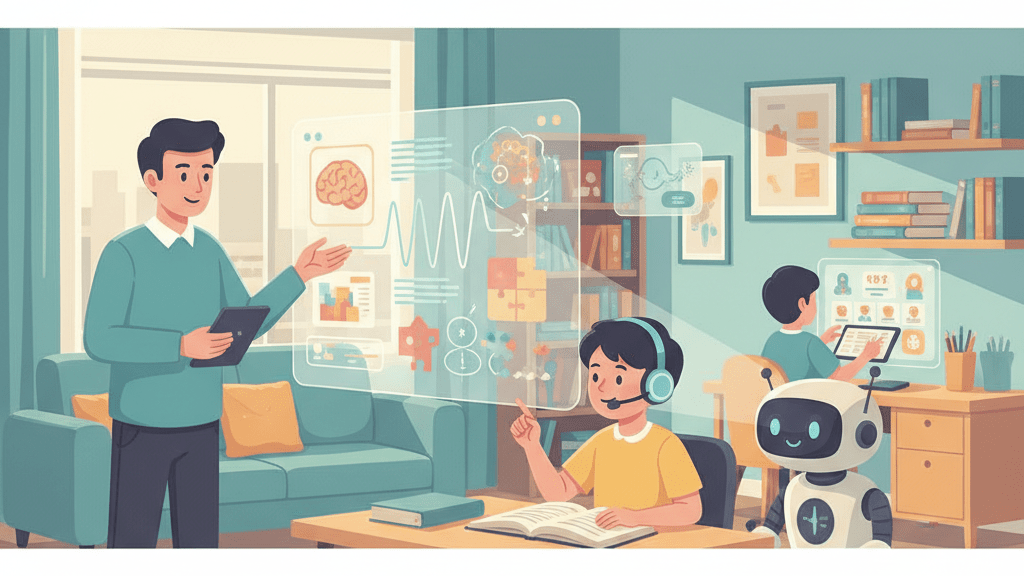
Parent (Anita): My son finishes homework much faster now with AI, but when I ask him to explain what he wrote, he struggles. Is AI making him dependent?
Mentor (Vikram): It can, if there is no structure. AI is like a calculator for language and ideas. Useful, but harmful when used before thinking. The goal is not to stop AI. The goal is to fix the sequence.
Anita: We tried restrictions, but then he hides usage. That creates more tension at home.
Vikram: Exactly. Bans usually create secrecy. Better approach: transparent rules. If your child knows when and how AI can be used, resistance drops and accountability improves.
Anita: What should that rule look like in day-to-day homework?
Vikram: Use a 3-step study loop: first attempt, AI assist, self output. Step one: 12 minutes without AI. Step two: AI only for specific doubts. Step three: final answer in the child’s own words.
Anita: He says first attempt wastes time.
Vikram: It feels slower at first, but it builds memory. Without first attempt, the brain stays passive. With first attempt, the child compares and corrects—this is where real learning happens.
Anita: What if his first attempt is mostly wrong?
Vikram: That’s normal. Wrong attempts are not failure; they are learning data. In fact, children who can spot and correct errors become stronger exam performers over time.
Anita: Biggest issue is copy-paste answers from AI into notebooks.
Vikram: Then make this a non-negotiable family rule: AI output is raw draft, not final submission. Final answer must include one personal example and one “why this matters” line.
Anita: I cannot monitor every subject. I also don’t remember all chapters.
Vikram: You don’t need subject mastery. Use the 60-second teach-back test. Ask your child to explain one concept aloud in one minute. You check for structure: definition, logic, example, and common mistake.
Anita: Math is still a problem. He reads AI solutions, then freezes on similar questions.
Vikram: Add a blind solve rule. After seeing one AI-supported solution, close everything and solve a parallel question from scratch. If needed, allow only one hint request—not full solution.
Anita: What does a good hint prompt look like?
Vikram: Something precise: “I am stuck at step 2 while factorizing this expression. Show only the next step and explain why.” Specific prompts create useful support. Broad prompts create overload.
Anita: Yes, he asks “Teach me whole chapter” and gets overwhelmed.
Vikram: Train prompt discipline. Ask for smaller chunks: “Explain this topic at Class 8 level in 5 points, then ask me 3 quick questions.” Small outputs improve retention.
Anita: We also face distraction—notifications, reels, tab switching.
Vikram: Build a low-friction study setup: phone away from desk, only required tabs, one visible task card, and a running timer. Environment beats repeated scolding.
Anita: He feels pressured by timers.
Vikram: Use gentle timing. Start with 25 minutes focus + 5 minutes break. If stress is high, use 20 + 5. Language matters too. Say “one block done, next small target” instead of “you’re behind.”
Anita: How much writing is necessary now that AI can type so well?
Vikram: Writing is still critical. Most school exams test handwritten recall under time pressure. Keep a hybrid rule: digital for discovery, writing for consolidation.
Anita: Can AI quizzes replace revision?
Vikram: AI quizzes are useful, but never enough alone. Always follow with no-screen retrieval: write key points from memory. Retrieval is what builds exam reliability.
Anita: How can I track progress without making home feel like a coaching center?
Vikram: Track five weekly indicators only: start-on-time rate, focus blocks completed, teach-back clarity, repeated error count, and confidence score (1–5). Keep it simple and visual.
Anita: Confidence score sounds subjective.
Vikram: Subjective is okay when tracked over weeks. Trends are powerful early warning signals. If confidence drops two weeks in a row, adjust method before marks drop.
Anita: What should I do when he keeps making careless mistakes?
Vikram: Avoid labels like “careless child.” Use process language: “Let’s find the pattern and fix the method.” Identity attacks reduce effort; process feedback improves it.
Anita: He compares himself to classmates who use shortcuts and still score well.
Vikram: Shortcuts can work for one test, not for a full academic year. Students with good systems improve steadily. Consistency quietly beats last-minute bursts.
Anita: Sometimes motivation is too low. Should we skip study fully?
Vikram: Use recovery mode, not zero mode. Reduce target size but keep routine alive: one short block, one teach-back, one written recall. Small continuity protects momentum.
Anita: Can siblings study together with AI?
Vikram: Yes, with clear boundaries. Shared timer, separate questions, and peer teach-back at the end. One child explains one concept to the other. Teaching improves understanding for both.
Anita: What is one daily non-negotiable habit every family should keep?
Vikram: This trio: one focused block, one teach-back, one written retrieval. It protects attention, comprehension, and memory together.
Anita: Final advice for parents trying to use AI without losing learning depth?
Vikram: Don’t fight AI. Design around it. Children don’t need perfect supervision; they need repeatable systems. If your routine works even on low-energy days, you are building independence—not dependence.
When parents move from daily control battles to process clarity, home study becomes calmer and outcomes become stronger. You don’t need complex dashboards to make this work. Start with a visible routine, use short feedback loops, and protect writing + recall every day. Over a few weeks, these small habits usually reduce arguments, improve confidence, and make exam preparation more stable. If you want more practical parent-friendly frameworks, read these related guides: How Parents Can Build a Calm AI Study Routine at Home and How Parents Can Build Exam-Ready Thinking with AI at Home. And if you’re setting up a focused learning environment with the right system support, explore APNA PC here: https://www.teachtoearn.in/apna-pc/. Keep the routine simple, keep expectations realistic, and let consistency do the heavy lifting.