
Q1. Is it true that most parents believe the schooling system is broken?
Yes. Privately, almost every parent admits it. Schools prioritise marks over mastery, obedience over curiosity, and conformity over creativity. Kids learn to memorise, not to think. Yet parents continue enrolling their children in the same system, year after year. Why? Not because they believe in it—but because they’re afraid to leave it.
Q2. If parents know it’s broken, why don’t they explore better options?
Because fear is a powerful anesthetic. Parents worry: What if my child falls behind? What if colleges reject them? What if society judges us?
Following the herd feels safe. Thinking independently feels risky. Sadly, parents often confuse popular with proven. Safety in numbers becomes an excuse for intellectual laziness.
Q3. Is following the herd really that harmful?
Yes—especially for children. When parents outsource thinking to schools, coaching classes, and rankings, kids learn a dangerous lesson early: don’t question authority, just comply.
This kills curiosity. It kills confidence. It kills ownership of learning. And once that spark is gone, no exam score can bring it back.
Q4. Aren’t parents just being responsible and cautious?
Caution is fine. Paralysis is not.
There’s a difference between protecting your child and imprisoning them in a system designed for the industrial age. Today’s world rewards adaptability, problem-solving, and self-learning—not obedient note-takers. By clinging to outdated models, parents unintentionally handicap their own children.
Q5. But what about exams, degrees, and careers? Don’t they still matter?
They do—but far less than parents think.
Degrees open doors, but skills keep them open. Employers increasingly care about what you can do, not what marks you scored at age 15. Ironically, children who learn how to learn do better even in exams—because they understand concepts instead of cramming them.
Q6. What does “putting students first” actually mean?
It means giving children autonomy and agency over their learning.
Instead of force-feeding syllabi, we help them explore interests. Instead of ranking them against others, we help them track their own progress. Instead of fear-based discipline, we build intrinsic motivation.
When students own their learning, discipline becomes irrelevant. Curiosity does the heavy lifting.
Q7. Isn’t self-directed learning chaotic or unstructured?
Only if you confuse freedom with neglect.
Self-directed learning is structured flexibility. Children learn at their pace, using high-quality resources, guided by caring adults—not micromanaged by rigid timetables.
The irony? Traditional schools are chaotic in the worst way—busy, noisy, stressful, and inefficient—while self-directed environments are calmer and more focused.
Q8. What role should technology play in this new model?
A central one—if used wisely.
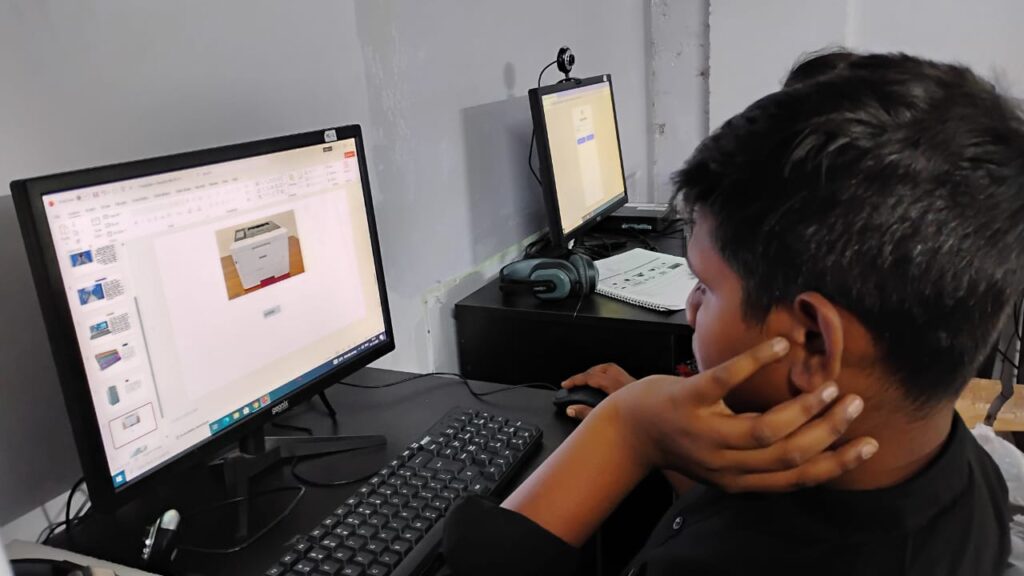
Technology should empower students, not distract them. With the right tools, children can access world-class content, learn independently, document their progress, and build real skills.
The problem isn’t screens—it’s unsupervised, mindless screen use. A well-designed educational computer becomes a laboratory for learning, not a toy for time-pass.
Q9. What is the biggest mistake parents make today?
Waiting for permission.
They wait for schools to reform. They wait for government policy. They wait for society to change. Meanwhile, their child’s childhood slips by.
Education reform doesn’t start in parliament—it starts at home. Parents who act early give their children a massive, compounding advantage.
Q10. What happens to kids when parents overcome their fear?
Something magical.
Children become confident learners. They ask better questions. They take responsibility. They stop fearing failure. They start enjoying learning again.
These are not “alternative kids.” These are future-ready adults—resilient, independent, and adaptable.
Q11. Are you saying I should pull my child out of school tomorrow?
No. This is not about rebellion—it’s about balance.
Even within the current system, parents can shift the center of gravity from school-controlled learning to student-owned learning. The goal is not to reject schools, but to stop worshipping them.
Q12. What is the first practical step a parent can take today?
Give your child a personal learning device designed for education—not entertainment.
A dedicated education PC creates a safe, focused space where children learn independently, build projects, explore interests, and grow at their own pace. Ownership of learning begins with ownership of tools.
Buy India’s first Education PC at www.apnapc.com and help your kids to become independent self-directed lifelong learners