India doesn’t have an education problem. It has a learning problem—and pretending otherwise has wasted decades. Schools chase marks. Coaching classes sell fear. Parents hope for the best.
Children? They’re taught to comply, not to think.
This article explains why we’re building an AI tutor for every child in India—not as a shiny EdTech gimmick, but as public infrastructure for learning. One that gives children autonomy, patience, and personalized guidance—something our system simply doesn’t.
Q1. What is your big goal with Teach to Earn?
Let’s not beat around the bush.
Our big, hairy, audacious goal is simple: every child in India should have access to a high-quality AI tutor.
Not someday. Not only rich kids. Not only kids in fancy schools.
Every child. Everywhere.
If you believe education determines destiny (and it does), then denying children access to good learning tools is the quietest form of injustice we tolerate.
Q2. Why AI tutors? Aren’t teachers enough?
This question assumes teachers and AI are competitors. They aren’t.
India has:
- Too few good teachers
- Overcrowded classrooms
- A one-size-fits-all syllabus
- Zero personalisation
AI tutors don’t replace teachers. They amplify learning by offering:
- 24/7 availability
- Infinite patience
- Personalised pacing
- No judgement, no fear, no embarrassment
A child can ask the same “stupid” question a hundred times. The AI won’t roll its eyes. That alone is revolutionary.
Q3. What problem are you actually trying to solve?
The real problem isn’t marks.
It’s that schools don’t teach children how to learn.
Most students:
- Memorise instead of understanding
- Chase marks instead of mastery
- Depend on teachers instead of thinking independently
We want students to become self-directed, lifelong learners.
That skill matters far more than any syllabus.
Q4. Why do you keep talking about autonomy and agency?
Because learning without autonomy is obedience training.
Real learning happens when:
- Students choose
- Students explore
- Students fail safely
- Students follow curiosity
Autonomy builds confidence.
Agency builds responsibility.
If a child never learns to take ownership of learning, they will always be dependent on someone else telling them what to do next.
That’s a terrible preparation for life.
Q5. What is Apni Pathshala and why did you start it?
Ideas are cheap. Reality is expensive.
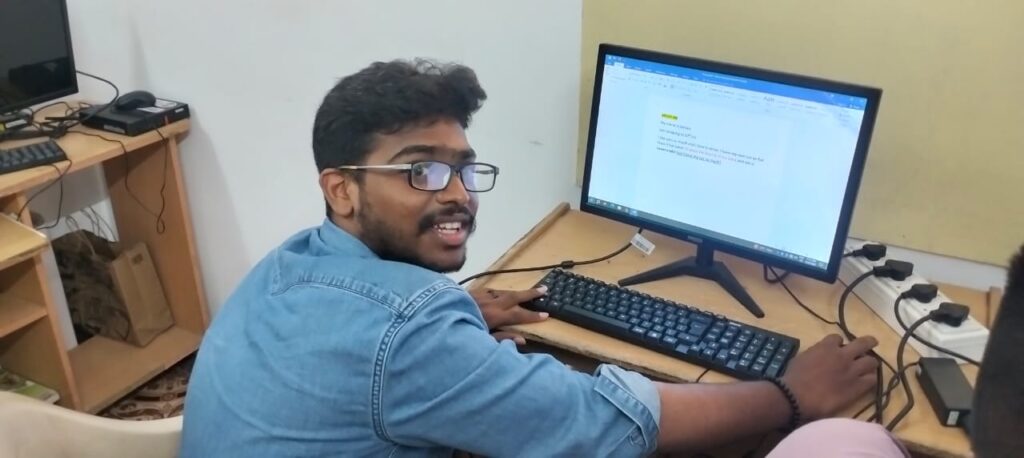
Apni Pathshala is our real-world laboratory—a community-based digital learning space where:
- Children learn using computers
- Adults supervise, not “teach”
- Learning is self-paced and interest-driven
- AI tools are used daily, not theoretically
We didn’t want PowerPoint decks.
We wanted proof on the ground.
Apni Pathshala allows us to test what actually works for Indian children—across ages, backgrounds, and learning levels.
Q6. Why did you build your own computer—the ApnaPC?
Because asking children to learn seriously on a borrowed smartphone is absurd.
Phones are:
- Distracting
- Unsafe
- Designed for consumption, not creation
The ApnaPC is an education-first computer, designed specifically for Indian students. It:
- Keeps children safe online
- Tracks their learning journey
- Encourages deep work, not scrolling
- Gives students ownership of a real tool
If we want children to build skills, they need proper tools—not hand-me-down gadgets.
Q7. What is Eklavya and how is it different from other AI tools?
Eklavya is our AI tutor, inspired by the original self-learner.
It is designed to:
- Ask better questions, not just give answers
- Encourage thinking, not spoon-feeding
- Adapt to the student’s level
- Support learning in an Indian context
Most AI tools are content machines.
Eklavya is a learning companion.
Our goal isn’t dependency on AI.
It’s independence through AI.
Q8. Why are you running so many different projects? Isn’t that confusing?
Only if you look at them in isolation.
All our projects serve one mission:
Help students become independent learners.
- Apni Pathshala → learning environment
- ApnaPC → learning tool
- Eklavya → learning guide
Different pieces. Same puzzle.
We experiment across multiple models because India is not one market. What works in one context may fail in another. Learning what doesn’t work is just as important.
Q9. How do you plan to make this affordable at scale?
Affordability isn’t an afterthought—it’s the design constraint.
We are exploring:
- White-labelled ApnaPCs
- Subscription models
- Community-shared resources
- Corporate partnerships
One powerful idea: encouraging corporates to gift ApnaPCs to blue-collar employees.
Not charity. Not CSR theatre.
But long-term skill building—for employees and their children.
That’s how you break intergenerational cycles.
Q10. Is this just another EdTech startup?
No. And frankly, that’s the point.
We are not chasing:
- Vanity metrics
- Buzzwords
- Short-term exits
We are building public-good infrastructure for learning.
Slowly. Iteratively. Transparently.
If India wants a future-ready generation, we must stop outsourcing thinking and start designing systems that trust children to learn.
Final Question: Why does this matter now?
Because children don’t get a second chance at childhood.
If we wait for the system to reform itself, we’ll be waiting forever.
So we build.
We test.
We learn.
We improve.
“One child. One computer. One AI tutor at a time.“
That’s how real change happens.