
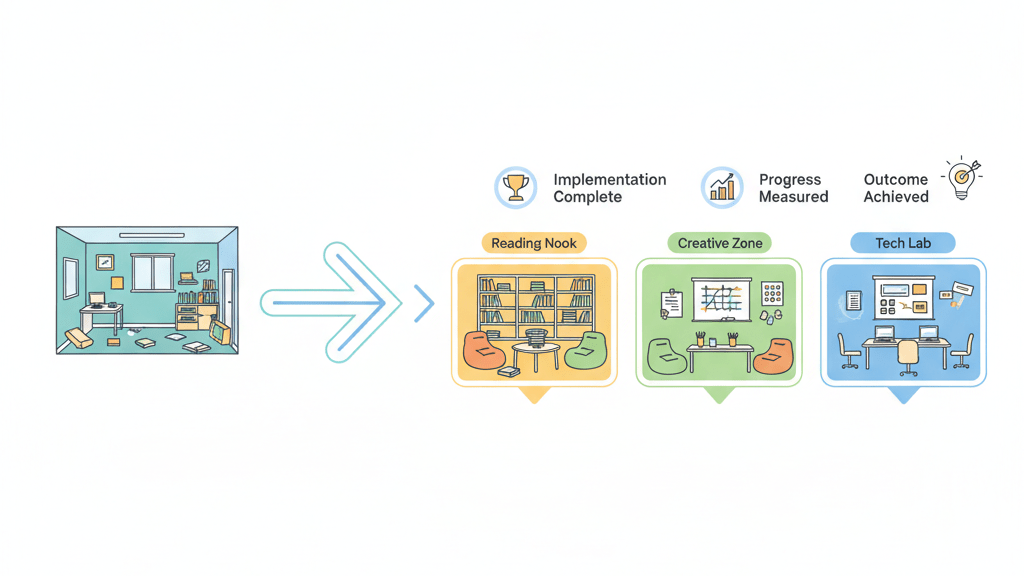
Starting a POD does not require a big building, expensive interiors, or a complicated business plan. Many successful learning PODs begin with one simple room, a few motivated children, and a caring adult who wants to create a better learning environment for the community.
The real challenge is not space.
It is creating a system that is calm, structured, and consistent.
Parents today are looking for smaller, safer, and more focused learning spaces where children get attention and build confidence. A well-run POD can become exactly that—a trusted community learning hub that also creates a steady source of income for the family running it.
The key is to keep things simple and practical from the beginning.
Why Local Learning PODs Are Growing Quickly
Many families feel that children are spending more time studying but learning less deeply. Large classrooms and crowded tuition batches often leave students confused and dependent.
That is why local PODs are growing naturally. Parents like them because:
-
Children get more attention
-
Learning happens in smaller groups
-
Progress is easier to track
-
Communication feels more personal
But PODs work best when they follow a clear routine instead of random teaching.
Children thrive when learning becomes predictable and steady.
What You Actually Need to Start a POD
The good news is that you do not need a fancy setup.
A basic POD can begin with:
-
One clean and quiet room
-
Good lighting and ventilation
-
A few chairs and tables
-
Stable internet
-
One learning-focused system like APNA PC
The environment should feel calm and distraction-free. Children learn better in spaces where they feel safe, comfortable, and supported.
More important than the furniture is the routine inside the room.
The Core Structure of a Good POD
A successful POD runs on consistency.
Every session should follow a simple structure:
-
Concept learning
-
Guided practice
-
Writing or problem-solving
-
Review and correction
This helps children stay focused and reduces confusion.
Parents also feel more confident when they can clearly understand what happens during each session.
The goal is not to “keep children busy.”
The goal is to create visible learning progress week after week.
Start Small Before Expanding
One of the biggest mistakes people make is trying to grow too fast.
Instead:
-
Start with one small group
-
Focus on one subject or age group
-
Build a stable routine first
Even 5–10 children are enough to begin.
When parents see improvement in their children, word-of-mouth growth happens naturally. Slow growth with strong trust is much better than rapid growth with weak systems.
How to Build Parent Trust ?
Parents trust what they can see.
Instead of giving long explanations, show:
-
Student writing improvements
-
Reduced mistakes
-
Better confidence during recall and discussion
A short weekly update works best:
-
One improvement
-
One area needing work
-
One focus for next week
Simple communication creates strong trust over time.
Why APNA PC Helps PODs Stay Consistent ?
Many homes struggle with distraction-heavy device usage. Children open multiple apps, lose focus, and waste time.
APNA PC helps create a learning-first setup where digital time becomes structured learning time.
This helps PODs:
-
Run sessions consistently
-
Reduce distractions
-
Track learning outputs more clearly
-
Create a smoother workflow for both students and facilitators
For parents, this increases confidence because technology usage is connected to visible learning outcomes.
Keeping the POD Sustainable
A POD should not feel stressful to run.
The idea is to create a learning space that helps children while also supporting the family running it in a steady and sustainable way.
Keep costs simple:
-
Use existing space where possible
-
Avoid unnecessary spending
-
Grow slowly based on demand
When the environment is stable and parents trust the system, the income becomes a natural by-product of helping the community.
Common Mistakes to Avoid
Many PODs struggle because they:
-
Change routines too often
-
Add too many subjects at once
-
Expand before systems become stable
-
Focus on tools instead of learning habits
Simple systems work best.
Consistency matters much more than perfection.
A Simple First-Month Action Plan
Week 1: Prepare the room and create a simple schedule.
Week 2: Start with a small pilot group.
Week 3: Track student work and identify improvement areas.
Week 4: Share progress updates with parents and improve the routine.
This steady approach creates confidence for everyone involved.
What to Do Next ?
If you want to create a meaningful learning space in your community, start small and stay consistent.
One room can become a trusted learning hub when:
-
The environment is calm
-
The routines are structured
-
The progress is visible
-
The communication is honest
And when children begin learning with confidence, parents naturally support and sustain the effort.
If you want a dependable setup to help run your POD smoothly, explore APNA PC here:
👉 https://www.teachtoearn.in/apna-pc/
Because real learning change does not start with large campuses.
Sometimes, it starts with one room, one caring adult, and one consistent system.