
Rahul was eleven years old when his class teacher called his mother. Not for bad behavior. For something harder to fix. “He understands when I explain,” the teacher said. “But he can’t apply it on his own at home.” His mother knew why. Every other child in his class had a home computer for students. They watched the explanation again that evening. They practiced. They submitted assignments online. Rahul had notebooks. And a neighbor’s phone twice a week, when the neighbor wasn’t using it.
Why a Home Computer for Students Is No Longer Optional
In 2026, schoolwork does not stop at the classroom gate. Assignments, projects, presentations, research tasks, and digital submissions are now standard at most CBSE and state board schools. Yet millions of Indian families still treat a home computer for students as something that can wait.
It cannot wait. The gap builds quietly, term by term.
The Central Board of Secondary Education (CBSE) has expanded digital learning across its curriculum significantly in recent years. Students who cannot access and use a computer independently at home are starting every project from behind, not because they are less capable, but because they have to work harder to reach the same starting point as classmates who have daily access.
The India Ministry of Education tracks learning outcomes across all districts, and its own data shows a consistent pattern: children with computer access at home outperform similar children without it, across every income group and region. This is not about expensive software. It is about consistent, reliable access that a child can use every evening without asking anyone’s permission.
What Actually Changes When Your Child Has Their Own Computer
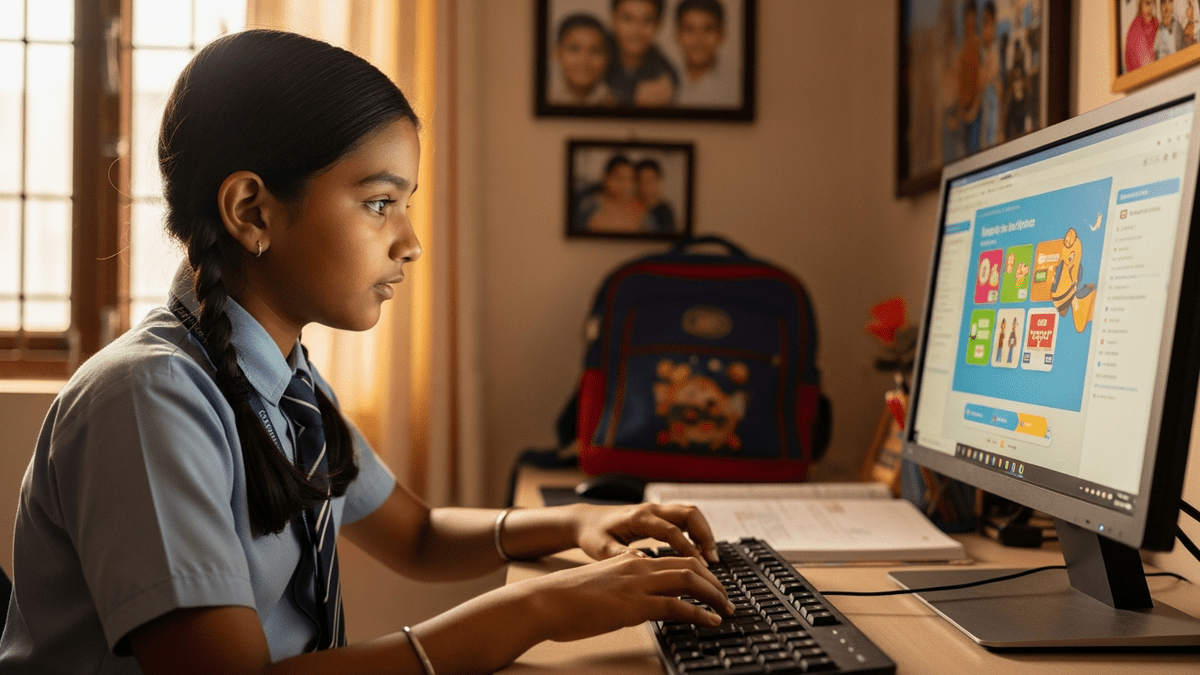
The first thing Rahul’s mother noticed after they got a computer was not his marks. It was that she stopped being asked questions at 9 pm.
Before the computer, he needed someone to hold the book, point at diagrams, and re-explain formulas. That is not a learning problem. That is what happens when a child cannot revisit what they have learned. Having their own computer gives children the ability to go back, replay, and repeat until something clicks — at their own pace, without waiting for a parent to sit down with them.
Here is what shifts inside the first few months:
- Self-revision becomes possible. Children stop waiting for explanations and start finding answers on their own.
- Project quality improves noticeably. When children research, type, and format their own work, they retain it far better than content copied from a dictated draft.
- Confidence with digital tools builds gradually. Typing, saving files, organizing folders—none of these feel difficult after three months of daily use.
- Study habits become more consistent. A dedicated computer creates a natural study routine that borrowing a phone never does.
- Digital skills develop before they become urgent. By the time competitive exams and online applications arrive, the child is already comfortable, not panicked.
But here’s the thing: none of this matters if the computer is slow, crashing, or unreliable. The child gives up. The parent gives up. The machine sits in the corner, and the gap stays exactly where it was.
That’s the real problem most families face: not the decision to buy, but knowing which computer is worth the money. See how school fee pressure relates to this decision in School Fee Hikes and the Smarter Way Forward.
How APNA PC Delivers a Home Computer for Students at ₹30,000
Most budget computers sold to Indian families fail within eighteen months. Slow startup, crashing browsers, and updates that drain what little storage remains parents end up spending more on repairs than they saved by buying cheaply. The learning stops, the frustration grows, and the device gets pushed aside.
APNA PC was built specifically to avoid this cycle.
It is a complete bundle priced at ₹30,000. Inside the box: a Mini PC with an Intel Core i3 7th Gen processor, 8GB RAM, and 128GB SSD. A monitor, keyboard, mouse, webcam, and headset are all included. No hunting for accessories. Everything a student needs is in the bundle from day one.
The system runs on Zorin OS, which is fast, stable, and requires almost no maintenance. It also comes in a Windows version for families that prefer it. Pre-loaded software includes LibreOffice for assignments, Scratch for programming practice, Blender for creative work, and Apni Prerna — a student monitoring and safety tool that lets parents track how and when the computer is being used during study hours.
The bundle comes with a 3-year warranty and full installation support. There is no extra cost after purchase.
What Rahul’s Story Tells Every Parent
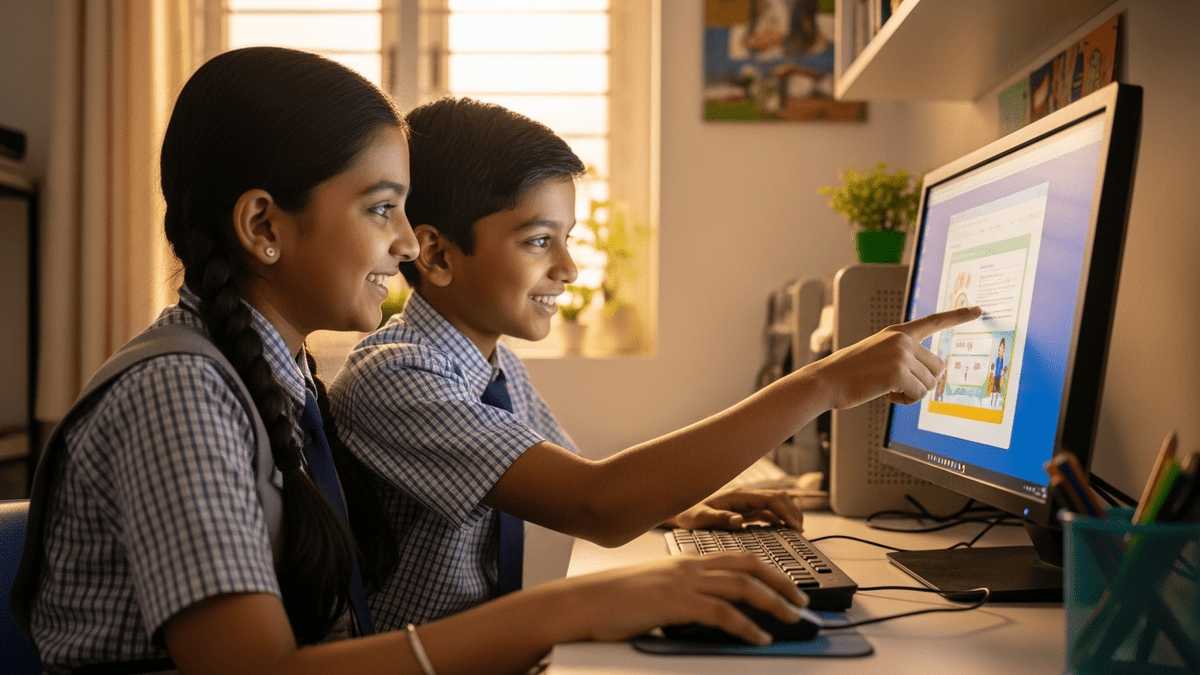
By class seven, Rahul wasn’t just completing his own assignments. He was explaining concepts to classmates over video calls. His mother didn’t change his school. She didn’t hire a tutor. She gave him a home computer for students that actually worked, and she let him use it every evening.
The school Indian children attend is not always the problem. What happens after school hours is. A child who can study independently, revise consistently, and build digital skills alongside academic knowledge has an advantage that no extra tuition class can fully replicate.
If your child is working hard but the results don’t match the effort, the answer might not be more pressure. It might simply be better access. Find out what the right setup looks like at APNA PC — affordable computer for learners.
Ready to give your child a home computer for students that does not let them down? Get APNA PC at ₹30,000 — complete bundle, 3-year warranty, everything included from day one.