
When Ravi was 11, his father brought home a second-hand laptop. It was slow, battered, and had a cracked corner. But to Ravi, it was magic. Within a week, he had figured out how to open a browser, search for tutorials, and build a simple animation in Scratch. Nobody taught him. He explored.
Ravi is now 14. He codes in Python, designs posters, and helps his classmates with digital projects. His classmates, most of whom got their first computer at 15 or 16, are still learning what he figured out at 11. The gap is not talent. It is timing.
Every Indian parent asks the same question: “When should my child get a computer?” The answer is simpler than they think. Before age 12. And the reasons are not what most people expect.
Why Age 12 Is the Critical Window
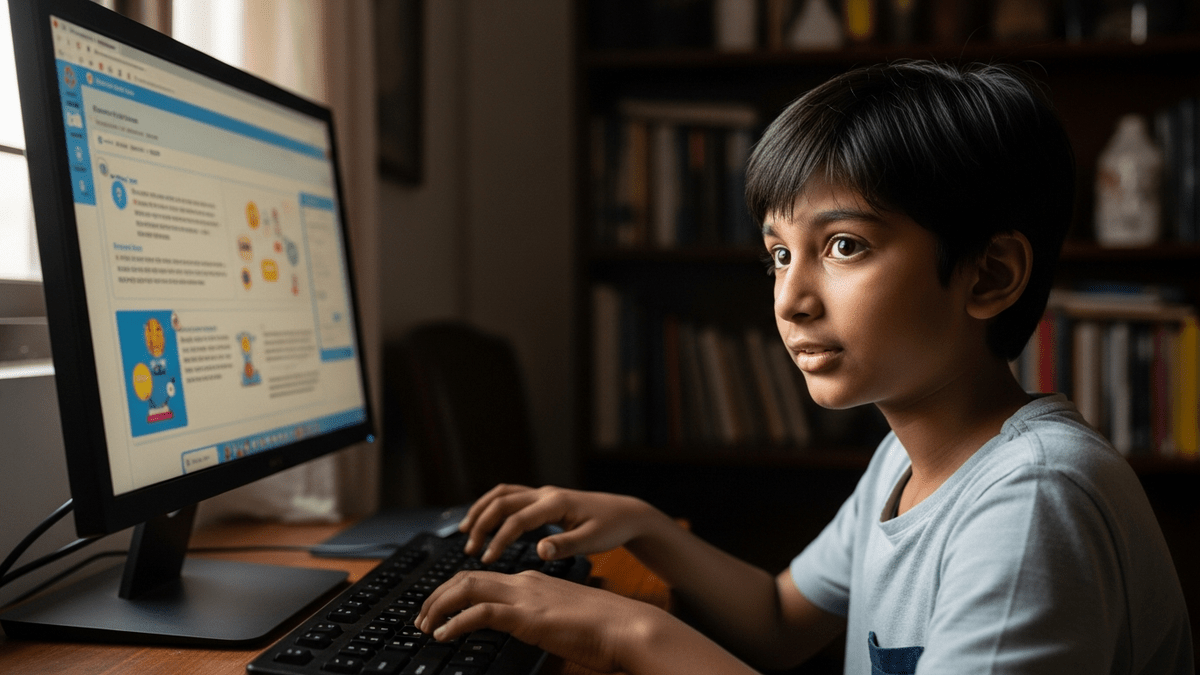
Children between 7 and 12 are in the most exploratory phase of their lives. They are curious about everything. They try new things without fear. They fail and try again without embarrassment. This is the perfect age to introduce a personal computer for students.
After 12, something changes. Peer pressure kicks in. The child becomes self-conscious. They start worrying about looking stupid. They stop exploring freely and start following what everyone else is doing. The window for effortless learning narrows.
A child who gets a computer before 12 builds familiarity during the fearless years. They learn to type, search, create, and solve problems on a screen before social anxiety makes those activities feel risky. By the time they reach their teenage years, using a computer is as natural as using a pen.
A child who gets a computer after 12 has to learn these same skills while also managing the social pressures of adolescence. The learning is slower, more stressful, and less intuitive. The same skills take twice as long to build.
What Children Actually Learn on a Computer
Most parents think a computer is for watching videos or playing games. That is because most parents have only seen children use phones. A computer is a fundamentally different tool.
On a computer, a child learns to type with all ten fingers. They learn to organise files and folders. They learn to search for information and evaluate what they find. They learn to create documents, presentations, and projects. They learn to code, design, and build.
These are not optional skills. In 2026, every school assignment, every college application, and every job requires digital fluency. The child who builds this fluency before 12 has a decade of practice before they enter the workforce. The child who starts at 16 has only a few years.
The skills go beyond the screen. A child who learns to debug code learns to debug problems in every subject. A child who learns to organise files learns to organise their thoughts. A child who learns to search for information learns to research. These thinking skills transfer to maths, science, and every other subject.
APNA PC is designed for exactly this. It comes pre-loaded with Scratch for coding, LibreOffice for documents, Blender for 3D design, and VS Code for more advanced projects. A child sits down and starts creating from day one.
The Cost of Waiting
Parents who wait are not being cautious. They are costing their child years of advantage. A child who starts at 10 has six years of practice before college. A child who starts at 15 has only three. That difference compounds over a lifetime.
The cost is not just skills. It is confidence. A child who has been using a computer for years walks into a digital task without hesitation. A child who is new to computers freezes. That confidence gap shows up in school projects, college applications, and job interviews.
Parents often worry about screen time. But screen time on a computer is different from screen time on a phone. A phone encourages passive scrolling. A computer encourages active creation. The child building a Scratch project is not wasting time. They are building skills that will serve them for decades.
APNA PC — affordable computer for students. Get APNA PC at ₹30,000.
DIKSHA — India’s national digital learning platform. UNESCO global education research.
Get APNA PC at ₹30,000 and give your child the advantage of early access. The investment is one-time. The benefits last a lifetime.