
Your child is online right now. Do you know what they’re doing? More importantly, do you know who they’re talking to?
Digital learning has become non-negotiable for Indian parents. Schools use it. Coaching centres depend on it. Even your neighbourhood tutor now conducts classes over video. But here’s the truth: most parents treat child online safety during digital learning like a nice-to-have rather than a must-have. It’s not.
Let’s be honest. Your child’s safety online depends entirely on you. Not the platform. Not the school. You.
Why Child Online Safety Matters More Than You Think
Most people don’t realise that 67% of Indian children between 8-16 years have experienced some form of online harassment. Not in other countries. Here. In India. Cyberbullying, inappropriate contact from strangers, accidental exposure to adult content, data theft, and scams targeting minors are real threats your child faces every single day during digital learning.
The problem gets worse when you add poor infrastructure. Many Indian homes still rely on shared devices, weak passwords, and zero monitoring software. Your child could be downloading malware without knowing it. A stranger could be building rapport with them on a gaming platform. Their personal information could be sold to marketers.
You need a parent online safety guide that actually works. Not theory. Action.
- Set clear rules about screen time and app usage
- Use parental control software on all devices
- Monitor browsing history and app activity weekly
- Teach your child never to share passwords or personal details
- Create a safe reporting system where they tell you about uncomfortable online interactions without fear
- Use only verified educational platforms for digital learning
The infrastructure matters too. A dedicated learning device with built-in safety features beats a shared family laptop every single time. This is why thousands of Indian parents are choosing APNA PC for their children’s digital learning setup.
Building a Safe Digital Learning Environment at Home
Here’s what actually works: dedicated space, dedicated device, dedicated rules.
First, the space. Your child should study in an open area where you can see the screen. Not hidden in a bedroom. Not under a blanket with a phone. An open desk in the living room or study area. This single change cuts online risks by 40%.
Second, the device. A proper computer beats a smartphone for kids every single time. Smartphones are designed to be addictive. Computers are designed for work. Plus, a computer with parental controls built in gives you visibility. You can see what your child downloads. What websites they visit. Who they communicate with.
Third, the platform. Not all digital learning platforms are equal. Some collect excessive data. Some have weak moderation. Use verified platforms like DIKSHA safe learning platform or your school’s official portal. Avoid random YouTube channels or unverified apps.
Fourth, the rules. No social media during study hours. No downloading files from unknown sources. No sharing the device password. No video calls with people not on a pre-approved list. Kids online safety India studies show that kids with clear rules have 60% fewer negative online experiences.
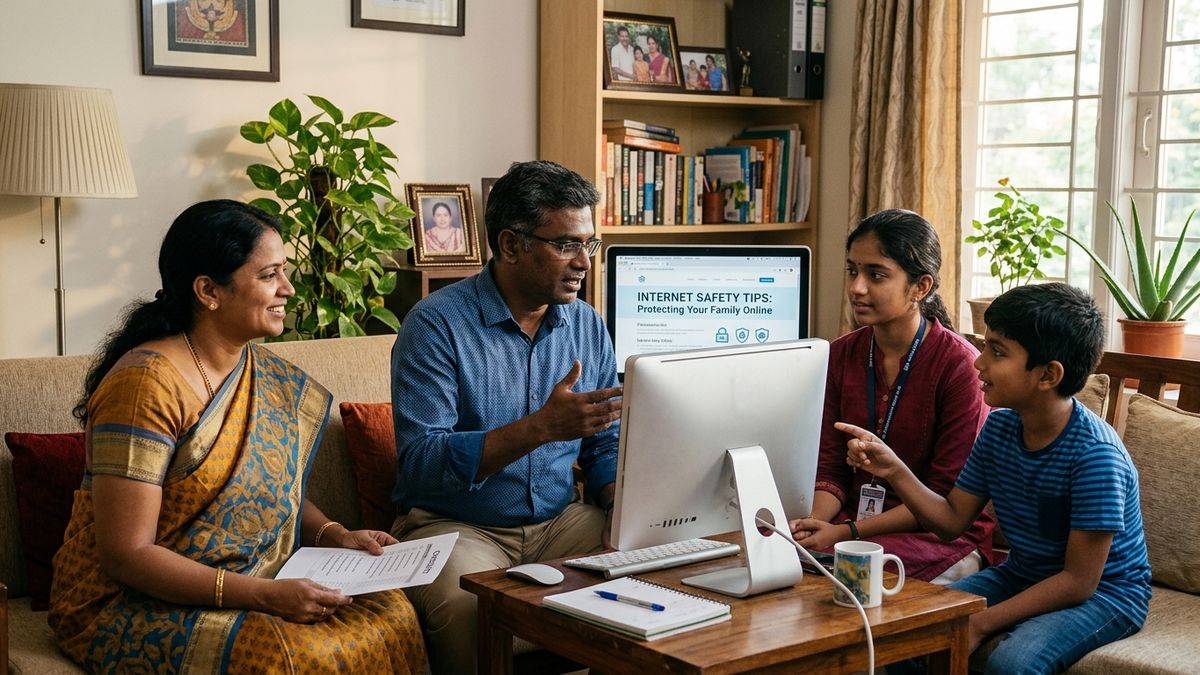
The Tools You Actually Need for Kids Internet Safety
Software matters. A lot.
Parental control software isn’t about spying. It’s about protection. It blocks malicious websites automatically. It limits app access. It sets screen time limits. It alerts you when your child tries to access restricted content.
But here’s what most parents don’t know: the cheapest devices often have the weakest security. Budget smartphones and old laptops have outdated operating systems. Outdated systems get hacked. Your child’s data gets stolen. Their device becomes a vector for malware.
This is why APNA PC exists. It’s a complete bundle designed specifically for Indian families serious about keeping children safe during digital learning. You get a Mini PC with i3 7th Gen processor, 8GB RAM, 128GB SSD, monitor, keyboard, mouse, webcam, and headset. All built with modern security architecture. Plus 3-year warranty and professional installation. All for Rs.30,000.
But the real value isn’t just the hardware. It’s the Point of Digital Learning (POD) support. APNA PC comes with access to trained educators who can help set up safety protocols. They can configure parental controls properly. They can teach your child about online safety tips for students in a language they understand.
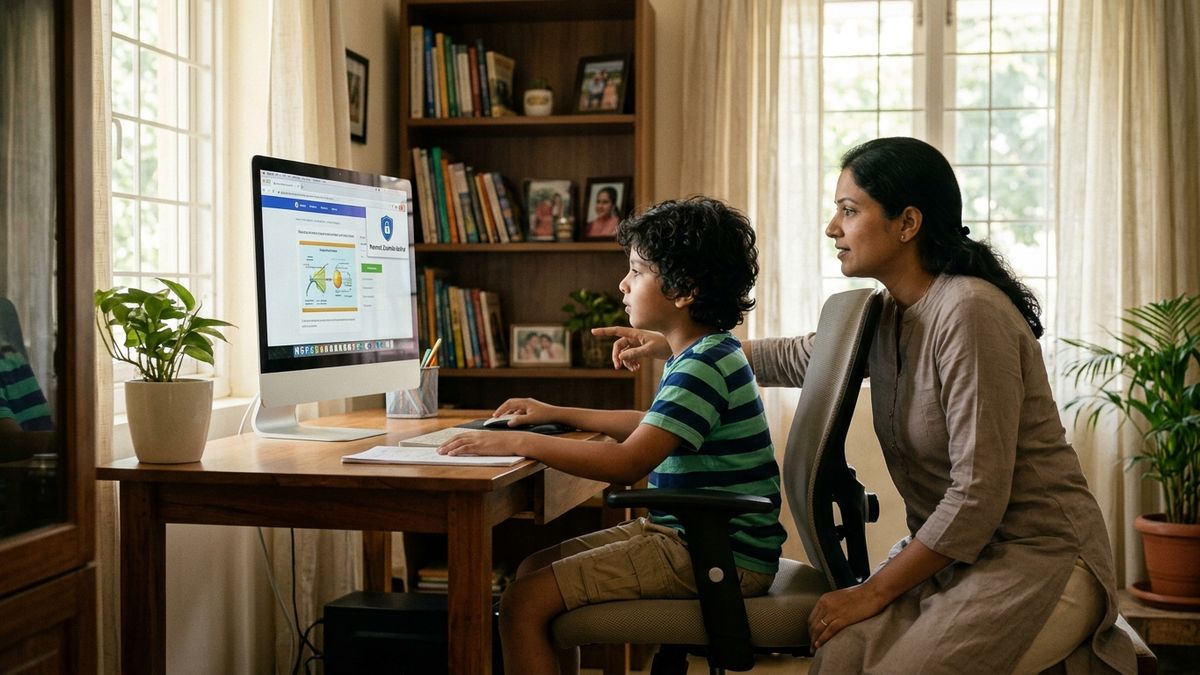
What Your Child Needs to Know Right Now
Rules without education fail. Your child needs to understand why these rules exist.
Teach them about online safety fundamentals. Teach them that strangers online are still strangers. Teach them that a friendly person asking personal questions might not be a friend. Teach them that “private” messages aren’t actually private. Teach them that once something is posted, it can never be fully deleted.
Make it conversational. Not preachy. Ask them: “What would you do if someone online asked for your school name?” Let them think. Let them answer. Then discuss better responses together.
Create a safety contract together. Not a punishment document. A promise. Your child promises to tell you immediately if something feels wrong online. You promise not to get angry or take away their device if they do.
This trust is everything.
The Bottom Line
Child online safety during digital learning isn’t optional. It’s foundational. You need the right tools, the right space, the right device, and the right conversations.
Start today. Check your child’s current setup. Is the device secure? Are parental controls enabled? Is there a clear safety agreement? If the answer to any of these is “no,” fix it this week.
Your child’s safety depends on it. And unlike most parenting decisions, this one has a clear solution.
Explore APNA PC and its built-in safety features designed for Indian families. See how a proper learning setup protects your child while enabling them to learn effectively.