Your Child’s Textbook Won’t Teach Them How to Survive 2026
Here’s the truth: A child who can recite the periodic table but can’t create a Google Form, edit a document online, or troubleshoot a basic software error is already falling behind. Digital literacy for Indian students isn’t a nice-to-have skill anymore. It’s the foundation everything else sits on.
Most people don’t realise that why digital literacy matters has shifted from “useful” to “essential” in just five years. Schools are still teaching the same way they did in 2010. Meanwhile, jobs, college applications, and even basic banking now demand digital skills Indian students need to master before they even graduate.
Let’s be honest: if your child, your students, or you yourself haven’t developed real digital competence, you’re watching the world move faster while standing still.
Why Digital Literacy Is Beating Textbooks
A printed textbook is static. It doesn’t update. It doesn’t respond. It doesn’t teach your child how to navigate a world that changes every month.
Meanwhile, Digital literacy means something specific: the ability to find, evaluate, create, and communicate information using digital tools. This isn’t about knowing how to turn on a computer. It’s about thinking digitally.
Consider what your child actually needs:
- Online research skills that go beyond Google (evaluating sources, spotting misinformation)
- Basic coding logic to understand how systems work
- Video creation and presentation skills for assignments and job interviews
- Cybersecurity awareness to protect themselves online
- Spreadsheet and data analysis basics for any technical role
None of these are taught in traditional textbooks. Yet employers expect them. Universities assume them. Life demands them.
The gap between what schools teach and what the world needs isn’t closing. It’s widening.
Who’s Being Left Behind in Digital Literacy
Indian students from tier-2 and tier-3 cities, rural areas, and lower-income households have one massive disadvantage: access. Not to textbooks. To computers. To proper instruction in digital skills India desperately needs.
A student in Delhi might have access to computer labs and online resources. A student in a small town in Madhya Pradesh or Bihar? Often not. This isn’t fair. And it’s not sustainable.
The Digital India initiative has made progress, but the real gap isn’t infrastructure anymore. It’s quality education delivered by trained teachers who understand both the technology and how to teach it.
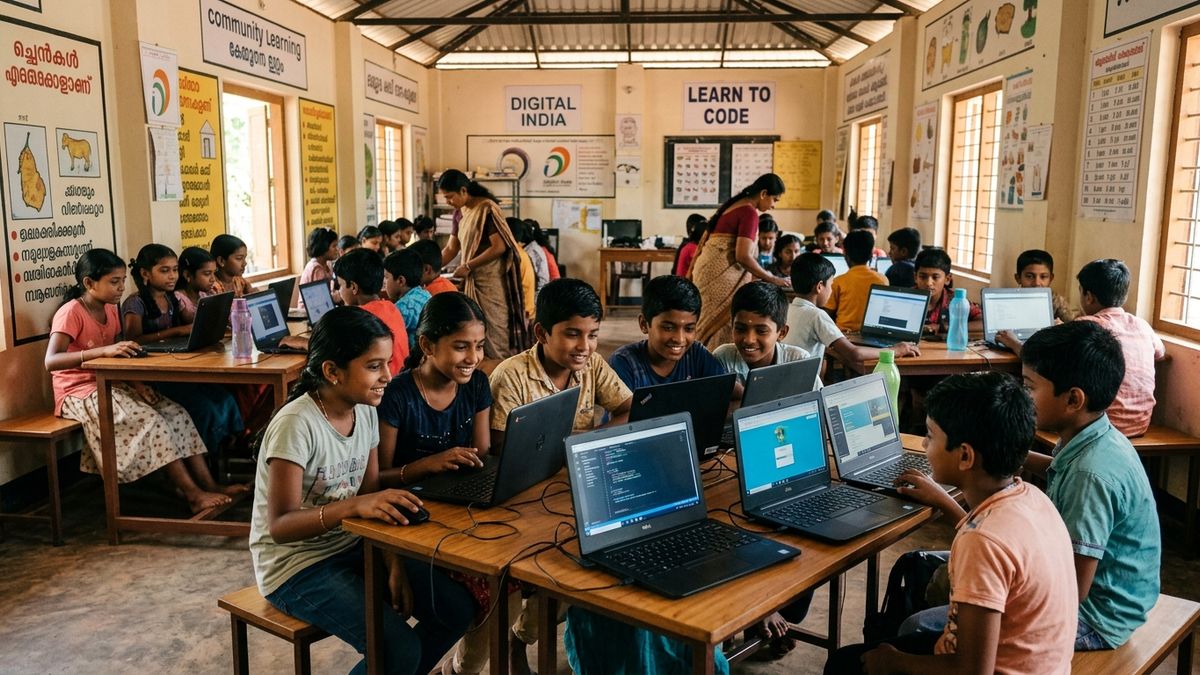
That’s where POD (Point of Digital Learning) comes in. A community learning centre run by a trained educator can serve 20-30 students in a neighbourhood. No fancy building needed. Just the right setup and the right person teaching.
Computer Education Schools Are Getting It Wrong
Many schools treat computer education like they treat everything else: as a subject to finish, a box to tick, an exam to pass.
Students memorize commands. They learn outdated software versions. They forget everything by next year.
Real digital literacy education looks different. It’s hands-on. It’s project-based. It teaches problem-solving, not memorization. It makes students creators, not just users.
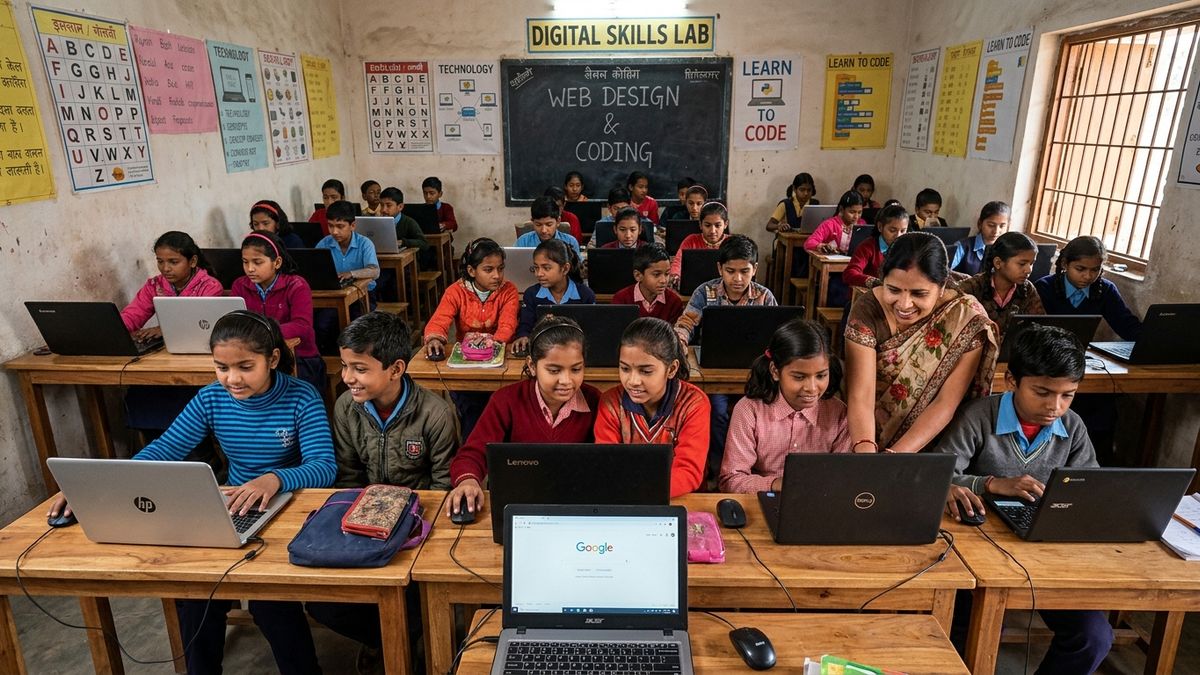
When a student builds a simple website, debugs code, creates a digital marketing campaign, or learns to protect their own data, something clicks. They’re not learning “computer” anymore. They’re learning to think.
What Actually Works for Digital Literacy
Let’s stop pretending that expensive coaching centres or one-size-fits-all online courses work for everyone. They don’t.
What works is this combination:
- Quality hardware that doesn’t crash (so students actually learn instead of fighting with the machine)
- Curriculum designed for Indian students with Indian context and examples
- A trained educator who can teach, not just show videos
- Accountability and real support, not abandonment
That’s why we created APNA PC. Rs.30,000 complete bundle. Mini PC (i3 7th Gen, 8GB RAM, 128GB SSD), monitor, keyboard, mouse, webcam, headset, education software, 3-year warranty, and installation. Not a toy. A real machine for real learning.
Pair this with a POD run by a trained educator in your neighbourhood or community, and you’ve got a system that actually works.
Why Homemakers, Senior Citizens, and Teachers Should Care
If you’re a homemaker wanting to earn: digital skills are your ticket. You can run a POD from home, teach neighbourhood kids, and build a real income. Your investment in APNA PC pays for itself in three months.
If you’re a senior citizen: learning digital skills isn’t about staying “relevant” (we hate that word). It’s about independence. Managing your own finances, staying connected with family, accessing services. You deserve to learn without condescension.
If you’re a tuition teacher or edupreneur: your students are falling behind because textbooks aren’t enough. Add digital literacy to what you offer, and you’re not just teaching. You’re future-proofing them.
The Real Question
In 2026, the question won’t be “Does your child know digital literacy?” It’ll be “Why didn’t they learn it earlier?”
Start now. Get an APNA PC. Set up a POD. Teach. Earn. Change lives in your community.