
Parent Engagement Tips for Learning Pod Success
Your child’s learning pod will fail without you. Not because the educator isn’t qualified. Not because the curriculum is weak. It fails because parents treat it like a babysitting service and check out mentally. Here is the truth: parent engagement in learning pods directly determines whether your child thrives or merely passes time.
Learning pods have exploded across India. Homemakers are running them from spare rooms. Senior citizens are mentoring batches of five to eight students. Tuition teachers are converting their one-on-one model into small group PODs (Points of Digital Learning). But the ones succeeding wildly? They have parents who are actively involved. Not hovering. Not interfering. Involved.
Most people don’t realise that parent involvement education transforms a learning pod from a cost centre into a genuine learning ecosystem. When parents engage properly, children show 30-40% better retention. They complete homework without nagging. They ask better questions in class. They actually want to come back.
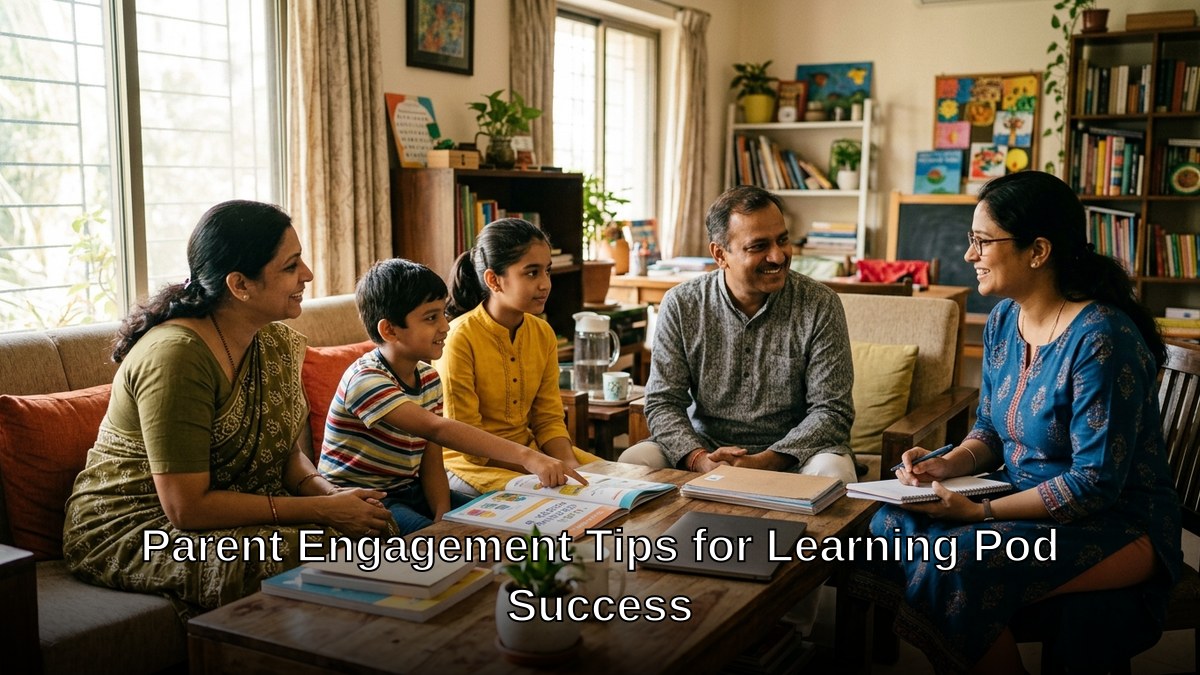
Start With Clear Communication Channels
Lets be honest: most learning pods fail at communication. The educator sends a WhatsApp message about progress. Parents ignore it. A child misses a class. Nobody knows why. Confusion builds. Trust erodes.
Set up a structured communication system from day one. This isn’t complicated.
- Weekly progress updates (fixed day, fixed time, no exceptions)
- A shared document showing what was covered in class and what needs revision at home
- Monthly parent-teacher meetings (even if it’s 30 minutes over video call)
- A clear escalation path for concerns (not random messages, but scheduled conversations)
If you’re running a learning pod, this is non-negotiable. If you’re a parent, demand this clarity. Don’t accept vague feedback like “he’s doing fine.” Ask specific questions. What topics did he struggle with? What homework should I focus on? When should we expect improvement?
Parent engagement learning pods thrive on transparency. The educator knows exactly what parents expect. Parents know exactly what their child is learning. No surprises. No disappointments.
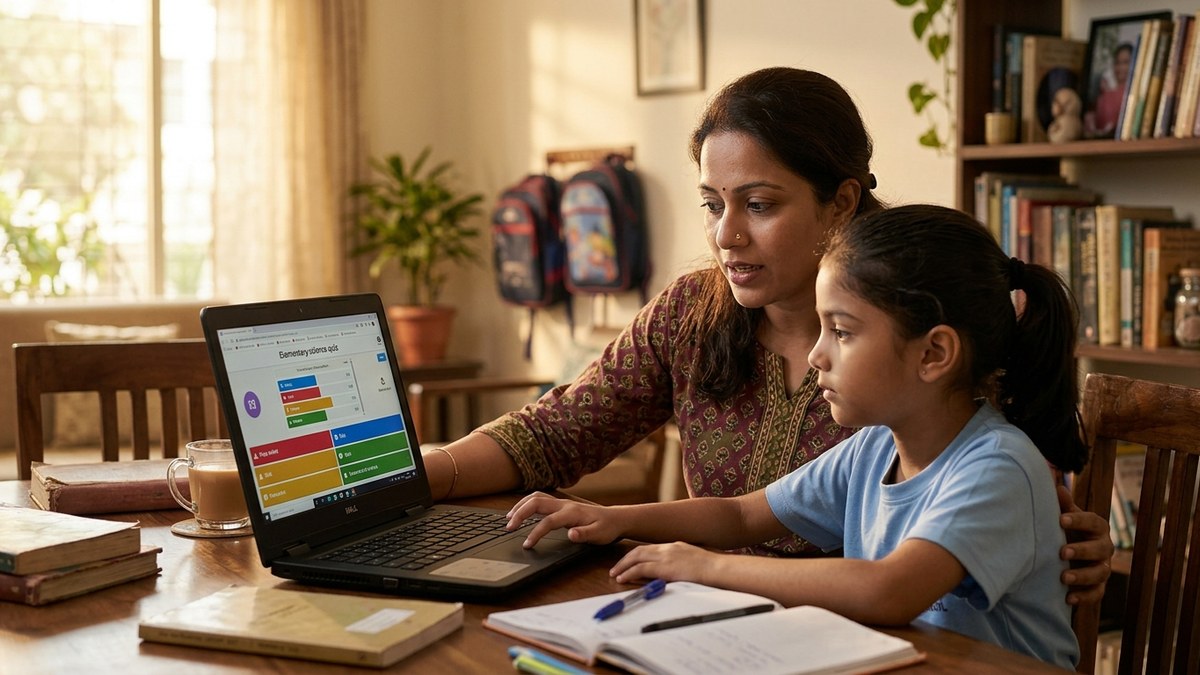
Create a Home Learning Environment That Reinforces the Pod
Here’s what separates successful learning pod students from mediocre ones: what happens at home after class ends.
The pod educator teaches for 90 minutes. Then the child goes home. If parents just let them watch YouTube and play games, you’ve wasted the pod investment. If parents create a simple reinforcement routine, you’ve multiplied it.
This doesn’t mean hiring a tutor or spending hours drilling. It means:
- 15 minutes of homework review every evening (parent sits with child, asks questions, doesn’t give answers)
- Reading the weekly progress sheet together
- Celebrating small wins loudly and publicly
- Asking the child to explain what they learned today (this is powerful)
- Limiting screen time on pod days so the child has mental energy
Most people don’t realise that children learn more from how parents respond to their learning than from the actual teaching. If a parent asks “How was class?” and listens to the answer, the child internalises that learning matters. If a parent scrolls through their phone while the child talks, the child learns that learning doesn’t matter.
Learning pod success tips always include this: your home is the second classroom.
Build a Community Among Pod Families
Isolated parents make disengaged parents. Connected parents become advocates.
Create a parent WhatsApp group (or Telegram if you prefer). But don’t let it become a gossip channel. Set clear norms. Share study tips. Celebrate achievements. Discuss challenges. When one parent finds a solution to homework struggles, share it with everyone.
Host a monthly parent gathering. Coffee and conversation. 45 minutes. Let parents meet each other’s children. Let the educator answer questions in a relaxed setting. Let parents understand that they’re part of a community, not isolated customers.
Parents who feel connected to other pod families are 5x more likely to stay committed. They’re also more likely to refer friends and family.

Use Technology Smartly to Track Progress
You don’t need expensive software to track parent engagement in learning pods. But you need something systematic.
Share a simple Google Sheet with parents showing:
- Topics covered each week
- Homework completion rates
- Assessment scores
- Areas needing improvement
- Next week’s focus areas
Parents can see this anytime. No surprises at the end of the month. They know exactly where their child stands. They can ask targeted questions. They can support learning at home with precision.
If you’re an edupreneur or tuition teacher scaling your learning pod, consider investing in a proper setup. A system like APNA PC (Rs.30,000 complete bundle with education software, Mini PC i3 7th Gen, 8GB RAM, 128GB SSD, monitor, keyboard, mouse, webcam, headset, 3-year warranty and installation) gives you the infrastructure to run professional learning pods. Better tracking. Better communication. Better parent engagement. Better outcomes.
Here is the truth: parents respect educators who use technology professionally. It signals that you’re serious about their child’s education.
Set Clear Expectations and Boundaries
Lets be honest: some parents want to micromanage. Some want to ignore completely. You need middle ground.
In your first meeting, be explicit:
- Parents are responsible for ensuring regular attendance
- Parents must create a distraction-free study space at home
- Parents must complete assigned homework review
- Parents should not interfere with teaching methods or curriculum
- Parents will receive honest feedback, even if it’s uncomfortable
This isn’t harsh. This is professional. Parents who understand boundaries are parents who stay engaged appropriately.
If you want to deepen your knowledge about learning theory and research, check Learning research on Wikipedia. You can also explore UNESCO global education research for additional perspectives on how parent engagement shapes learning outcomes.
For more structured guidance on building your learning pod model, read our complete microschool guide. If you’re ready to launch, here’s how to start your teaching business from home.
The Bottom Line
Parent engagement in learning pods isn’t a nice-to-have. It’s the difference between success and failure. It’s the difference between a child who loves learning and a child who tolerates it.
Most people don’t realise that parents are more powerful than any curriculum or teaching method. When parents believe in the pod, show up consistently, and reinforce learning at home, everything changes.
Ready to launch a learning pod with serious parent engagement? Start your learning pod today and build a community that actually works.