Homeschooling in India is Legal. But Most Parents Don’t Know the Rules.
Your child doesn’t have to sit in a classroom to get a valid education in India. Yet thousands of Indian parents abandon homeschooling plans because they believe it’s illegal or that their child won’t get recognized certificates. Here is the truth: homeschooling India legal framework exists. It’s just not advertised by schools that want your fees.
If you’re an Indian homemaker, senior citizen, tuition teacher, or edupreneur considering homeschooling or starting a learning pod, you need to understand the actual rules. Not the myths. Not the fear. The facts.
What the Law Actually Says About Home Education in India
Let’s be honest: India’s education system is built around schools. The Right to Free and Compulsory Education (RTE) Act, 2009 mandates that children aged 6-14 receive education. But it doesn’t say the education must happen in a brick-and-mortar school.
The RTE Act requires education. It doesn’t mandate institutional schooling. Your child can learn at home, in a community learning centre, or through a POD (Point of Digital Learning) as long as the learning is structured, documented, and meets curriculum standards.
Here’s what you need to know:
- Homeschooling is not explicitly banned in India
- The Ministry of Education recognizes home-based learning as valid
- Your child must follow a recognized curriculum (CBSE, ICSE, State Board, or equivalent)
- Annual exams and board certifications remain the same whether you homeschool or attend traditional school
- Documentation of learning progress is essential for legal compliance
Most people don’t realise that homeschool laws India actually give parents significant freedom. You’re not breaking any rule by teaching your child at home. You’re exercising a right that the law permits.
The Curriculum Question: What Must Your Child Study?
Here’s where many parents get confused. You can homeschool, but you can’t teach whatever you want and expect recognition.
Your child must follow a recognized curriculum. In India, this means:
- CBSE curriculum and board exams
- ICSE curriculum and board exams
- State Board curriculum and exams
- International curricula (IB, Cambridge) if affiliated with recognized centers
Your homeschooled child can take board exams as a private candidate. They’ll sit the same exam as school students. They’ll get the same certificate. This is where home education rules India become crystal clear: the output (the certificate) is identical. Only the delivery method changes.
You need structured learning materials, a proper study space, and ideally, guidance from someone trained in education. This is why many parents are now setting up PODs (Points of Digital Learning) in their homes or communities, combining homeschooling flexibility with professional oversight.
Attendance Records and Documentation: The Legal Shield
Here’s the part that protects you legally. Keep records.
Schools maintain attendance records. When you homeschool, you become the record keeper. Document:
- Daily study schedule and subjects covered
- Books and materials used
- Monthly progress assessments
- Periodic tests aligned with curriculum
- Any external coaching or tuition taken
Why? Because if anyone questions whether your child is receiving education, these records prove compliance with home education rules India. They show that learning is happening systematically, not haphazardly.
Many parents use learning management systems or simple notebooks. The format doesn’t matter. Consistency and completeness do.
Comparing Homeschooling vs Traditional School: The Real Differences
Before committing to home education, understand what you’re choosing. Check out our detailed comparison on homeschooling vs traditional school to see how learning outcomes, socialization, and costs actually compare.
The legal status is the same. The experience is different. Know the difference before you decide.
Setting Up a POD: The Hybrid Approach
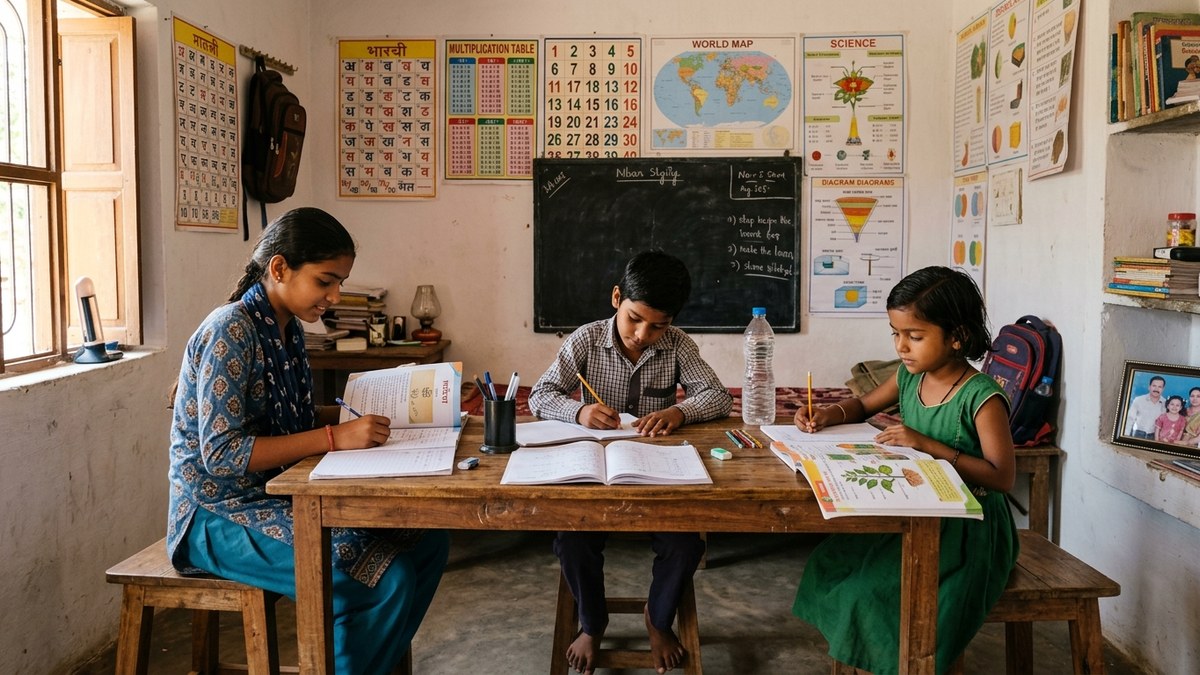
Not all parents want solo homeschooling. Many prefer a Point of Digital Learning (POD) model: a community learning centre run by a trained educator where 5-15 children learn together using structured curriculum and technology.
A POD is still homeschooling legally. It’s just shared. And it works brilliantly for edupreneurs and senior citizens who want to contribute to education without formal school infrastructure.
When setting up a POD, the same legal rules apply. Follow recognized curriculum. Keep records. Prepare students for board exams. Learn more about study habits at home learning pod to ensure your center maintains academic standards.
The Technology You Actually Need
Homeschooling or running a POD requires basic infrastructure. A good computer, reliable internet, and educational software make a massive difference.
This is why many educators and parents invest in APNA PC. A complete bundle at Rs.30,000 includes education software, 3-year warranty, installation, and hardware (Mini PC i3 7th Gen, 8GB RAM, 128GB SSD, monitor, keyboard, mouse, webcam, headset). Everything you need to run structured digital learning at home or in a learning pod.
Technology isn’t optional anymore. It’s the backbone of modern homeschooling in India.
Your Next Step
Homeschool laws India are clear if you know where to look. You have the legal right to educate your child at home. You have the responsibility to do it properly.
According to school system research, alternative education models are growing worldwide. If you’re ready to start a learning pod or formalize your homeschooling setup, we can help. Start your learning pod journey here and join hundreds of Indian educators creating alternatives to traditional schooling.
The future of education in India isn’t just schools. It’s homes. It’s communities. It’s parents and educators taking control.
Are you ready?