
The Hard Truth: Your Child Is Already Behind
Here is the truth: If your child hasn’t started learning coding before college, they’re competing with one hand tied behind their back. Not because coding is a magic skill. But because every competitive entrance exam, every tech internship, every high-paying job now assumes basic programming knowledge. The Indian education system hasn’t caught up. Colleges haven’t caught up. But employers have. And that gap is where your child gets left behind.
Most people don’t realise that learning coding before college India isn’t about becoming a software engineer. It’s about survival in a job market that’s moving faster than our school syllabi. When your child applies for a data science role, a business analytics position, or even a finance job at a startup, they’ll be asked about coding. Not as a bonus. As a baseline.
Why Student Coding Skills Matter Right Now
Let’s be honest: the traditional path isn’t working anymore. Your child studies for board exams, scores well, gets into college, and then realises they’re three years behind their peers who started coding in 9th grade.
Here’s what happens when student coding skills start early:
- Problem-solving becomes a habit, not a subject to memorise
- Logic and reasoning improve across all subjects, including math and physics
- Confidence builds because they’re creating real things, not just answering questions
- College applications and entrance exams suddenly have a standout differentiator
- They understand how technology actually works instead of just consuming it
The students who learn coding early don’t just score better. They think differently. They break problems into smaller pieces. They iterate. They fail fast and learn faster. These are the exact skills that colleges and companies are desperate for.
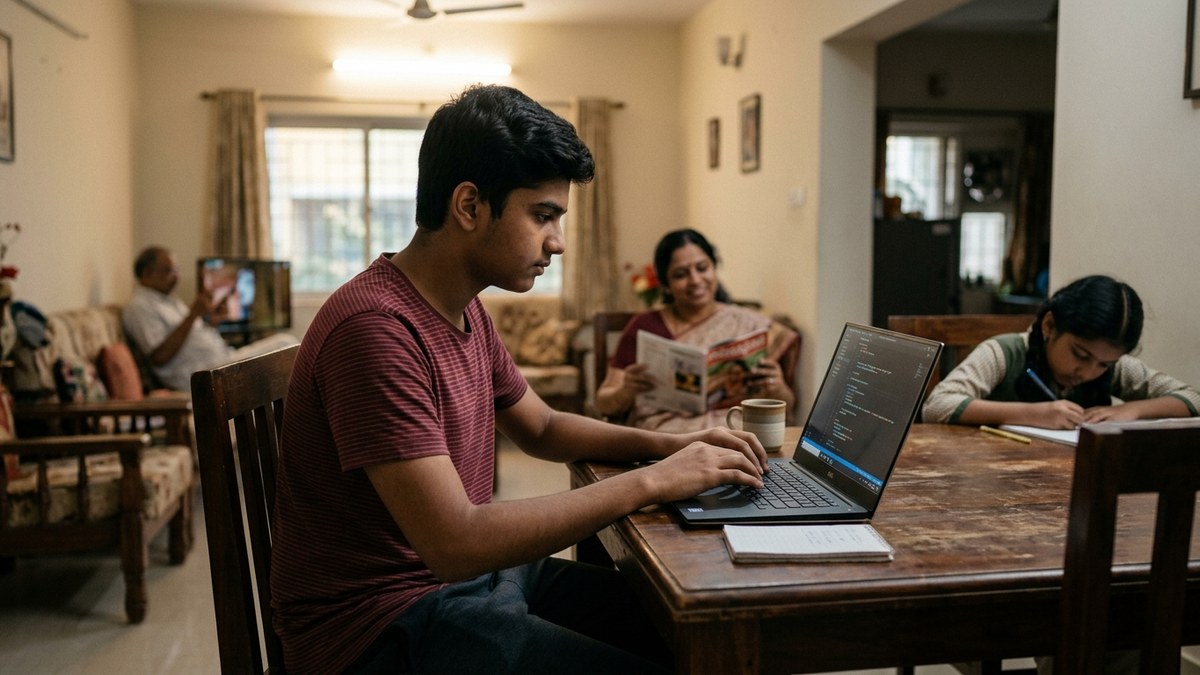
Look at the numbers. According to the India Ministry of Education, coding is now part of the revised curriculum. But implementation is slow. Schools are still figuring it out. Meanwhile, private platforms, coding bootcamps, and home learning centres are already producing students who can code. Your child can’t wait for the system to catch up.
The Real Barrier: Access and Cost
Most parents want their children to learn coding. They know it matters. But they hit a wall immediately. Good coding education requires a computer. Not just any computer. One that runs coding software smoothly, has enough RAM, doesn’t lag, and doesn’t frustrate a beginner into quitting.
Then there’s the cost of coaching. Private institutes charge 5,000 to 15,000 rupees per month. Online platforms want subscriptions. And most importantly, there’s no structured path that connects coding education to actual career outcomes.
This is where the problem sits. Not in motivation. Not in interest. In access.
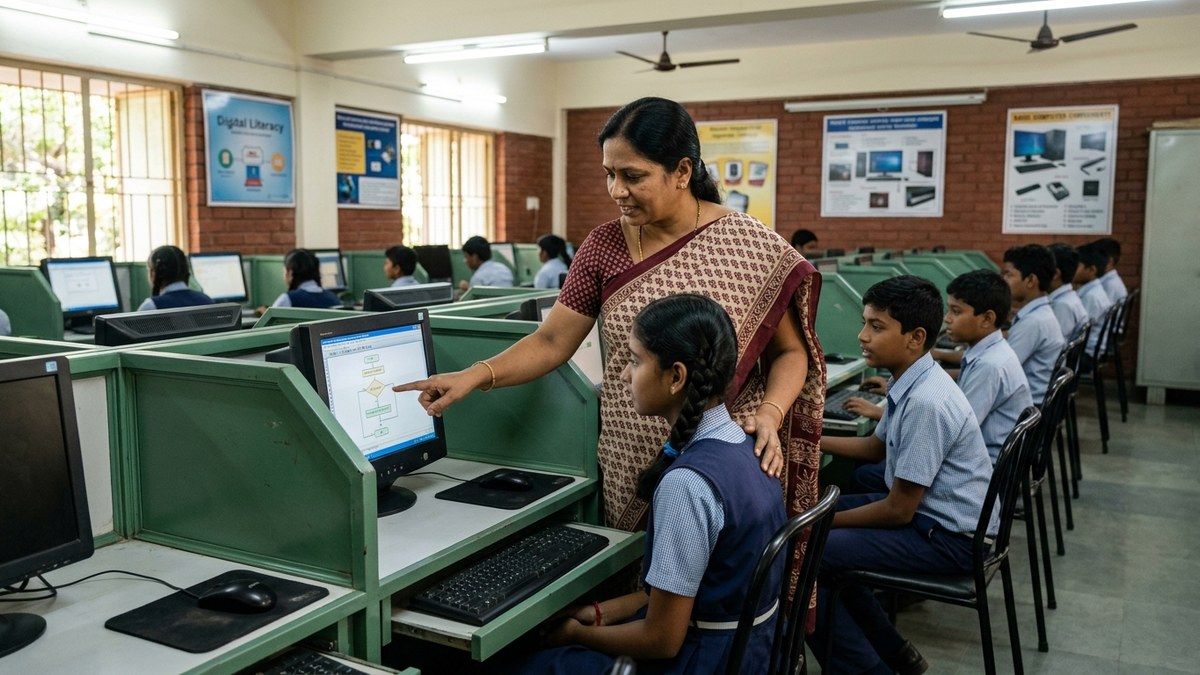
That’s why APNA PC exists. It’s not just a computer. It’s a complete learning solution built for Indian families and educators. For Rs.30,000, you get everything: a mini PC with i3 7th Gen processor, 8GB RAM, 128GB SSD, monitor, keyboard, mouse, webcam, headset, plus education software and 3-year warranty with installation. No hidden costs. No monthly fees.
More importantly, APNA PC works with the Point of Digital Learning model. That means your child can learn at home or at a community learning centre run by a trained educator. Not in an expensive coaching institute. Not in a crowded classroom where the teacher is teaching 40 kids at once.
How This Changes Everything for Your Child
When your child starts learning coding early, several things shift. First, they stop being passive consumers of technology. They become creators. They understand that apps, websites, and software are built by people who know how to code. That realisation alone changes their confidence.
Second, they develop digital literacy skills that go beyond just knowing coding syntax. They learn about data, logic, debugging, and systematic thinking. These skills apply everywhere. In math. In science. In how they approach any problem.
Third, they get ahead in college admissions. When they write their admission essay or appear for interviews, they have something real to show. Not just grades. Actual projects. Code they’ve written. Problems they’ve solved.
And finally, they’re prepared for a job market that’s already here. Understanding computer programming basics is no longer optional. It’s expected. And the students who started early will have the advantage.
You’ve probably also heard about how AI is changing learning. Coding skills become even more critical in an AI-driven world. Your child needs to understand not just how to use AI tools, but how they work underneath. That requires coding knowledge.
What Parents and Teachers Can Do Today
If you’re a parent: Stop waiting for the school to teach coding. It’s not happening fast enough. Start your child with a structured program at home or at a local learning centre. Give them the right tools. APNA PC is designed exactly for this. It removes the equipment barrier that stops most families from even trying.
If you’re a teacher or edupreneur: This is your moment. Parents are looking for someone they trust to teach their children coding. If you set up a Point of Digital Learning centre with APNA PC, you’re not just running a tuition class. You’re giving Indian students a real skill that employers actually want.
If you’re a student reading this: You already know this matters. You’ve seen your older siblings or friends struggle in college because they didn’t start early. Don’t be that person. Start now. The best time to plant a tree was 20 years ago. The second best time is today.
Your action step is simple. Get APNA PC today and start your coding journey. Not next month. Not after board exams. Now. Every month you wait is a month your peers are getting ahead.
The future belongs to people who can code. Let’s make sure your child is one of them.