
Your Grandmother Doesn’t Need to Stay Left Behind
Here’s the truth: digital literacy isn’t a luxury in rural India anymore. It’s survival. By 2026, the gap between those who can navigate digital tools and those who can’t will determine who gets access to government benefits, healthcare information, banking services, and income opportunities. Most people don’t realise that a 60-year-old homemaker in a village has the same right to financial independence as a city professional. The only difference? Access to proper digital literacy rural India training.
This isn’t about learning to scroll Instagram. This is about dignity. Control. Real income.
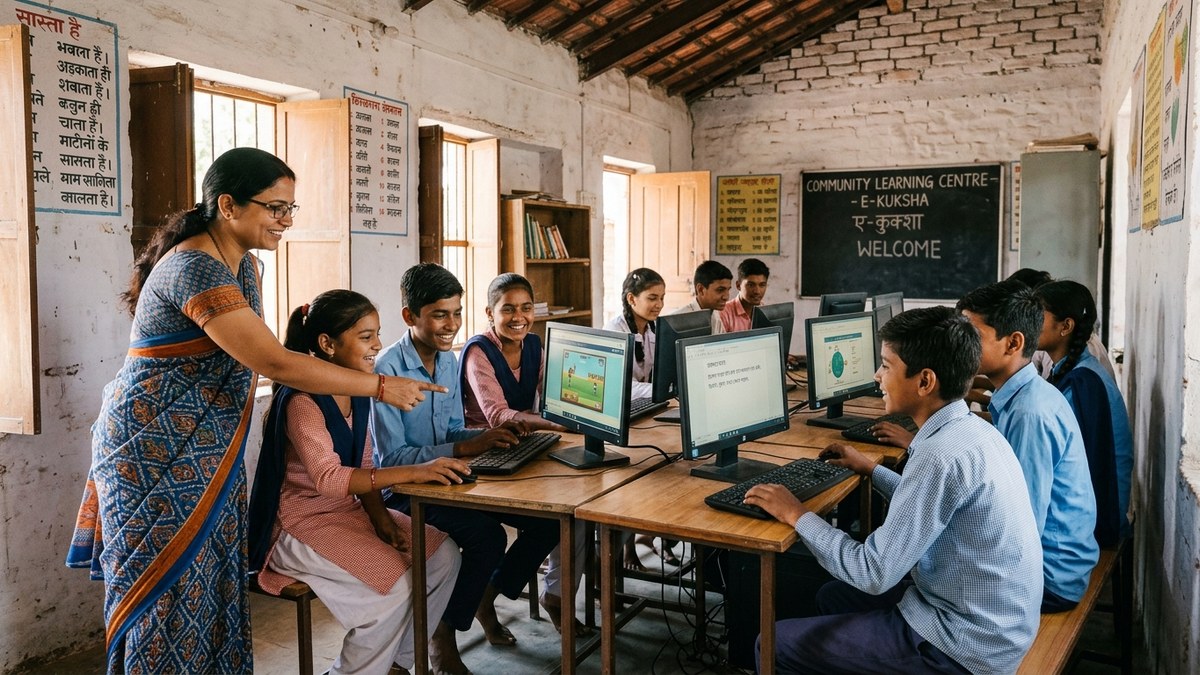
What Rural Digital Skills Actually Mean in 2026
Let’s be honest: when we talk about rural digital skills, we’re talking about practical abilities that solve real problems. Not theoretical knowledge. Not buzzwords.
- Basic computer operation – turning on a device, using a mouse, understanding folders and files. Sounds simple? Ask a 55-year-old who’s never touched a keyboard.
- Internet navigation – finding information, understanding what’s safe and what’s a scam, using search engines effectively.
- Government portals and digital payments – accessing Aadhaar services, using UPI, understanding digital banking. This directly impacts pensions, rations, and healthcare access.
- Online safety and fraud awareness – recognising phishing, protecting personal data, understanding digital rights.
- Basic productivity tools – using spreadsheets for household budgets, creating documents, understanding email communication.
- Income generation skills – online selling, digital marketing basics, content creation. These turn digital literacy for homemakers into actual earnings.
The Digital literacy foundation starts with confidence. Most rural learners have been told they’re “too old” or “not technical enough.” That’s nonsense. The brain doesn’t stop learning at 40 or 60. It stops learning when we stop trying.
Why Village Computer Education Matters Right Now
The Digital India initiative has brought internet connectivity to villages. But connectivity without skills is like giving someone a car without teaching them to drive. Village computer education bridges that gap.
A trained educator running a Point of Digital Learning (POD) from home or a community centre can teach 15-20 students weekly. That’s 15-20 people gaining access to government schemes they couldn’t navigate before. That’s 15-20 people who can help their children with online classes. That’s 15-20 people who can start small online businesses.
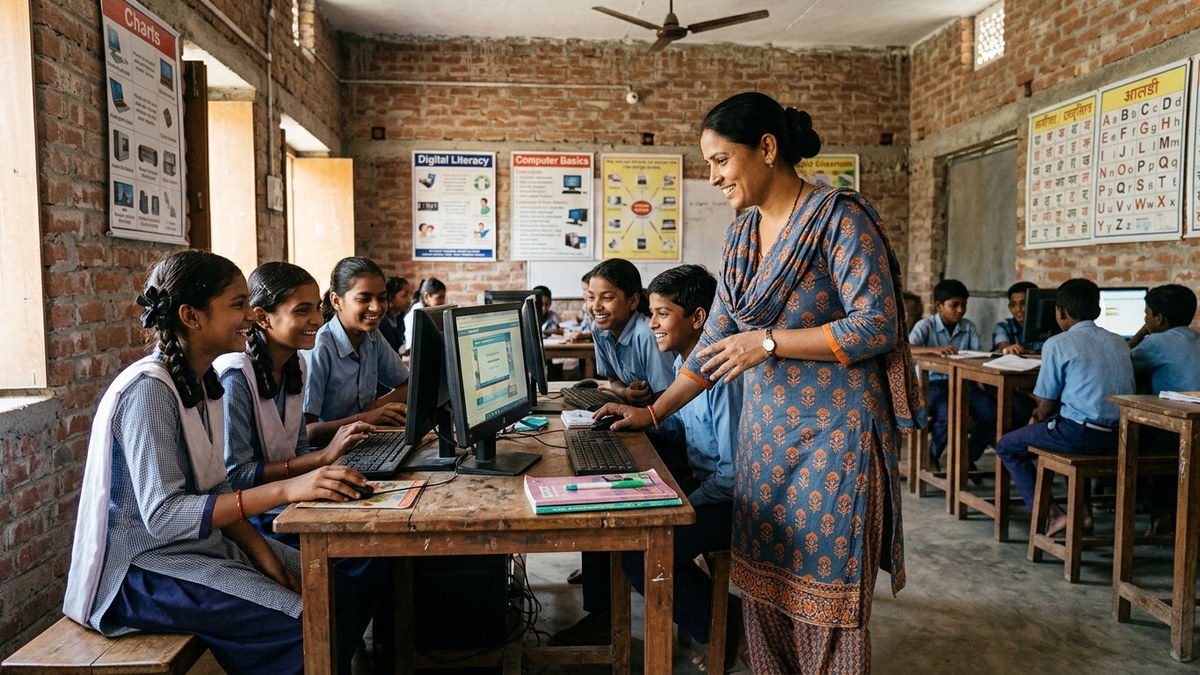
The impact multiplies. One trained homemaker teaches her mother-in-law. A retired teacher becomes a tuition educator and adds digital skills to her curriculum. An edupreneur sees an opportunity and starts a computer coaching centre that transforms her neighbourhood.
This is already happening. It’s just not happening fast enough.
The Real Barrier Isn’t Willingness. It’s Access.
Most people don’t realise that rural educators want to teach digital skills but don’t have the right setup. A decent computer costs 40,000-50,000 rupees. Educational software licenses cost more. Installation and support add up. For someone earning 15,000 rupees monthly, this is impossible.
That’s why APNA PC exists. At Rs.30,000, it’s a complete bundle. Not just hardware. A full ecosystem designed for rural Indian learning contexts.
What’s included: Mini PC with i3 7th Gen processor, 8GB RAM, 128GB SSD, monitor, keyboard, mouse, webcam, headset, education software, 3-year warranty, and professional installation. This isn’t a compromise. This is exactly what a POD needs to serve 20-30 students weekly with zero technical headaches.
One APNA PC can train 500-600 people annually. Do the math. That’s real scale.
Who Should Be Teaching Digital Literacy in Villages
Not tech companies. Not outsiders. People from the community. People who understand the language, the concerns, the context.
A homemaker who learns digital skills can earn 8,000-15,000 rupees monthly teaching neighbours. A retired teacher can add 10,000-20,000 rupees to her pension. A young edupreneur can build a sustainable business. These aren’t fantasies. These are documented outcomes from PODs already running across rural India.
The only requirement? Access to proper equipment and curriculum. Everything else is already there: the willingness, the need, the market demand.
2026 Isn’t Far Away
In two years, the digital divide in rural India will be even sharper. More services will move online. More jobs will require basic computer skills. More government schemes will require digital access. The question isn’t whether your community needs digital literacy. The question is whether it will have it.
The answer depends on whether someone in your village decides to act today. That someone could be you. Whether you’re a homemaker looking for income, a teacher wanting to expand your impact, or an edupreneur building something bigger, the path is clear. Set up a POD. Get an APNA PC. Start teaching. Change lives.
The tools exist. The need is real. The time is now.
Start your POD today and bring digital literacy to your community.