
Your child’s grades depend less on school quality and more on what happens at your dinner table.
Here’s the truth: parent involvement in education isn’t a nice-to-have luxury for affluent families. It’s the difference between a child who struggles and one who thrives. In India, where millions of children attend under-resourced schools, parent engagement in learning pods and home learning environments has become non-negotiable.
Most people don’t realise that a parent’s involvement directly correlates with academic performance, confidence, and long-term success. Yet many Indian parents still believe education happens only in classrooms. That belief is costing your children years of potential growth.
The Parent Involvement Reality Check
Let’s be honest: Indian schools are overwhelmed. A single teacher manages 50-60 students. Your child gets minutes of individual attention per day. The homework your child submits gets glanced at, not thoroughly reviewed. The doubts that pile up during class rarely get addressed.
When parents step in, everything changes. Studies on Education in India consistently show that children with engaged parents score 15-20% higher on assessments. They develop better study habits. They ask better questions. They see learning as a shared family value, not a punishment.
Parent involvement in education means:
- Daily conversations about what your child learned
- Creating a dedicated study space at home
- Reviewing assignments and identifying weak areas
- Encouraging questions instead of just answers
- Being present during learning, not just financially present
This isn’t about hiring expensive tutors. It’s about showing up.
Why Indian Families Are Uniquely Positioned
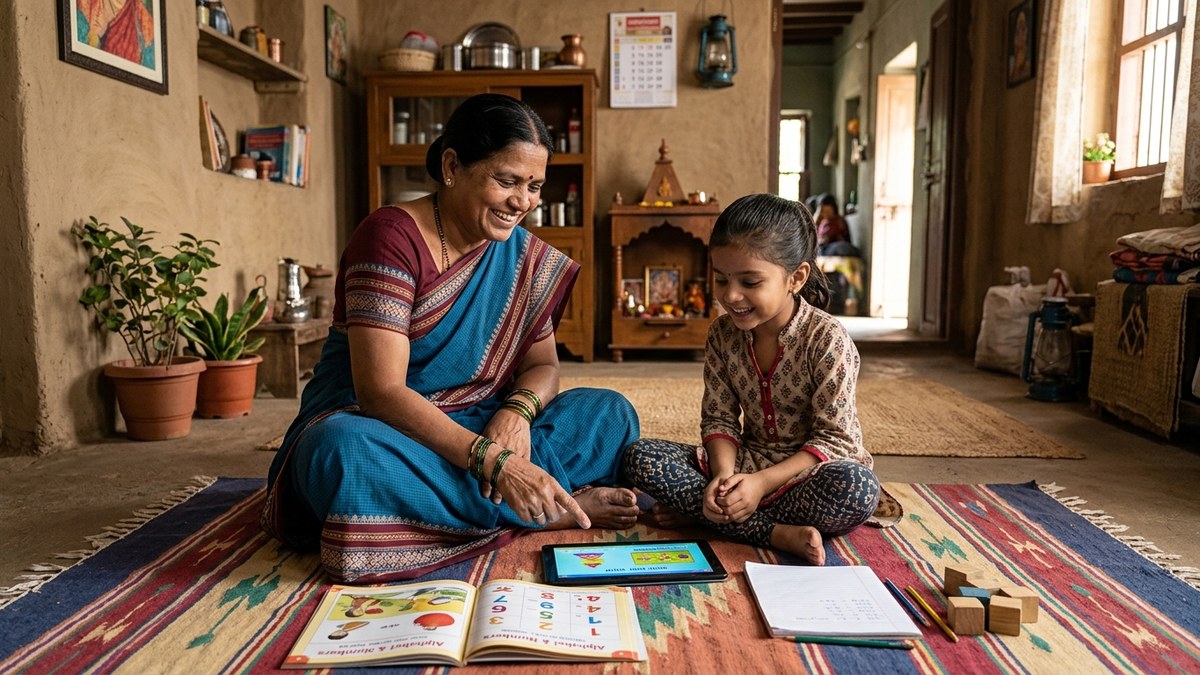
Indian households have something Western education systems envy: multi-generational homes. Grandparents, parents, and children under one roof. Homemakers with time to invest in children’s learning. A cultural value system that respects education.
Yet this advantage is being wasted. Grandparents watch TV while grandchildren struggle with math. Homemakers juggle household work but don’t engage with their children’s studies. The infrastructure for strong parent engagement exists, but the intentionality doesn’t.
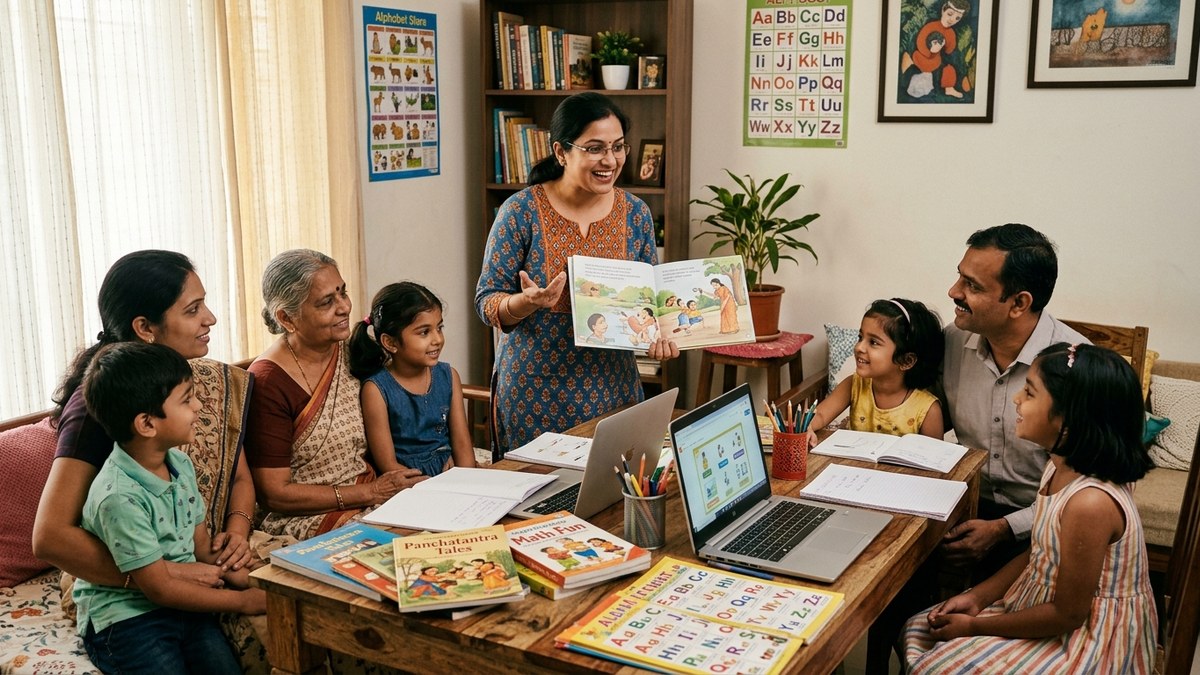
Senior citizens in Indian homes can become learning mentors. Homemakers can become accountability partners. Tuition teachers can become guides who empower families rather than replace them. When parent engagement in learning is structured and supported, entire family units transform into learning ecosystems.
This is where tools like APNA PC change the game. A complete learning bundle at Rs.30,000 gives your family access to digital resources, structured learning software, and the ability to create a Point of Digital Learning (POD) right at home. No fancy setup needed. Just intentional learning.
Consider this scenario: A homemaker in Bangalore uses APNA PC to run a small learning pod for 4-5 neighbourhood children. She’s not replacing school. She’s reinforcing it. She’s creating accountability. She’s filling the gap between classroom teaching and home learning. Parent involvement expands beyond her own children to her community. That’s leverage.
The Mechanics of Effective Parent Involvement
Parent involvement in education works best when it’s structured. Random help doesn’t cut it. Your child needs consistency.
Start with these non-negotiables:
- Weekly learning reviews: Sit with your child every Sunday. Ask what was taught. What was difficult. What needs more practice. Not interrogation. Conversation.
- Dedicated study hours: Not just homework time. Learning time. When you’re also reading, researching, or upskilling yourself. Children learn by example.
- Digital tools that track progress: Guesswork fails. Use platforms like DIKSHA digital learning platform or education software bundled with APNA PC to see exactly where your child stands.
- Community learning: Connect with other parents. Run or join a homeschooling in India group or learning pod. Shared accountability works.
Here’s what separates high-involvement parents from the rest: they don’t wait for teachers to report problems. They spot them first. They intervene early. They celebrate small wins. They model curiosity.
The Investment That Actually Pays
You’ll spend money on your child’s education regardless. The question is whether you’ll spend it on external tutors who replace your involvement, or on tools that amplify your involvement.
APNA PC is the latter. Rs.30,000 for a complete bundle: education software, 3-year warranty, installation, Mini PC (i3 7th Gen, 8GB RAM, 128GB SSD), monitor, keyboard, mouse, webcam, headset. Everything your family needs to create a structured learning environment at home or in a community POD.
Compare this to monthly tuition fees that run Rs.2,000-5,000 per child. In 6-7 months, you’ve matched the APNA PC investment. But the software and hardware remain yours. The learning infrastructure stays in your home.
More importantly: when you invest in tools that support parent involvement, you’re teaching your child that learning is a family priority. Not something outsourced to tutors. Not something that happens only in classrooms. Something woven into daily life.
Ready to transform your family’s relationship with education? Start a learning pod today and become part of a community where parent involvement in education isn’t optional. It’s the standard.
Your child’s future isn’t built in classrooms. It’s built at home, with your involvement, your questions, and your presence.