
Board exams in India are broken. Not because students aren’t smart enough. Because they’re being prepared with tools from 1995.
Let’s be honest: your child is studying for board exams the same way you did. Handwritten notes. Printed textbooks. Maybe a tutor who visits twice a week. Meanwhile, the actual exam boards are digitizing everything. The disconnect is real.
Here’s the truth: board exam digital skills India aren’t optional anymore. They’re survival skills. The Central Board of Secondary Education (CBSE) and state boards are pushing digital literacy hard. Students who can’t navigate digital tools, access online resources, or type efficiently are already behind.
Most people don’t realise that digital skills for board exams go way beyond “using a computer.” It’s about research efficiency. Online mock tests. Digital note-taking. Video learning. Time management apps. Document formatting. These aren’t luxuries. They’re what separates average scores from top scores.
Key Takeaways
- Online mock tests for board exams give instant feedback, reveal weak areas and build time management under real exam conditions.
- Board exam preparation that ignores digital skills is incomplete as CBSE and state boards push digital literacy.
- Useful skills include online research, digital note-taking, video learning, typing, document formatting and time management apps.
- Home preparation has lagged behind school technology, with many students still relying only on handwritten notes and printed books.
- A dedicated digital learning space with a proper computer helps students use these tools without phone distractions.
Why Board Exam Preparation Tips Must Include Digital Tools
The education system in India on Wikipedia documents how rapidly schools are adopting technology. But home preparation hasn’t caught up. Parents and tutors are still relying on traditional methods while students sit in classrooms with smart boards.
Board exam preparation tips that ignore digital skills are incomplete. Here’s what actually works:
- Online mock tests: Students get instant feedback, understand weak areas, practice time management under real exam conditions.
- Video explanations: Complex topics like physics derivations or chemistry mechanisms become clear when explained visually.
- Digital note-taking: Searchable, organized, shareable. No lost notebooks. No illegible handwriting.
- Subject-specific software: Math solvers, periodic tables, historical timelines. Tools that save hours of manual work.
- Collaborative learning: Study groups on video calls. Shared documents. Group problem-solving across cities.
A student with a laptop and proper software completes 3 hours of study in 2 hours. That’s not exaggeration. That’s efficiency.
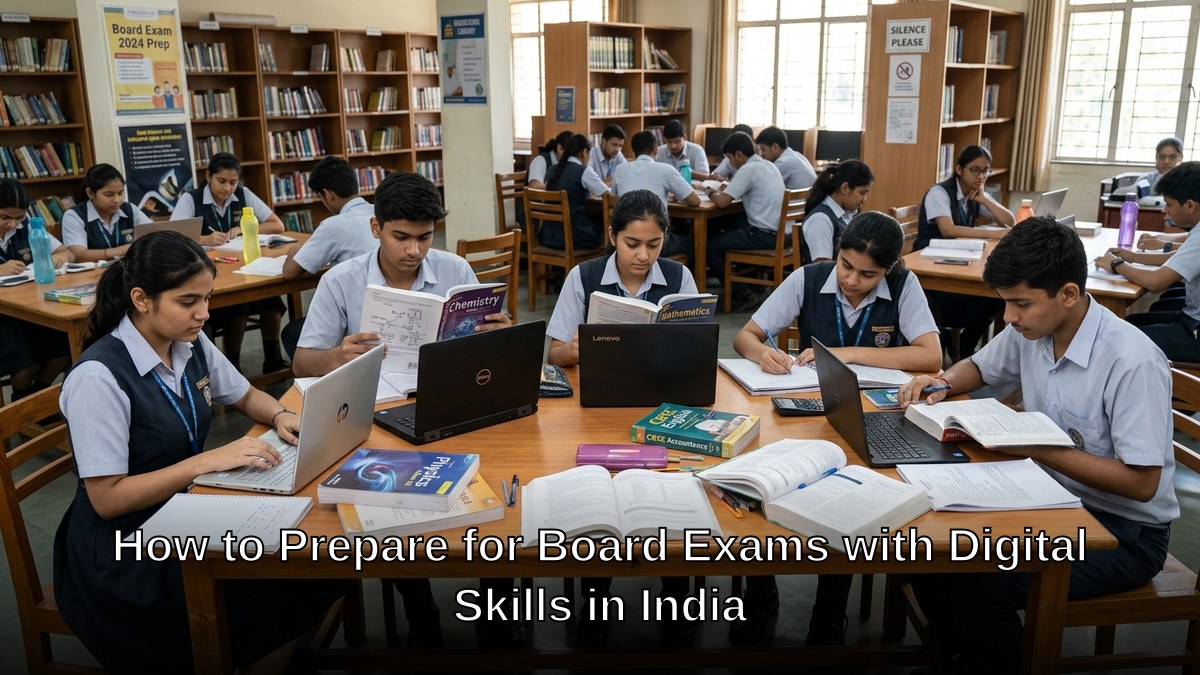
Digital Skills Students Need for Board Exams Right Now
Stop waiting for schools to teach this. They won’t. Not in time for your child’s exams anyway.
Digital skills students need for board exams include:
- Research skills: Finding credible sources online. Filtering information. Not just copying Wikipedia.
- Software navigation: Learning management systems. PDF annotation tools. Video conferencing platforms.
- Data organization: Folder structures. File naming. Backup systems. One corrupted file shouldn’t destroy weeks of work.
- Typing speed: Slow typing kills exam performance. 40 WPM is minimum. 60+ is competitive.
- Basic troubleshooting: Internet issues happen. Software crashes happen. Students need to stay calm and solve problems.
These aren’t “nice to have” skills. They’re foundational. A student who can’t organize digital files is a student who loses study materials. A student who types 20 WPM will never finish answer sheets on time.
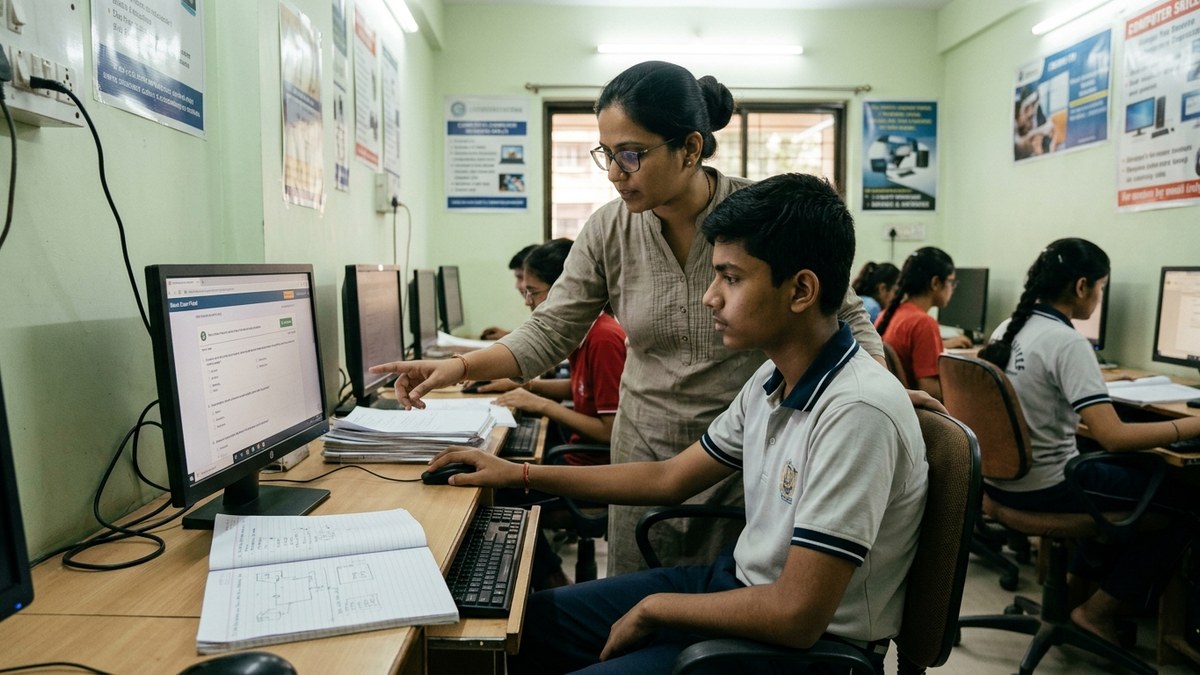
The real advantage? Board exam preparation tips that combine digital tools with human guidance. A trained educator who knows both the exam syllabus AND how to use technology effectively. That’s rare. That’s powerful.
Building a Digital Learning Space for Board Exam Success
You don’t need an expensive setup. You need a focused one.
A Point of Digital Learning (POD) is a home or community learning centre run by a trained educator. It’s where board exam digital skills India actually get developed. Not through lectures about “digital transformation.” Through actual practice. Real exams. Real feedback.
What does a POD need? A computer. Software. Reliable internet. A tutor who understands both traditional and digital pedagogy. That’s it.
APNA PC is built exactly for this. Rs.30,000 complete bundle. Mini PC with i3 7th Gen processor, 8GB RAM, 128GB SSD. Monitor, keyboard, mouse, webcam, headset included. 3-year warranty. Installation included. Education software pre-loaded.
No hidden costs. No “you need to buy more software.” Everything a student needs to develop board exam digital skills India is there. Video learning. Mock tests. Digital note-taking. Research tools. All working. All optimized.
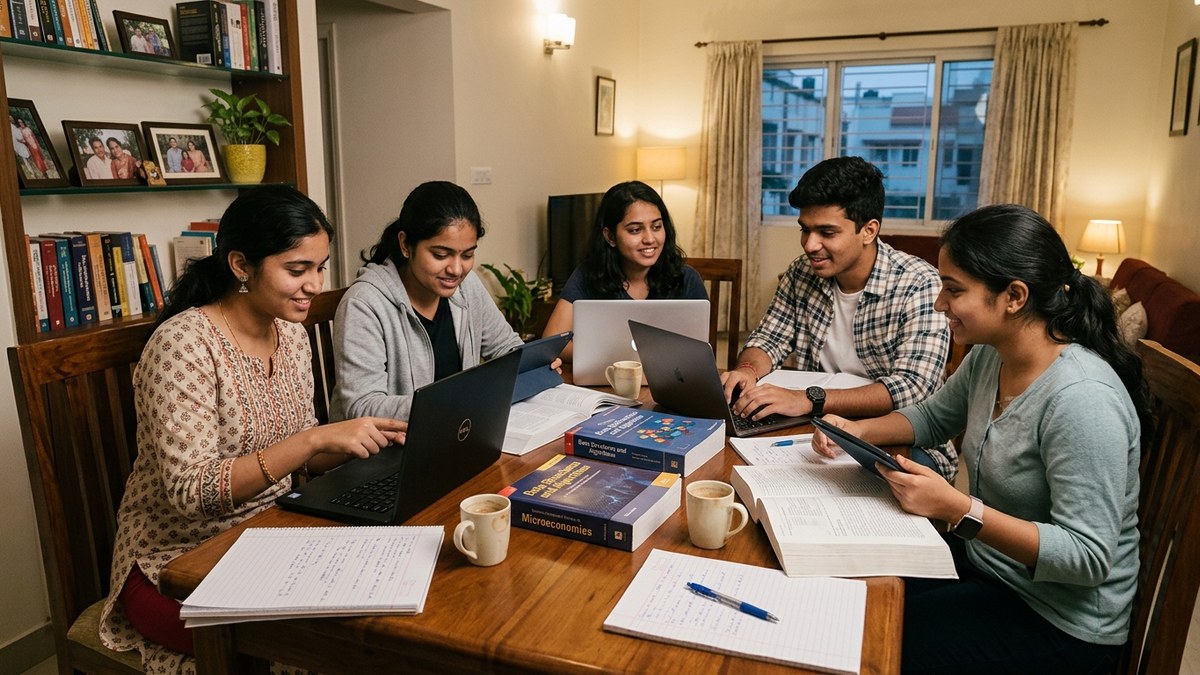
The Real Question Isn’t Whether Digital Skills Matter
It’s whether you’ll act before your child’s board exams are here.
Most parents realize the importance only when it’s too late. When their child scores 65 instead of 85 because they couldn’t manage digital resources efficiently. When they see peers using technology confidently while their child struggles.
Board exam digital skills India are no longer future skills. They’re present skills. Urgent skills.
Start now. Set up a digital learning space. Get proper equipment. Get proper guidance. Watch the difference.
Start building your digital exam preparation setup with Teach to Earn.
Frequently Asked Questions About Online mock tests for board exams
Are online mock tests useful for board exam preparation?
Yes. Online mock tests give instant feedback, show which topics need more work and help students practise managing time under exam conditions. Taking them regularly reduces exam-day anxiety. They work best combined with review of every mistake.
Where can students find free online mock tests for board exams?
Students can use practice material on the DIKSHA platform, sample papers published by CBSE, and practice tests from reputable free education sites. School teachers often share recommended resources too. Always check that the content matches the current syllabus.
What digital skills do board exam students need?
Key skills include searching for reliable resources, taking digital notes, learning from video lessons, typing, formatting documents for projects and using a simple planner. These help students revise efficiently and complete school work properly.
Is a computer better than a phone for board exam practice?
A computer gives a larger screen for full-length practice tests, a keyboard for notes and fewer distracting notifications. Phones are handy for quick revision but are harder to use for long, focused sessions. A shared home computer in a quiet corner is ideal.
How should a student set up a digital study space at home?
Choose a quiet, well-lit corner, place a computer with reliable internet there, and keep only study apps and bookmarks open during study time. A fixed daily schedule helps build the habit. Parents can check in on progress weekly.
CBSE publishes official sample question papers and marking schemes for Class 10 and Class 12 board exams on its academic website, which students can use for timed practice.