
The Tuition Teacher Without Digital Skills Is Already Obsolete
Your students have smartphones. Their parents expect online options. Competitors are offering hybrid classes. And you’re still using a notebook and pen.
Here’s the truth: digital skills for tuition teachers aren’t optional anymore. They’re survival skills. Whether you run a home tuition centre or manage a Point of Digital Learning (POD), the question isn’t whether you need to go digital. It’s whether you’ll do it this year or watch your income shrink while others capture your students.
Most people don’t realise that tuition teacher digital literacy has become as basic as knowing how to teach itself. Parents in 2026 aren’t just looking for someone who knows maths or English. They want someone who can deliver lessons online when needed, track student progress digitally, and communicate through apps and video calls. If you can’t do these things, you’re invisible to half your potential market.
Key Takeaways
- Tuition teacher digital literacy is now as basic as subject knowledge, because parents expect online classes, digital progress tracking and app-based communication.
- The core skills are practical: video classes, recording lessons, digital attendance and marks, online quizzes and messaging parents.
- Each skill opens a new way to earn, such as teaching students in other towns or selling recorded courses.
- The main barriers are equipment and confidence, not age or intelligence, and these skills take weeks rather than years to learn.
- A proper computer with a webcam and headset is needed for serious online teaching; a smartphone alone is not enough.
What Digital Skills Actually Mean for Your Income
Let’s be honest: this isn’t about becoming a software engineer. Online teaching skills India focuses on practical abilities that directly impact your earning potential. We’re talking about basic competencies that take weeks, not years, to master.
- Recording and uploading lessons – Create recorded content that parents can share with relatives. Charge premium fees for this.
- Using video conferencing tools – Conduct live online classes. Reach students across cities without travel time.
- Managing student data digitally – Track attendance, marks, and progress. Send automated reports to parents.
- Creating digital assessments – Build online quizzes and tests. Get instant results. Save hours on manual marking.
- Communicating via messaging apps – Stay connected with parents. Send homework reminders. Build trust through consistent digital presence.
Each of these skills opens a new revenue stream. A tuition teacher with online teaching skills can charge 20-30% more than one stuck in offline-only mode. You can teach students from neighbouring towns. You can create recorded courses and sell them repeatedly. You can run a POD with digital infrastructure that attracts quality-conscious parents willing to pay premium fees.
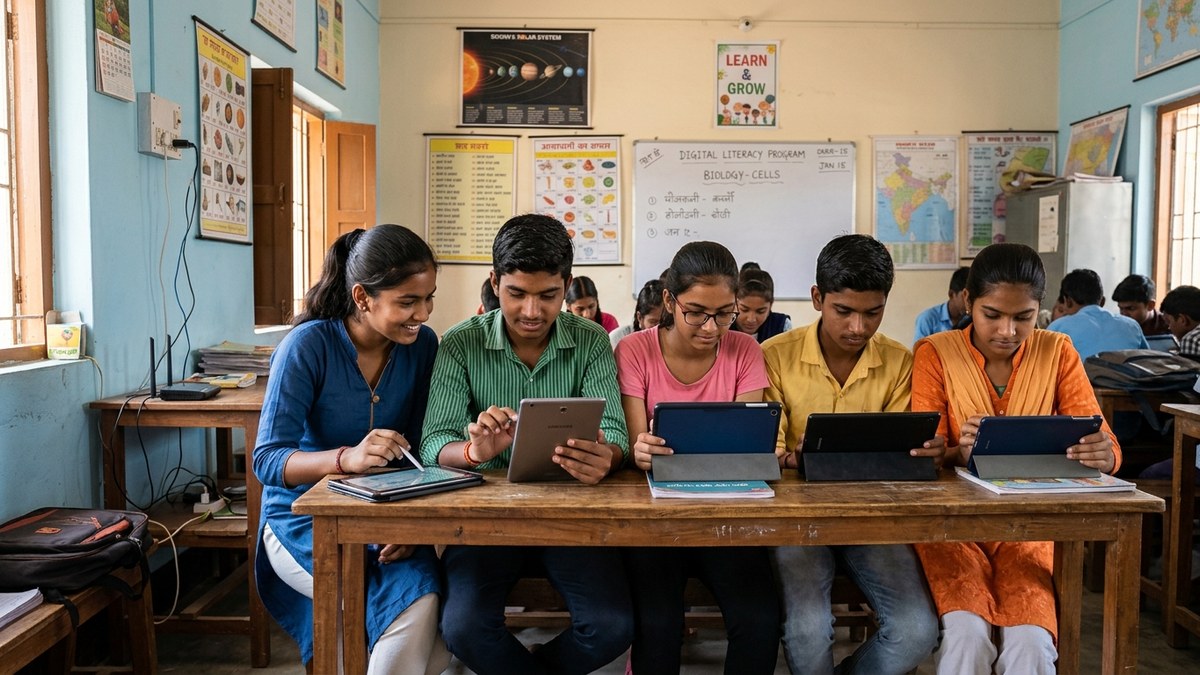
The double your tuition income with the pod model approach works specifically because it combines physical presence with digital infrastructure. You’re not replacing yourself. You’re multiplying your reach.
Why Most Tuition Teachers Are Failing at This (And How You Won’t)
The barrier isn’t intelligence. It’s not age either. We’ve trained 60-year-old homemakers and 70-year-old retired professionals who now run thriving digital learning centres. The real barrier is equipment and confidence.
Without a proper computer setup, you’re stuck. A smartphone isn’t enough for serious online teaching. You need a real screen, a keyboard, a webcam, and reliable performance. You need something that works consistently without freezing during a live class or crashing when you’re recording content.
This is exactly why APNA PC exists. At Rs.30,000, you get a complete bundle: a Mini PC with i3 7th Gen processor, 8GB RAM, and 128GB SSD. Add the monitor, keyboard, mouse, webcam, and headset. Include education software pre-loaded. Throw in 3-year warranty and professional installation. That’s your entire digital infrastructure sorted.
Most people don’t realise that this investment pays for itself within 2-3 months of increased student fees and new online students. A tuition teacher who can offer online classes charges 500-1000 rupees more per month per student. Add just 5-10 new students from neighbouring areas, and your APNA PC is paid for.
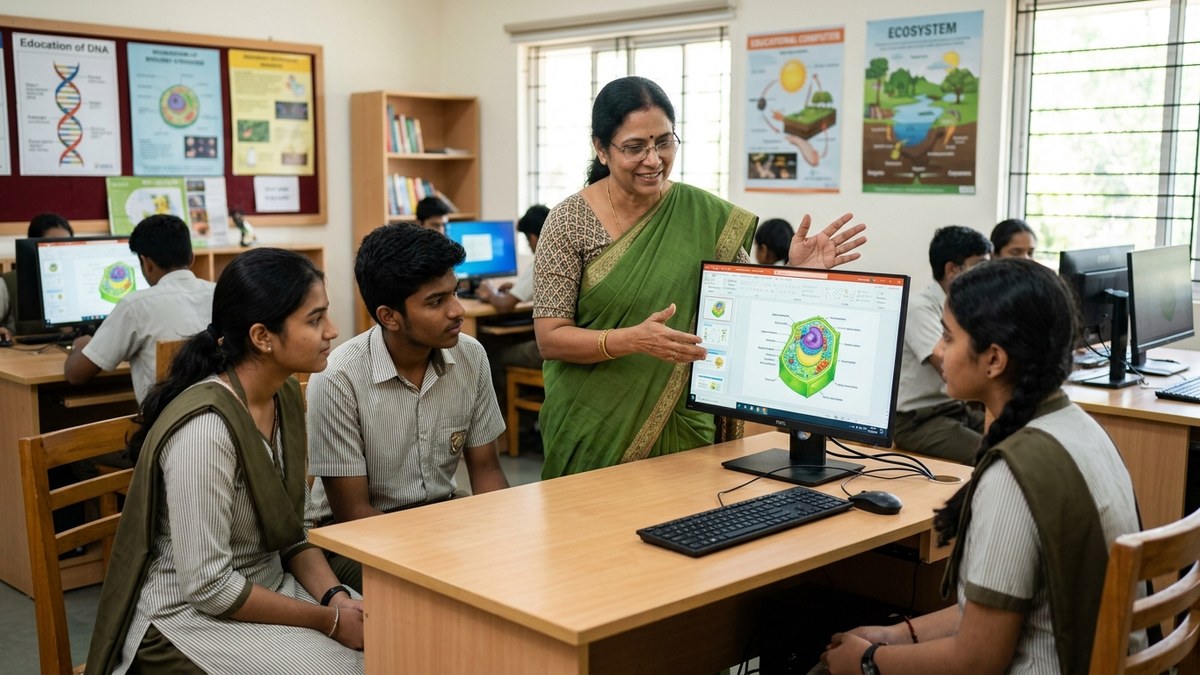
The how AI is changing tuition classes landscape means you need to stay ahead. Basic digital skills aren’t enough anymore. You need tools that help you teach smarter, not just differently.
The Real Competitive Advantage
Here’s what separates successful tuition teachers from struggling ones: adaptability. The ones earning 2-3 lakh rupees monthly aren’t necessarily better teachers. They’re teachers who adapted to how students and parents want to learn.
Parents checking your WhatsApp status at 9 PM to see if you’re active. Students asking if they can attend class from their grandparent’s house on weekends. Siblings wanting to join from a different city. These aren’t edge cases anymore. They’re mainstream expectations.
When you have digital skills and proper equipment, you say yes to all these requests. When you don’t, you say no and watch them go to someone who will.
The Digital India initiative and efforts by the Ministry of Electronics and IT have made internet access ubiquitous across Indian towns and villages. The infrastructure exists. Parents are ready. Students are ready. The only question is whether you’re ready.
Digital skills for tuition teachers aren’t a luxury feature anymore. They’re the baseline expectation. The question isn’t whether you’ll develop them. It’s whether you’ll do it now while the opportunity window is still wide open, or later when you’re playing catch-up against teachers who moved first.
Start with proper equipment. Get an APNA PC. Learn one skill at a time. Within 3-6 months, you’ll wonder how you ever taught without these tools. Within 12 months, you’ll be earning significantly more and reaching way more students.
Get your APNA PC bundle today and start your digital transformation
Frequently Asked Questions About Tuition teacher digital literacy
What digital skills does a tuition teacher need?
The essentials are running live classes on video tools, recording and sharing lessons, keeping attendance and marks digitally, creating online quizzes and staying in touch with parents through messaging apps. These cover most of what parents now expect. None require programming.
How long does it take a tuition teacher to learn digital tools?
Most teachers can get comfortable with the basics in a few weeks of regular practice. Starting with one tool, such as video classes or online quizzes, and adding others step by step works best. Age is not a barrier when the practice is consistent.
Can digital skills help a tuition teacher earn more?
Yes. Online classes let you teach students beyond your locality, and recorded lessons can be reused or sold. Digital progress reports also make your service look more professional to parents. Together these widen your reach without adding travel time.
Is a smartphone enough for online tuition classes?
A phone works for messages and quick calls, but it is limited for teaching full classes. Sharing screens, writing on a digital board and managing student records need a computer with a keyboard, webcam and proper screen. That setup gives a far better class experience.
Where can tuition teachers learn digital teaching skills for free?
DIKSHA offers free teacher training courses, and platforms like Google and YouTube have free tutorials on tools such as Meet, Classroom and Forms. Practising on your own lessons is the fastest way to learn. Local teacher groups can also help.
DIKSHA, run by NCERT for the Ministry of Education, hosts free teacher training courses, including programmes on using technology in teaching.