Your child studies alone. Their marks stay flat. Here’s why peer learning groups change everything.
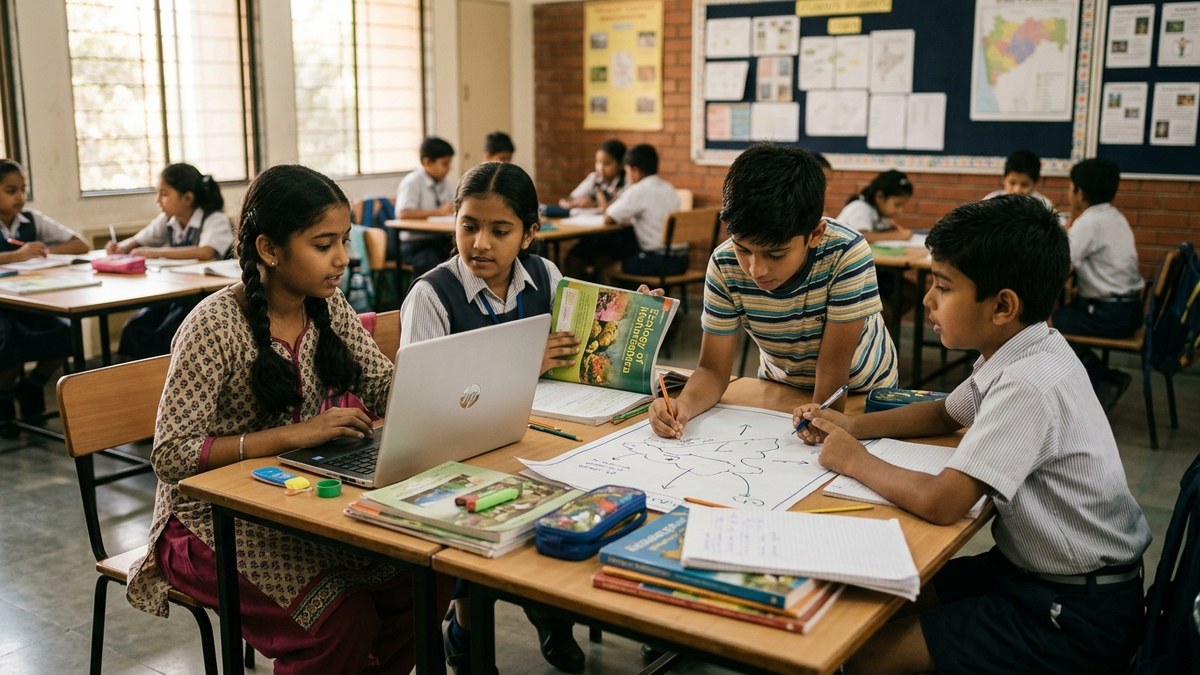
Most people don’t realise that isolation kills learning. A child sitting alone with a textbook absorbs maybe 30% of what they could learn in a group. When students explain concepts to each other, ask real questions, and solve problems together, retention jumps. Peer learning for students is not a nice-to-have. It’s the foundation of actual progress.
You’ve probably noticed it yourself. Your child asks you a question about math. You explain it three times. Still blank stares. Then a friend visits and explains it in two minutes using a different angle. Suddenly, it clicks. That’s the power of collaborative learning at work.
Why group study benefits go way beyond marks
Let’s be honest: group study in India has always existed. Joint families, neighbourhood study circles, tuition batches. But here’s what’s changed. Today’s students face information overload, screen fatigue, and zero confidence in group settings. They need structure. They need facilitation. They need a trained educator who knows how to run study groups that actually work.
Group study benefits aren’t just academic. When students learn together, they develop:
- Communication skills. Explaining an idea to a peer forces clarity. Listening to different approaches builds flexibility.
- Problem-solving confidence. In a group, a stuck student sees others struggle and recover. Failure becomes normal, not shameful.
- Peer accountability. Kids show up for friends in ways they never show up for parents or teachers.
- Real friendships around learning. Not just WhatsApp groups. Actual human connection that makes studying feel less like a chore.
Here’s the truth: a child who learns in isolation will always feel isolated when exams come. A child who solves problems in a group walks into exams thinking, “I’ve done this with five other people. I can do this alone.”
How to set up peer learning groups that actually work
You can’t just throw five kids in a room with a textbook and call it collaborative learning. Structure matters. Here’s what works:
1. Keep groups small. Three to five students. Any larger and someone zones out. Any smaller and you lose the diversity of thinking.
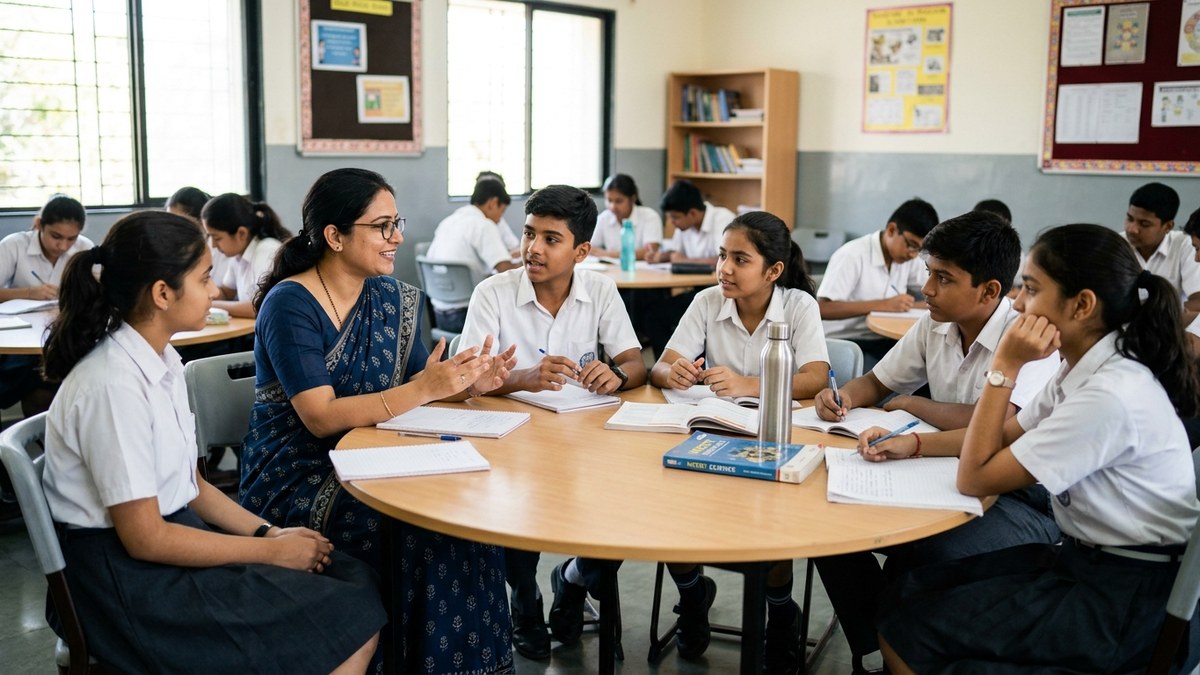
2. Mix ability levels deliberately. One strong student, two mid-range, one struggling. The strong student clarifies their own thinking by teaching. The struggling student learns from peers without the shame of one-on-one tutoring.
3. Use a trained facilitator. This is where most DIY group study fails. A facilitator (could be a tuition teacher, an edupreneur, or a parent with training) guides questions, keeps pace, and ensures everyone participates. This is what a Point of Digital Learning, or POD, does.
4. Rotate roles. One student explains, one questions, one takes notes, one watches for clarity. Everyone gets to lead.
5. Mix online and offline. Use DIKSHA digital learning platform or similar tools to share resources, but do the real learning face-to-face. That’s where the magic happens.
Most people don’t realise that running a study group requires the right infrastructure. You need a quiet space. You need devices for research and collaboration. You need a facilitator who can manage group dynamics while teaching content. This is why setting up a learning pod at home or community centre works better than hoping it happens naturally.
The infrastructure you need to make peer learning stick
Here’s what stops most educators and parents from running peer learning groups: they don’t have the right setup. You need:
- A reliable computer or mini PC for accessing learning resources
- A monitor large enough for group viewing
- Audio equipment so everyone can hear clearly
- Stable internet for accessing digital content
- A webcam if you want to blend online collaboration with in-person learning
This is exactly why APNA PC exists. For Rs.30,000, you get a complete bundle: education software, a Mini PC with i3 7th Gen processor, 8GB RAM, 128GB SSD, monitor, keyboard, mouse, webcam, headset, plus 3-year warranty and installation. Everything a POD needs to run study groups that combine digital resources with human connection.
You’re not buying a computer. You’re buying the infrastructure to run a learning space where students actually thrive.
The microschool model in India is growing because parents and educators finally understand this. Small groups with trained facilitators, using proper technology, produce better results than both traditional schools and solo online learning.
Why this matters right now
Competitive exams are harder. Board marks matter more. Parents are exhausted trying to manage tuition schedules. Students are burnt out studying alone in rooms. Something has to give.
Peer learning groups are the answer. Not because they’re trendy. But because they work. When a student learns alongside peers, with a trained facilitator, using proper tools, something shifts. Learning stops being something done to them. It becomes something they do together.
If you’re a parent tired of expensive one-on-one tutoring with zero social benefit. If you’re a tuition teacher wanting to scale beyond solo classes. If you’re an edupreneur thinking about starting a learning centre. If you’re a homemaker looking to create a community learning space. Study groups are your answer.
The infrastructure is simple. The methodology is proven. How learning works is no longer a mystery. We know what works. We know what doesn’t. The only question is: will you build it?
Ready to start? Start a peer learning group today. We’ll show you exactly how.