
YouTube Channel for Indian Teachers: Stop Waiting, Start Creating
Your expertise is rotting on a shelf while someone else monetizes mediocrity on YouTube. That’s the brutal truth. Indian teachers, whether you run a tuition centre, teach from home, or manage a learning pod, have knowledge worth thousands. Yet most never hit record. They convince themselves they need perfect equipment, flawless English, or a fancy studio. None of that is true.
Here is the truth: You need three things to start a YouTube channel for Indian teachers. A device. Internet. And the guts to press publish. That’s it. This guide walks you through building a sustainable education content creator presence that actually generates income.
Why YouTube Matters for Indian Teachers Right Now
Let’s be honest: the tuition model is broken. You trade time for money. You cap your earnings at whatever your local market pays. YouTube flips that equation. One video works for you forever. A single lesson on quadratic equations gets watched by 100,000 students across India. You get paid once, earn repeatedly.
Most people don’t realise that best online teaching tools now make it stupidly easy to produce professional content from home. You don’t need a production house. Homemakers can build channels teaching cooking, languages, or crafts. Senior citizens can share decades of expertise. Tuition teachers can scale beyond their locality. Edupreneurs can build entire education businesses around video content.
The Central Board of Secondary Education (CBSE) and state boards have created massive demand for supplementary learning content. Parents search YouTube constantly. Students binge educational videos. The audience is hungry. The monetization is real.
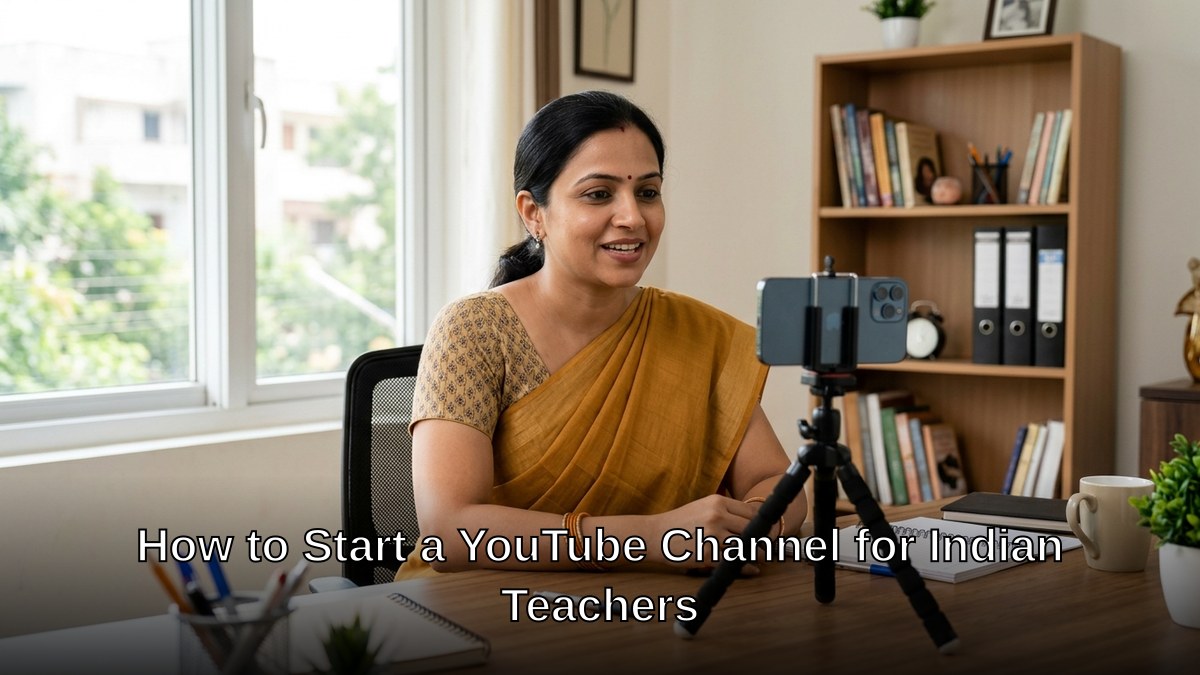
Step 1: Set Up Your Channel and Choose Your Niche
Create a Google account if you don’t have one. Go to YouTube. Click your profile icon. Select “Create a channel.” Name it something clear. “Mrs. Sharma’s Math Lessons.” “Hindi for Beginners.” “Competitive Exam Shortcuts.” Avoid generic names. Specificity wins.
Your niche is your anchor. Pick one subject or skill you can teach for 200 videos without dying of boredom. CBSE maths? Class 10 Science? English grammar? Spoken English for housewives? Accounting for small business owners? Each niche has thousands of hungry students.
Write a channel description that answers three questions: Who are you? What will viewers learn? Why should they subscribe? Make it 200 words maximum. Include keywords naturally. Link to your tuition centre or learning pod if you have one.
Step 2: Get the Right Equipment (You Probably Already Have It)
Your smartphone is enough to start. Seriously. The camera is better than equipment from five years ago. Download CapCut (free) or use YouTube Studio’s built-in editor. Shoot in good lighting. Natural window light works. Avoid sitting with light behind you.
But here’s what separates serious creators from hobbyists: proper audio. A cheap USB microphone (Rs.1,500-2,500) transforms video quality more than anything else. Bad audio makes people click away. Good audio makes them stay.
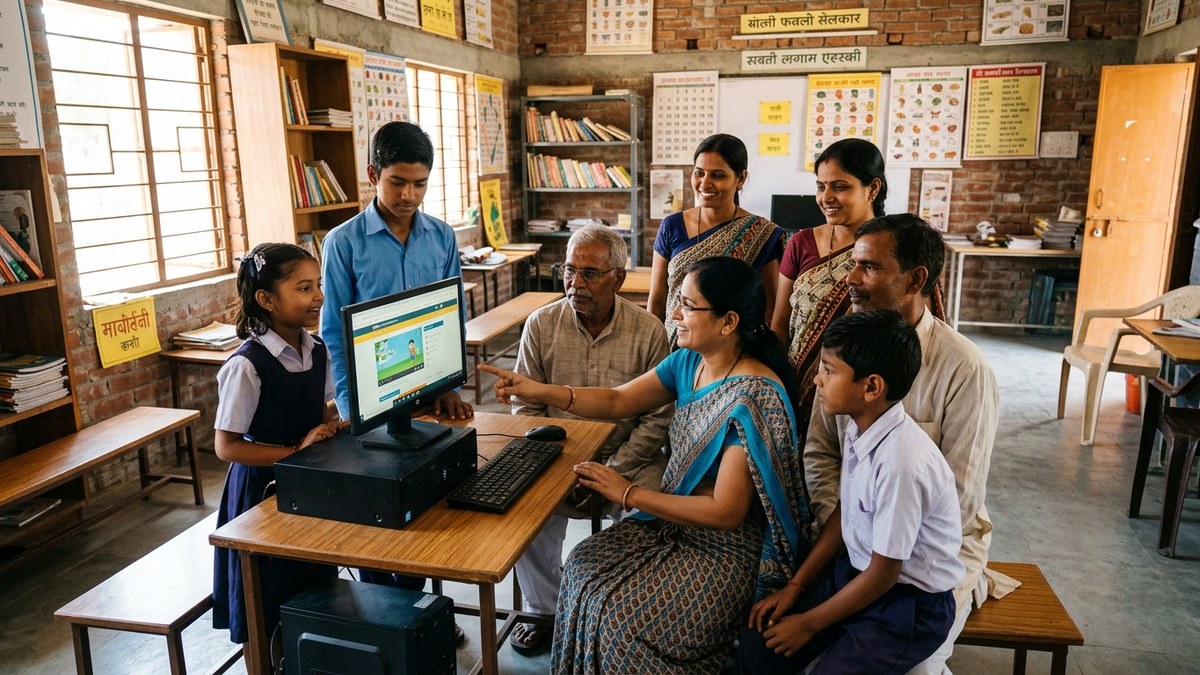
If you’re running a Point of Digital Learning (POD) or tuition centre, invest in APNA PC. The complete bundle, Rs.30,000, includes education software, 3-year warranty, installation, and a Mini PC (i3 7th Gen, 8GB RAM, 128GB SSD) with monitor, keyboard, mouse, webcam, and headset. This setup handles video editing, live classes, and content creation without lag. It’s built for Indian teachers who mean business.
Step 3: Create Content That Actually Converts Views to Income
Not all educational videos make money equally. Solve problems people actively search for. Use Google Trends. Search “class 10 maths” and see what autocompletes. Those are real questions with real search volume.
Structure every video the same way. Hook in the first 10 seconds. State the problem. Solve it step by step. Summarize. Call to action. Consistency in format builds audience trust.
Upload one video per week minimum. Two is better. Three is optimal if you can sustain it. Batch-record sessions. Film 5-10 videos in one day. Edit over the week. This prevents burnout and keeps your channel active.
Enable monetization once you hit 1,000 subscribers and 4,000 watch hours. This takes 6-12 months for most new channels. But while you’re building, focus on value. Money follows audience. Audience follows consistency and quality.
Step 4: Leverage Digital Marketing to Grow Faster
YouTube success isn’t just about uploading. You need digital marketing skills to amplify reach. Share videos on WhatsApp groups. Post clips on Instagram Reels and Facebook. Write blog posts linking to your videos. Build an email list of viewers.
Collaborate with other education content creators. Guest appearances on established channels expose you to new audiences. Partner with tuition centres or POD operators to cross-promote. Create playlists that bundle related videos. YouTube’s algorithm rewards watch time. Playlists increase it.
Use the Central Board of Secondary Education (CBSE) syllabus as your content roadmap. Align videos with exam patterns. Students searching for exam prep are high-intent viewers. They engage more. They share more. They convert to paying students.
Step 5: Monetize Beyond YouTube AdSense
AdSense pays poorly in India. Rs.1-3 per 1,000 views. Don’t rely on it solely. Layer multiple income streams. Sell courses on your channel. Offer tuition services. Promote your POD. Sell study materials. Recommend UNESCO global education research and educational books (affiliate links). Create memberships for exclusive content.
Your YouTube channel becomes a funnel. Free videos build trust. Paid offerings convert viewers into students. This is the real money. Not AdSense. Direct student acquisition.
The Bottom Line
Starting a YouTube channel for Indian teachers isn’t complicated. It’s just action. You have knowledge. You have a device. You have an audience waiting. Stop overthinking. Record your first video this week. Upload it. Then do it again next week. In six months, you’ll have 50 videos and a real audience. In a year, you’ll have income streams that work while you sleep.
Your expertise deserves to reach beyond your locality. YouTube makes that possible. The only barrier is you.
Ready to scale your teaching? Start your learning pod with TeachToEarn today.