Digital Skills Are No Longer Optional for Indian Students
Your child’s future job doesn’t exist yet. But the skills they need to land it? They’re digital. This isn’t hype. This is the reality facing Indian students in 2026. While many families still treat computer skills as a “nice-to-have,” employers across India are actively filtering out candidates who can’t navigate basic digital tools, let alone advanced platforms.
Here’s the truth: digital skills for Indian students aren’t about becoming a programmer or IT expert. They’re about survival in the job market. Whether your child dreams of becoming an accountant, teacher, nurse, or entrepreneur, they’ll need foundational digital competency. The gap between those who have it and those who don’t? It’s widening fast.
Let’s be honest. Most people don’t realise that employability skills India 2026 now includes digital literacy as a baseline expectation, not a bonus. Employers aren’t asking “Can you use a computer?” anymore. They’re asking “What can you do with it?”
The Five Digital Skills Indian Students Must Master by 2026
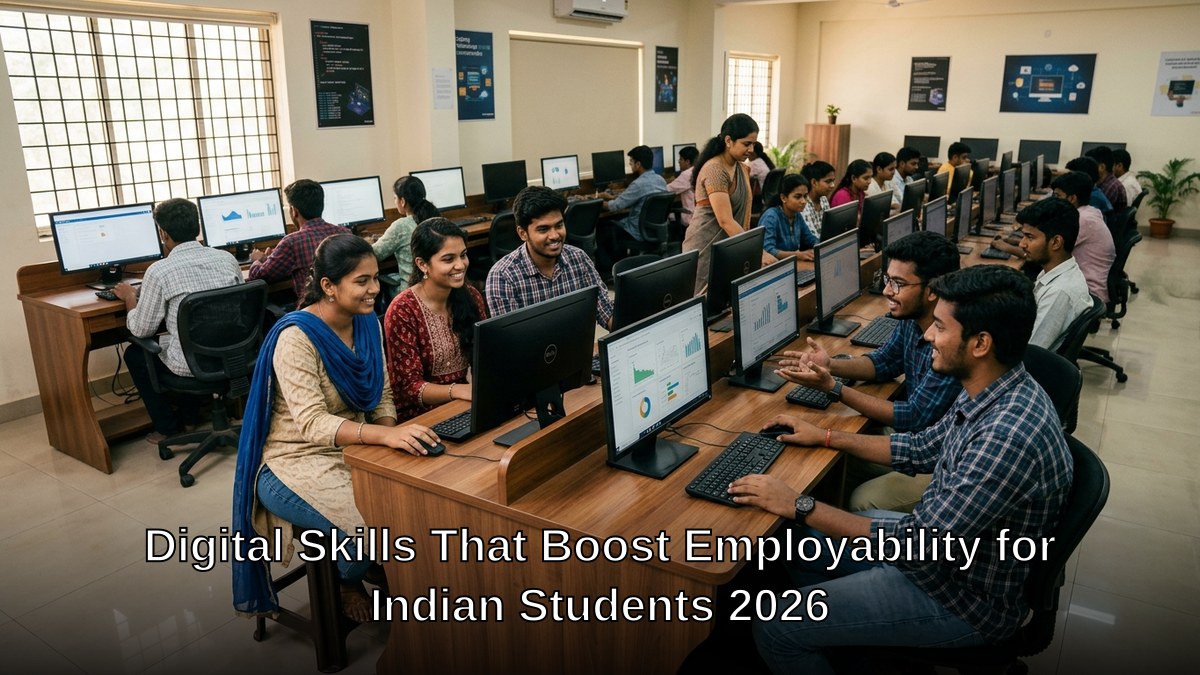
Career skills Indian students need fall into five clear categories. Master these, and you’re ahead of 70% of your peers.
- Cloud-based productivity tools: Google Workspace, Microsoft 365, Canva. Schools teach Microsoft Office. Employers use cloud platforms. Your child needs both.
- Data literacy: Understanding spreadsheets, basic data analysis, and how to present information visually. This applies to every sector.
- Digital communication: Video conferencing, professional email, online collaboration platforms. Remote work isn’t coming. It’s here.
- Cybersecurity basics: Password management, recognising phishing, protecting personal data. Non-negotiable in 2026.
- AI skills students need in 2027: Prompt engineering, understanding AI tools, and knowing when to use them. This is the frontier.
The Digital India initiative has pushed infrastructure into rural areas. MeitY’s Digital India programme continues expanding access. But infrastructure alone doesn’t create skilled workers. Training does.
Why Most Indian Students Are Falling Behind
Here’s what’s happening in most Indian homes right now: children have smartphones. Parents assume this means they’re “tech-savvy.” Wrong. Scrolling Instagram isn’t a digital skill. It’s consumption, not creation or problem-solving.
Real digital skills require hands-on practice with proper tools and guidance. This is where most families struggle. Smartphones and basic internet access aren’t enough. Students need access to actual computers, proper software, and trained educators who can teach them systematically.
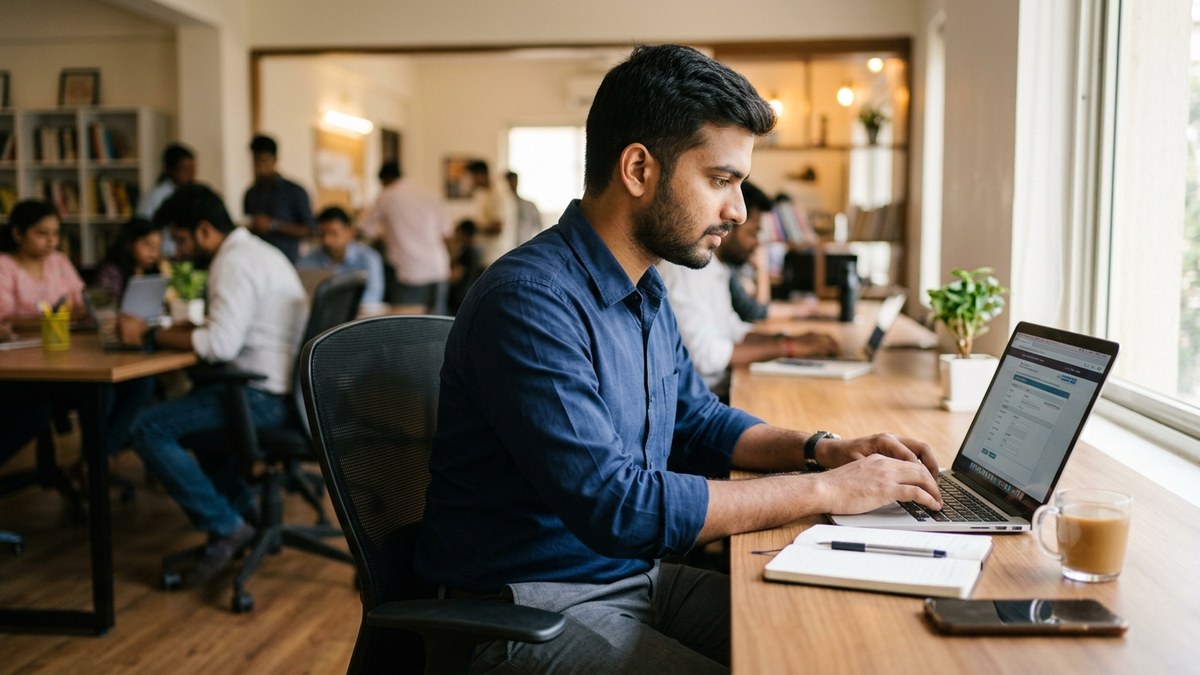
Most people don’t realise that digital literacy skills that shape careers take time to develop. You can’t learn spreadsheet analysis on a phone. You can’t master video editing on a tablet. You need a proper setup.
The Role of Point of Digital Learning in Your Community
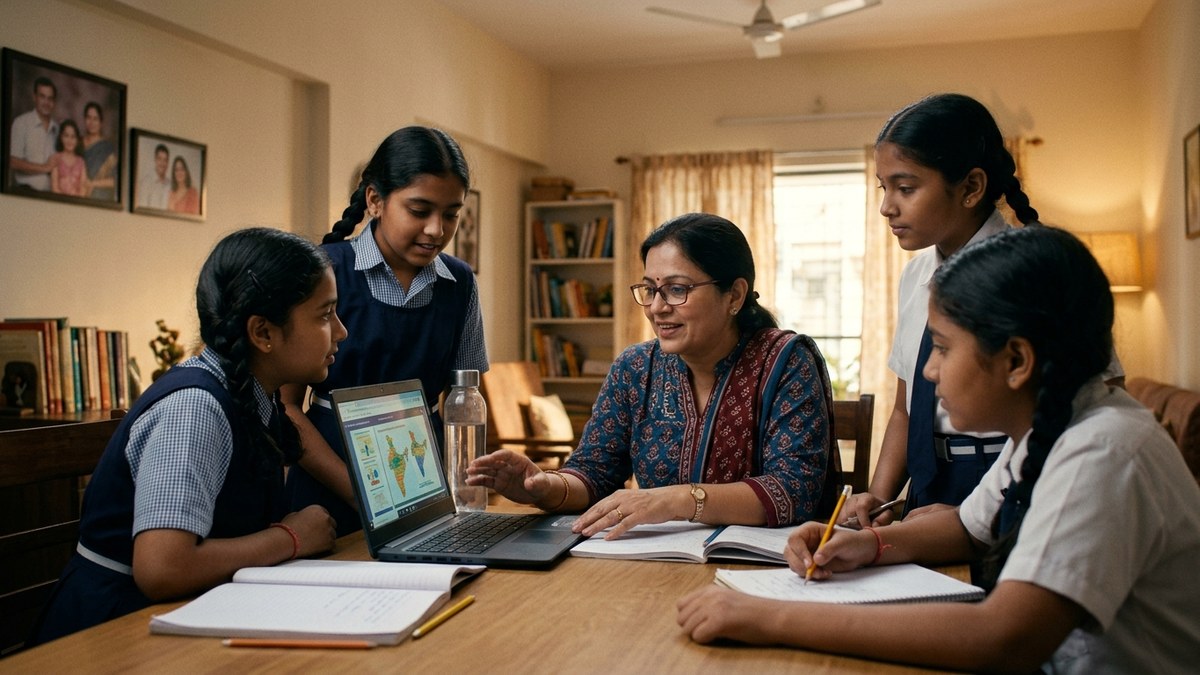
This is where POD comes in. A Point of Digital Learning is a community-based or home-based learning centre run by a trained educator. Think of it as a bridge between traditional tuition and corporate training.
Why POD works for Indian families: it’s local, it’s affordable, it’s personalised, and it’s practical. A trained educator in your neighbourhood can teach digital skills in a way that matches the pace and needs of local students. No one-size-fits-all curriculum. No pressure to keep up with 50 other kids in a classroom.
Homemakers can run a POD. Senior citizens with tech knowledge can run a POD. Tuition teachers can expand their offerings with a POD. Edupreneurs can build a sustainable business around a POD. The barrier? Access to the right equipment and training.
Making Digital Skills Accessible with APNA PC
Here’s the problem most educators face: setting up a digital learning space requires significant investment. Computers are expensive. Software licenses cost money. Installation requires technical knowledge.
APNA PC solves this. For Rs.30,000, you get a complete bundle: a Mini PC (i3 7th Gen processor, 8GB RAM, 128GB SSD), monitor, keyboard, mouse, webcam, headset, education software, 3-year warranty, and professional installation.
That’s not just hardware. That’s a complete digital learning solution. One APNA PC can serve 20-30 students rotating through sessions. The education software is pre-loaded. The warranty covers you for three years. Installation is handled by professionals.
For homemakers looking to earn while contributing to their community, APNA PC is the entry point. For senior citizens wanting to stay active and relevant, it’s an opportunity. For tuition teachers, it’s a way to future-proof your business. For edupreneurs, it’s the foundation of a scalable model.
The Bottom Line
Digital skills for Indian students aren’t a luxury. They’re essential. The job market in 2026 won’t wait for stragglers. Employers want candidates who can work with digital tools confidently and independently.
The good news? You don’t need a fancy corporate training centre to deliver this. You need commitment, proper equipment, and structured learning. You need APNA PC and the vision to create a Point of Digital Learning in your community.
The question isn’t whether your students need digital skills. It’s whether you’re going to help them acquire them.
Get started with APNA PC today and build your Point of Digital Learning.