
The Tuition Trap: Why Extra Classes Aren’t the Answer for Weak Students
Most parents believe weak students need more tuition. They’re wrong. Your child isn’t struggling because they need another teacher in another room. They’re struggling because the learning method doesn’t fit them. Here’s the truth: throwing money at extra tuition fees won’t help weak students catch up if the fundamental approach stays broken.
India spends over Rs 1 lakh crore annually on private tuition. Yet learning outcomes haven’t improved proportionally. Why? Because tuition treats the symptom, not the disease. A weak student sitting in a crowded tuition class with 30 other kids learns nothing new. They just pay more.
Let’s be honest. Most parents see tuition as a status symbol or a safety net. “At least we’re doing something,” they think. But that something often wastes money and steals time from what actually works.
What Actually Works: Five Proven Methods to Help Struggling Students
Forget tuition fees. Here are methods that genuinely help weak students catch up without breaking the bank.
- Personalised learning at home. When a student learns at their own pace, in their own space, with one-on-one attention, everything changes. No peer pressure. No comparison. Just progress. This is why community learning centres powered by trained educators are transforming education in India.
- Use peer learning groups. Peer learning groups create accountability without pressure. When weak students study with 2-3 classmates of similar level, they ask questions freely. They learn from each other. No ego. No shame. Just real learning.
- Access quality digital content. Platforms like DIKSHA digital learning platform offer free, structured content aligned with Indian curricula. Your child can revisit concepts repeatedly without anyone judging them for being slow.
- Train yourself to teach basics. You don’t need to be a teacher. You need to understand the core concept and explain it simply. Most weak students just need someone patient to break down the topic into smaller pieces. That someone can be you, a senior citizen in the family, or a trained community educator.
- Combine offline and online teaching tools. The best results come from blending human touch with technology. Online teaching tools let you track progress, set reminders, and provide instant feedback. But they work best when paired with face-to-face interaction.
These methods cost a fraction of tuition fees. More importantly, they actually work.
The Real Solution: Start a Point of Digital Learning in Your Community
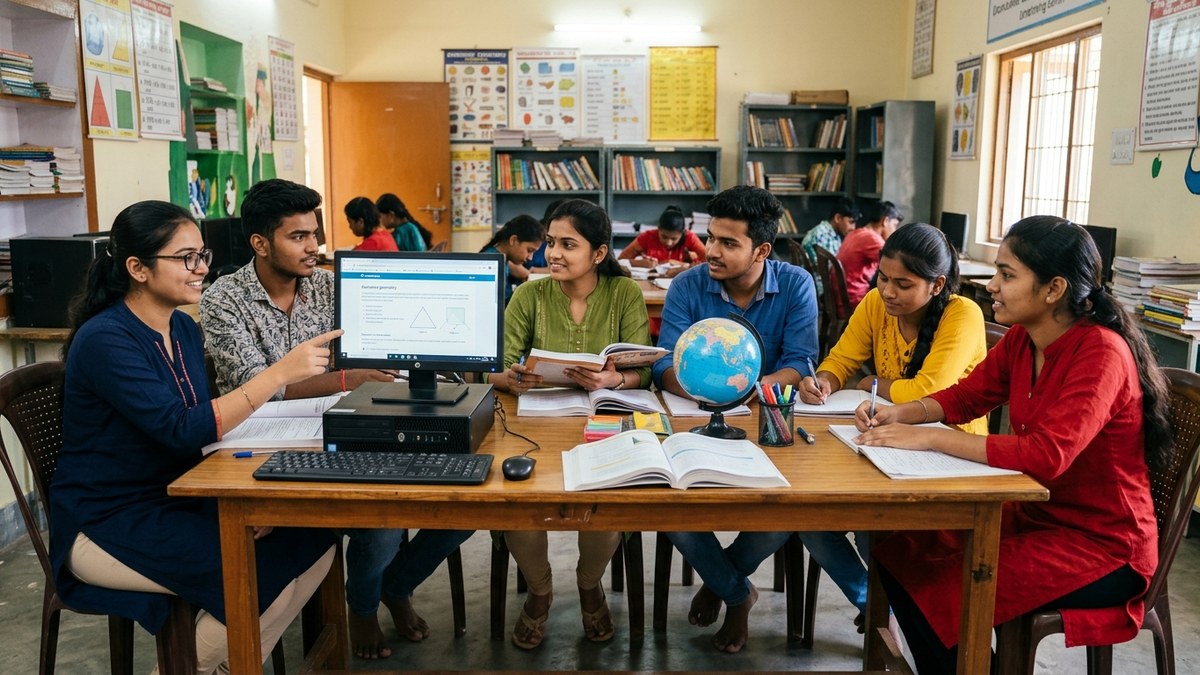
Most people don’t realise that you don’t need a fancy tuition centre to help weak students catch up. You need a Point of Digital Learning (POD). A POD is a home or community learning centre run by a trained educator using structured curriculum and technology.
Here’s what makes a POD different from traditional tuition:
- Small batches (5-10 students max) instead of crowded classes
- Personalised learning plans for each child
- Regular progress tracking and parent communication
- Affordable fees because you’re not paying for fancy buildings or marketing
- Flexible timings that work around school schedules
Starting a POD requires one thing: the right technology. Not expensive servers or complicated software. Just reliable hardware that works consistently.
This is where APNA PC comes in. For Rs 30,000, you get a complete bundle: education software, a Mini PC (i3 7th Gen, 8GB RAM, 128GB SSD), monitor, keyboard, mouse, webcam, headset, plus 3-year warranty and installation. That’s your entire setup to help weak students catch up.
Think about it. A single tuition class costs Rs 500-1,000 per month per student. Within 3-4 months, you’ve spent what APNA PC costs once. And with APNA PC, you can help dozens of weak students year after year.
Why This Works Better Than Tuition
Weak students don’t fail because they’re incapable. They fail because traditional schooling moves too fast. They get left behind. Then parents panic and add tuition, which often repeats the same fast-paced, one-size-fits-all approach.
A POD powered by APNA PC breaks this cycle. Here’s how:
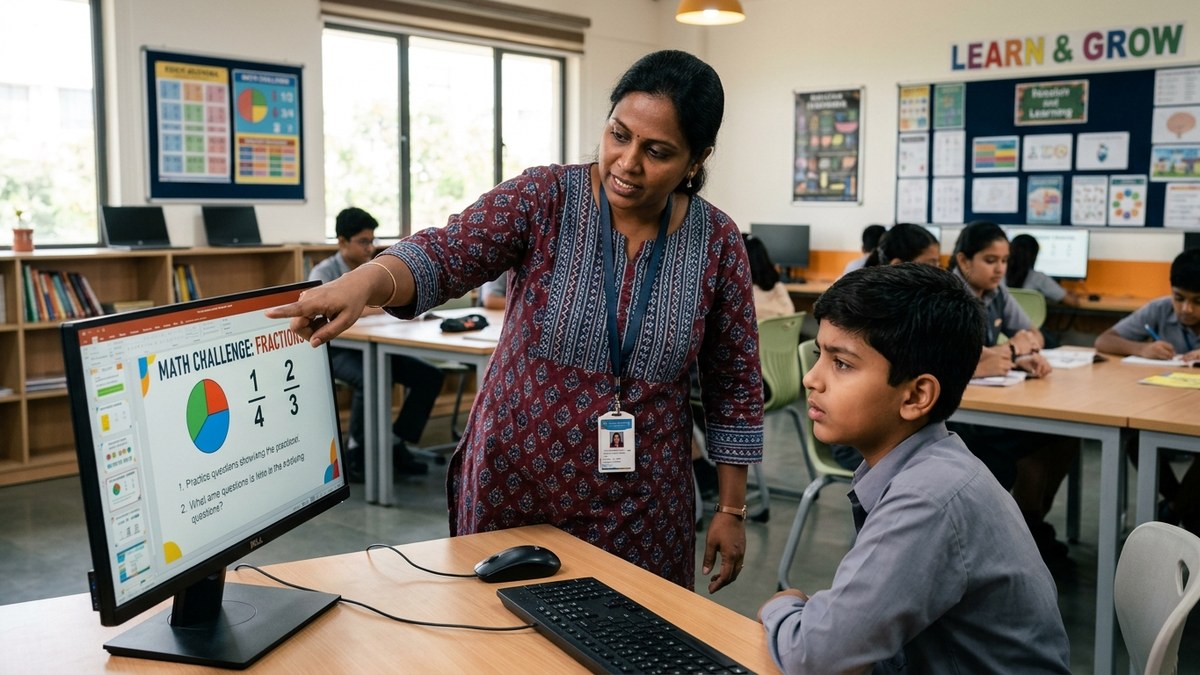
- The educator can pause, repeat, and explain differently without time pressure
- Digital tools track exactly where each student struggles
- Content is aligned with India Ministry of Education standards, so students actually catch up with their class
- Parents see real progress, not just a monthly fee deduction
- Weak students build confidence, not anxiety
This is scalable. A homemaker in Delhi can run a POD from her living room. A senior citizen can earn while helping neighbourhood kids. A tuition teacher can upgrade from chalk and talk to structured digital learning. All with APNA PC as the foundation.
Your Next Step
Stop paying for tuition that doesn’t work. Start building a solution that does. Whether you’re a parent frustrated with your child’s progress, a homemaker looking to earn, or an educator wanting to reach more weak students, the answer is the same.
Set up a Point of Digital Learning. Invest in APNA PC. Help weak students catch up properly.