
The Hard Truth: Your Home Is Missing a Digital Learning Space
Your child is falling behind. Your student isn’t getting enough practice. Your community has no access to quality education software. These aren’t dramatic statements. These are facts playing out in millions of Indian homes right now.
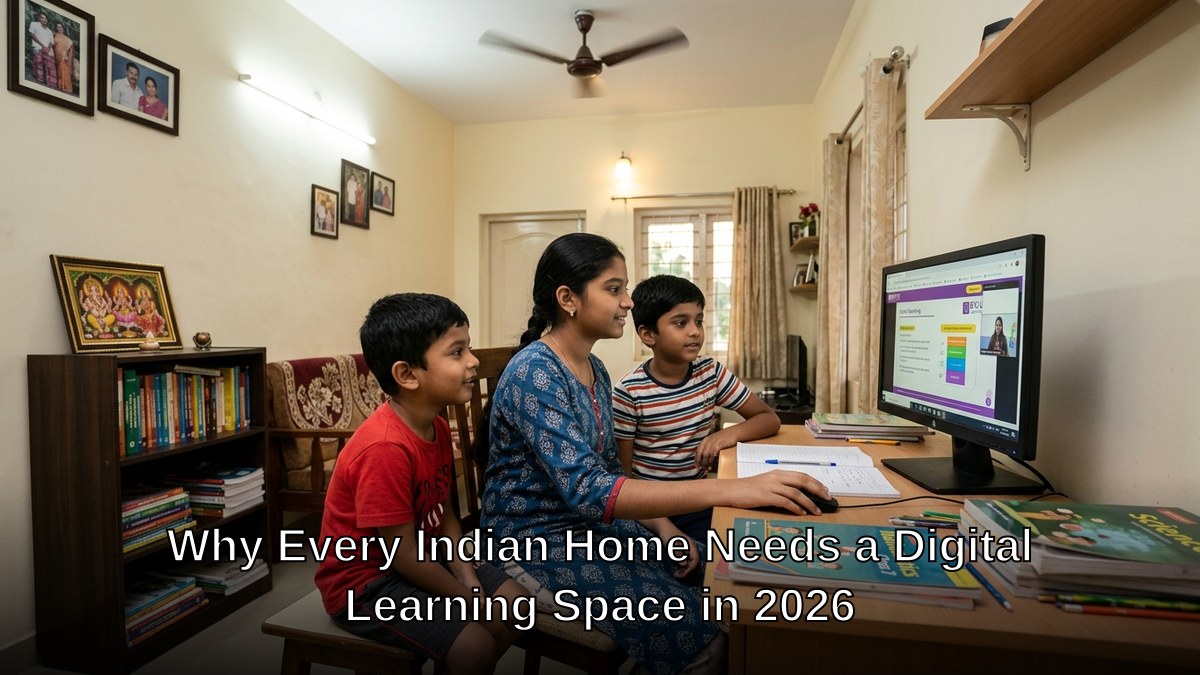
Here is the truth: a digital learning space India home setup is no longer a luxury. It’s become as essential as a kitchen or a bedroom. Yet most Indian families still treat it like an afterthought. They squeeze a laptop onto a dining table. They share one screen among four children. They wonder why learning outcomes stagnate.
The gap isn’t just about technology. It’s about intention. When you create a dedicated digital learning space in your home, you’re sending a signal. To your children. To yourself. That education matters enough to deserve real space. Real equipment. Real infrastructure.
Key Takeaways
- A digital learning space at home is now closer to a basic need than a luxury, but most families still squeeze learning onto a shared phone or a dining table.
- A dedicated space signals that education matters and gives children a fixed spot where focused work happens.
- Homemakers, senior citizens, tuition teachers and edupreneurs all gain from a proper setup, from saved troubleshooting time to the ability to teach more students.
- A real setup is an ecosystem: a reliable computer, a screen everyone can see, working audio and video, durable peripherals, and installation and warranty support.
- Once the setup works, the same space can grow into a Point of Digital Learning that serves neighbouring families.
Why 2026 Is The Year Everything Changes
Let’s be honest: the pandemic forced a shift. Schools adapted. Teachers learned. But most homes never caught up. They installed what was minimally necessary and called it done.
Now we’re seeing the results. Students who learned at home during lockdown are struggling to maintain that momentum. Teachers offering tuition from cramped rooms can’t scale. Edupreneurs wanting to run learning centres from home lack proper infrastructure.
2026 is different because:
- Government platforms like DIKSHA digital learning platform now have millions of quality resources ready to use
- Internet penetration in Indian homes has crossed 50 percent in most urban and semi-urban areas
- The cost of setting up a proper home computer setup learning station has finally become accessible
- Parents and educators have moved past the “is online learning effective?” debate and moved to “how do we do it well?”
Most people don’t realise that the real barrier today isn’t whether digital learning works. It’s whether they have the right setup to make it work.
Who Needs a Digital Learning Space Right Now
This isn’t just for tech-savvy families. If you fall into any of these categories, you need to read this carefully.
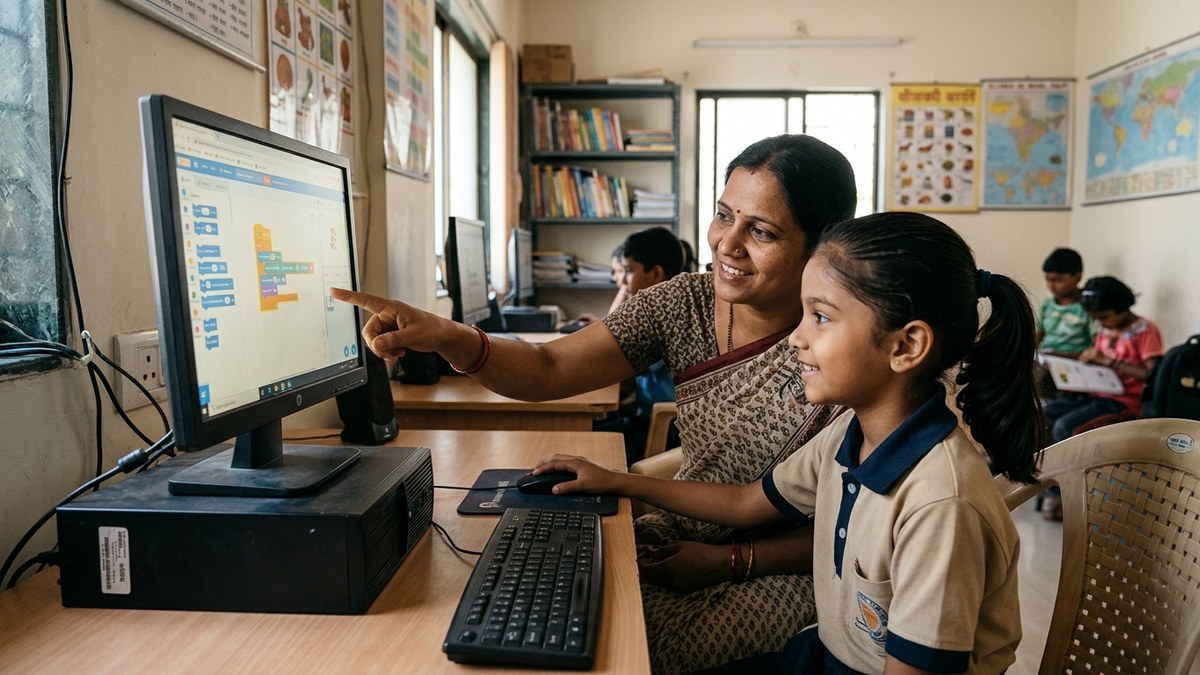
Homemakers managing children’s education: You’re juggling school assignments, tuition classes, and online resources on whatever device is available. A dedicated digital learning space means your children can access structured content independently. It means you get back 10 hours a week that you’re currently spending on screen-sharing and technical troubleshooting.
Senior citizens wanting to stay relevant: Digital literacy isn’t optional anymore. A home computer setup learning station lets you learn at your pace. Video calls with grandchildren. Online shopping. Government services. Banking. All of this becomes easier when you have a proper setup and someone to guide you through it.
Tuition teachers and edupreneurs: You’re currently teaching from your bedroom or a cramped corner. Your students see poor video quality. Your audio cuts out. You can’t run interactive sessions properly. This limits how many students you can take and how much you can charge. A Point of Digital Learning (POD) setup changes everything about your business model.
The Real Cost of Not Having One
Here’s what happens when you don’t invest in a proper digital learning space:
- Children study for 20 minutes then complain about discomfort. Learning suffers.
- Teachers can’t deliver quality online sessions. Student outcomes plateau.
- You buy random gadgets that don’t work together. Money wasted.
- Your home remains chaotic because there’s no dedicated learning zone.
- You miss out on government initiatives and quality content because your setup can’t handle it.
The irony is that NOT investing costs more than investing. You spend money on ineffective solutions. You waste time troubleshooting. You lose opportunities because you can’t scale.
What a Real Digital Learning Space Looks Like
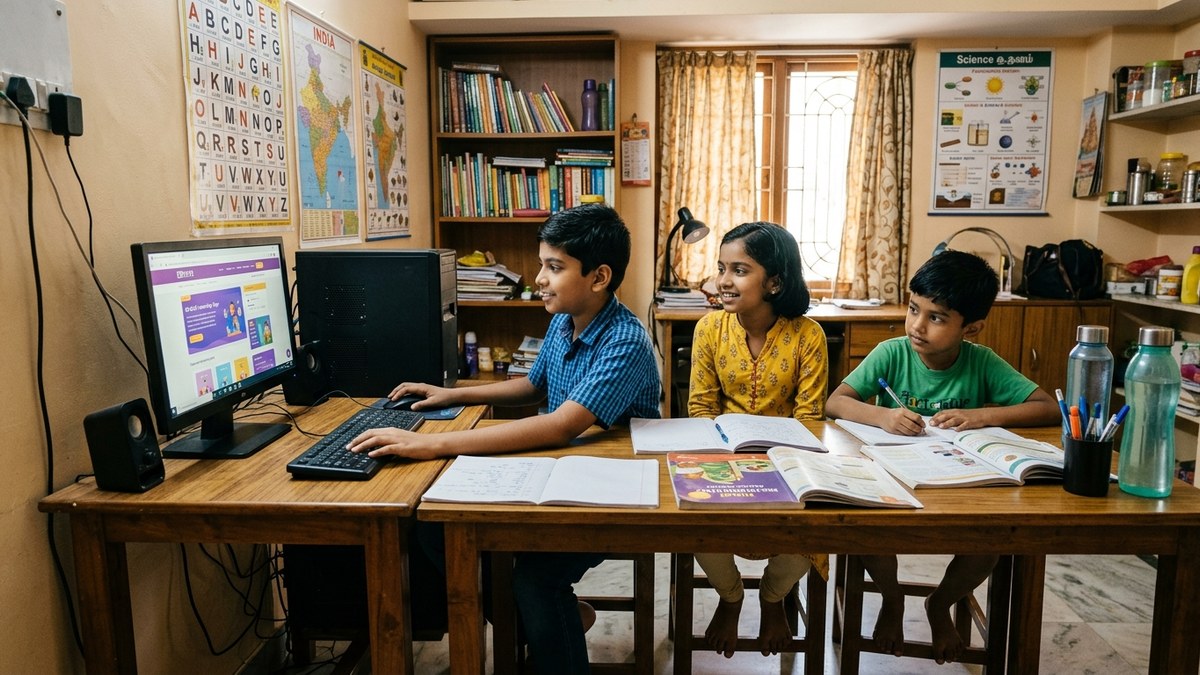
Stop thinking about this as buying a computer. Think about it as building an ecosystem.
A proper home computer setup learning includes:
- A reliable machine with enough power to run education software smoothly
- A monitor large enough that multiple people can see clearly
- Audio and video equipment so online classes work properly
- Peripherals that don’t fail after three months
- Software pre-installed and ready to use
- Professional installation so you’re not fumbling with cables
- Warranty and support so you’re not panicked when something breaks
This is exactly what APNA PC delivers. A complete bundle. Rs.30,000. Mini PC with i3 7th Gen processor, 8GB RAM, 128GB SSD. Monitor. Keyboard. Mouse. Webcam. Headset. Three years of warranty. Installation included. Education software pre-loaded and ready to go.
No guesswork. No assembly required. No software confusion. Just a working digital learning space India homes actually need.
From Home Setup to Community Impact
Here’s where this gets interesting. Once you have a proper setup, you can do more than just learn. You can teach. You can lead.
Teachers and edupreneurs are using APNA PC to start a microschool from home. Running structured online classes. Taking 15-20 students. Building a sustainable income. Creating a Point of Digital Learning (POD) in their community.
Homemakers are using it to help neighbourhood children with homework. Senior citizens are learning digital skills and teaching others. The ripple effect goes beyond one home.
If you’re serious about building a home learning space under Rs.30,000, this is the path forward.
The Choice Is Yours
You can continue as you are. Squeezing learning into whatever space and equipment you have. Accepting mediocre outcomes. Watching opportunities pass by.
Or you can make a decision. Right now. That your home deserves a proper digital learning space. That education deserves real infrastructure. That 2026 is the year you stop compromising.
The APNA PC bundle is ready. Your space is waiting. Your students are waiting. What are you waiting for?
Start today. Build your Point of Digital Learning. Transform how education happens in your home and your community.
Frequently Asked Questions About Digital learning space at home
What does a home digital learning space actually need?
A reliable computer with enough power for education software, a monitor large enough for more than one person to see, and working audio and video for online classes. Add durable peripherals, a fixed desk and chair, and a stable internet connection. Installation and warranty support keep it running through the year.
Is a smartphone enough for a child’s online learning?
A phone is fine for watching lessons and quick lookups, but not for real school work. Typing assignments, filling forms, spreadsheets, online tests and coding all need a keyboard and a full screen. A shared family computer handles these properly.
How much space do I need for a home learning setup?
You do not need a separate room. A low-traffic corner away from the TV and kitchen, with decent light and a desk used only for study, is enough. Using the same spot at the same times is what builds the focus habit.
Can a home digital learning space help me earn income?
Yes. Once the setup is reliable, tuition teachers can run structured online classes, homemakers can help neighbourhood children with homework for a fee, and educators can build a small learning centre. The same computer that supports your child’s study can support paid teaching.
Why is a dedicated learning space better than a shared device?
A shared phone or laptop that is also used for calls, entertainment and household work is always in demand and full of distractions. A dedicated computer and corner mean a child can sit down and start without negotiating for the device or the space each time.
India’s Digital India programme and the DIKSHA platform are built on the assumption that families and community centres have basic computer access, since core school and government services now run online.