
Digital Literacy Still Matters for Rural India in 2026
A village teacher in Maharashtra told us last month: “My students can’t get jobs because they don’t know how to use a computer. But I can’t teach them because I don’t have one.”
That’s not a sob story. That’s the reality for millions of rural educators across India right now. While urban India debates AI and cloud computing, rural students are still locked out of basic digital literacy. And here’s the truth: this gap isn’t closing on its own.
We’re in 2026. The Digital India initiative has been running for over a decade. Yet rural education remains stubbornly offline. Why? Because digital literacy isn’t just about access. It’s about having the right tools, the right training, and the right support system in your own community.
Let’s be honest: most people don’t realise that digital literacy is now a survival skill, not a luxury. A student without basic computer knowledge can’t fill an online job application. Can’t access government services. Can’t participate in the digital economy that’s reshaping rural India.
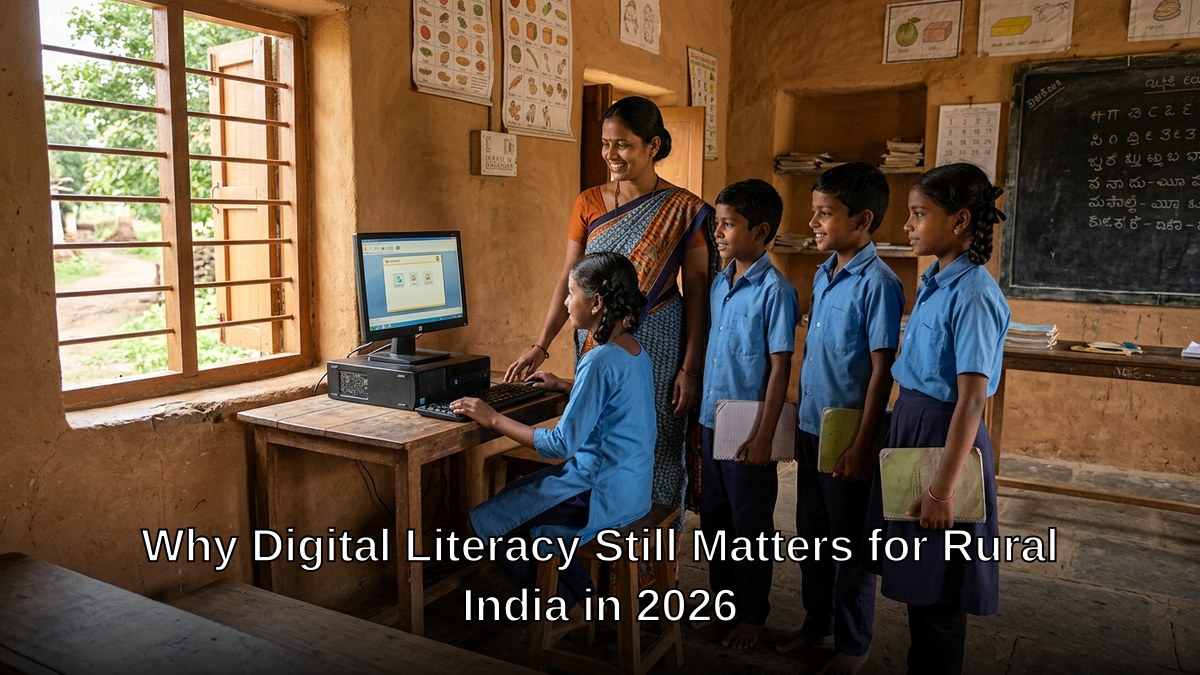
Why Rural Schools Are Still Struggling with Digital Skills
The barriers are real and they’re structural. Rural schools lack basic infrastructure. Teachers don’t have training in digital pedagogy. And when a computer does arrive, it often sits unused because there’s no one to maintain it or teach with it.
The government has launched programs. The DIKSHA digital learning platform exists. But a platform without hardware is just wishful thinking. A computer without a trained educator is an expensive paperweight.
Most rural areas have:
- No reliable electricity backup for computer labs
- Teachers who’ve never been trained on basic software
- No budget for hardware maintenance or replacement
- Internet connectivity that drops every monsoon
- Students who graduate without ever touching a keyboard
This isn’t about lack of will. Rural educators want to teach digital literacy. They’re just not given the means.
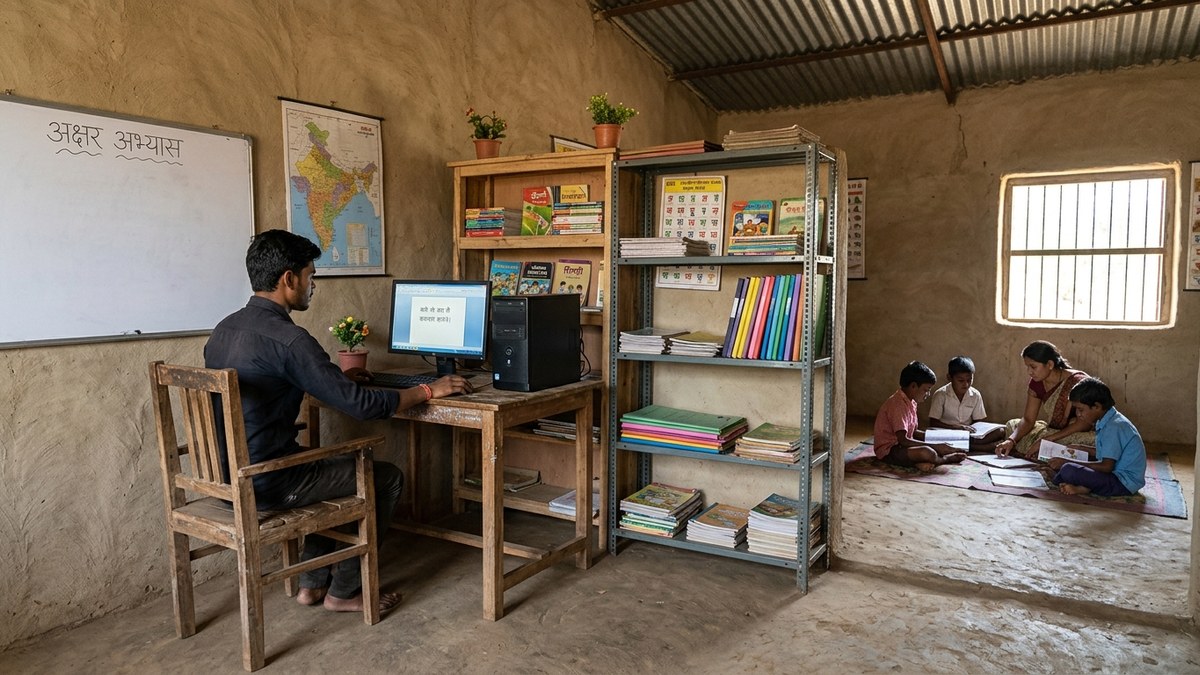
The Real Solution: Digital Literacy Starts at the Community Level
Here’s what actually works: putting a computer in the hands of a trained educator in your own village. Not in a distant district office. Not in a government school that may or may not function. In your community.
This is why the Point of Digital Learning model matters. A POD is simple: one educator, one quality computer setup, serving 20-30 students from your neighbourhood. No bureaucracy. No waiting for government approval. Just real teaching happening.
When you start a microschool in your community, you’re not just running a tuition centre. You’re building a hub for digital skills. Your students learn not just academics, but how to use computers, navigate the internet safely, and prepare for a digital economy.
The APNA PC bundle makes this possible. For Rs.30,000, you get everything: a Mini PC with i3 7th Gen processor, 8GB RAM, 128GB SSD, monitor, keyboard, mouse, webcam, headset, plus education software pre-loaded and 3 years of warranty with installation support. That’s not an expense. That’s an investment in your community’s future.
Most people don’t realise that a single educator with one APNA PC can teach 100+ students per year. That’s 100 young people who now understand computers. Who can apply for jobs online. Who can access government services. Who can participate in India’s digital economy.
Why 2026 Is the Year to Act
The window is closing. Urban India is moving faster into digital skills. Rural students are falling further behind. If your community doesn’t have digital literacy infrastructure now, your young people will be competing for jobs without the basic skills employers expect.
Educators are already stepping up. Teachers are becoming edupreneurs. They’re running learning pods. They’re teaching digital skills for tuition teachers and expanding their own capabilities. They’re not waiting for the system to change. They’re changing it themselves.
You can do the same. You don’t need a fancy computer lab. You don’t need government permission. You need one computer, one educator (maybe that’s you), and commitment to teaching digital literacy in your community.
The APNA PC isn’t just hardware. It’s the foundation of a Point of Digital Learning. It’s how you bring real digital literacy to rural India. It’s how you prepare your students for 2026 and beyond.
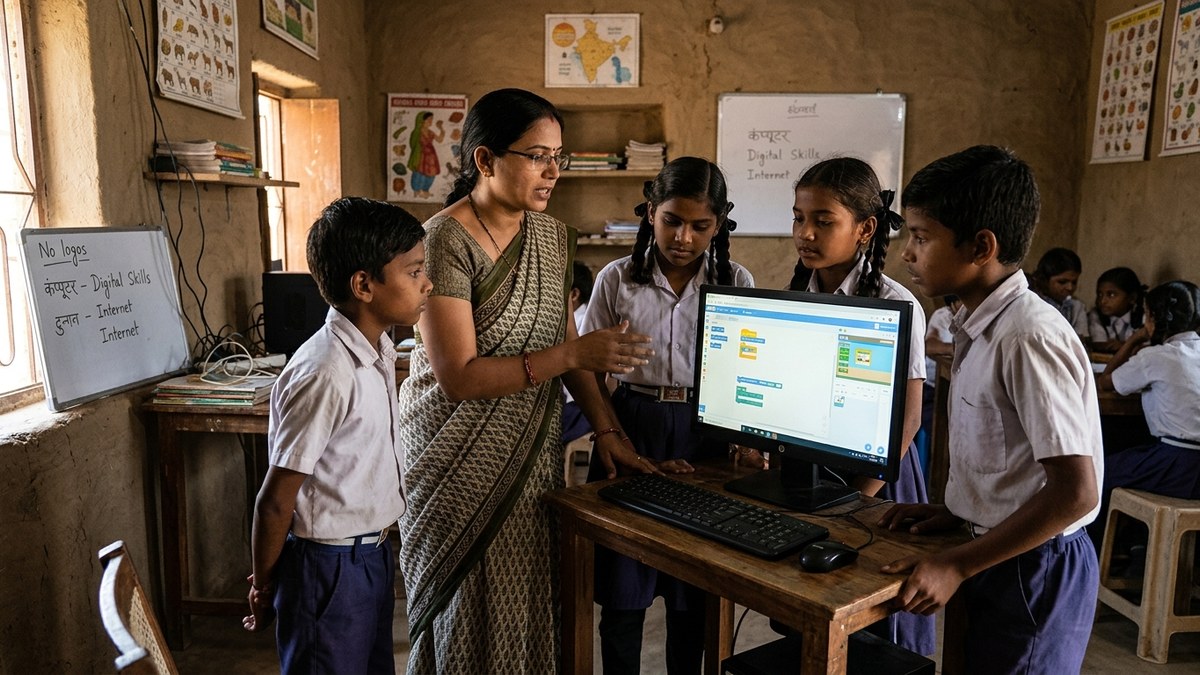
Here’s the challenge: If not you, then who? If not now, then when? Rural India’s digital literacy gap won’t close itself. It closes when educators like you decide to act.
Ready to start? You have two paths. Either set up a Point of Digital Learning in your community with full support from TeachToEarn. Or get the hardware foundation you need with APNA PC and build from there.
The question isn’t whether your community needs digital literacy. It does. The question is: are you ready to be the one who makes it happen?