
Your tuition students are leaving you for online classes. Not because your teaching is bad. Because you’re still operating like it’s 2015.
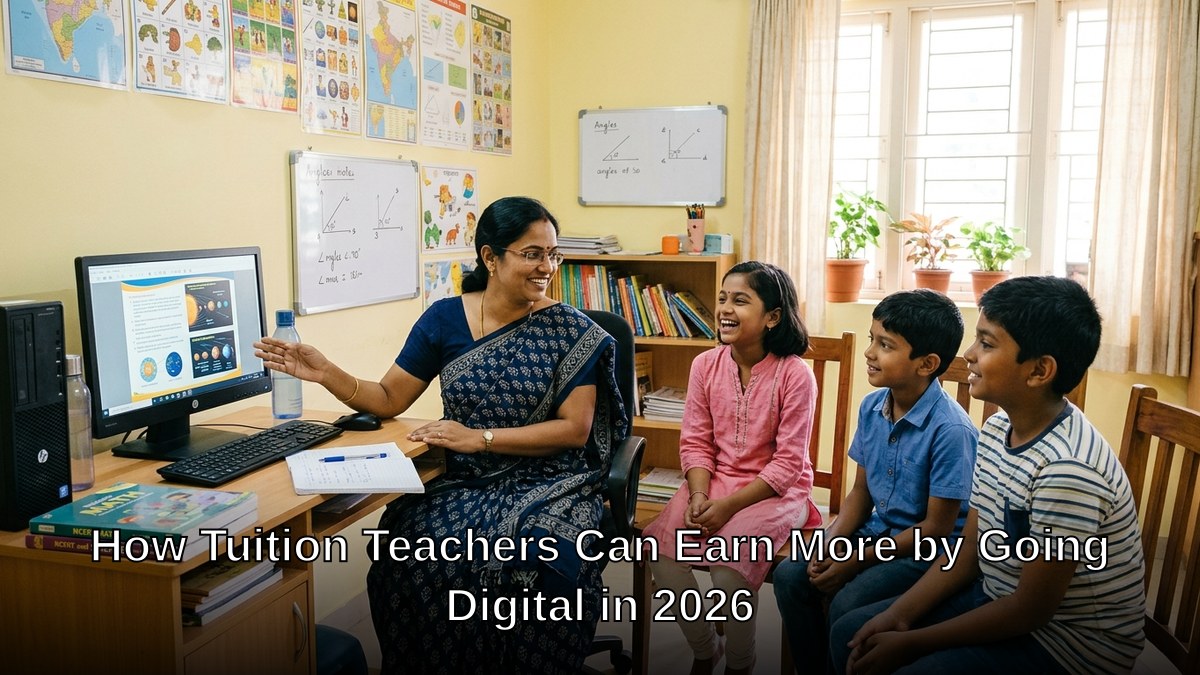
Here is the truth: tuition teachers in India are sitting on a goldmine they refuse to excavate. Parents want flexibility. Students want recorded lessons. Siblings want to join from different cities. But most tuition teachers are still writing on blackboards and hoping students show up on time.
The coaching class model is broken. Not dead. Broken. And the tuition teachers who adapt will earn 3-4x more than those who don’t.
This isn’t about replacing your in-person classes. It’s about multiplying them. Going digital doesn’t mean abandoning your students. It means reaching more of them. It means getting paid while you sleep. It means your reputation compounds instead of disappearing when you retire.
Key Takeaways
- Tuition teachers going digital are not replacing their in-person classes, they are adding recorded lessons and online batches on top.
- Traditional tuition income is capped by physical teaching hours, while digital delivery lets one lesson reach many more students.
- Parents increasingly want flexibility like recorded lessons for siblings in different cities or revisiting a lesson at their own pace.
- A reliable computer setup, not a phone, is what makes recording clear lessons and managing multiple online batches realistic.
- Building a digital presence lets a tuition teacher’s reputation compound over time instead of resetting whenever they retire or relocate.
Why Tuition Teachers Are Losing Income Right Now
Let’s be honest: you’re capped. Your income depends on how many hours you can physically teach. If you teach 4 hours a day, 6 days a week, that’s your ceiling. Add one more student? You lose sleep. Add one more batch? You burn out.
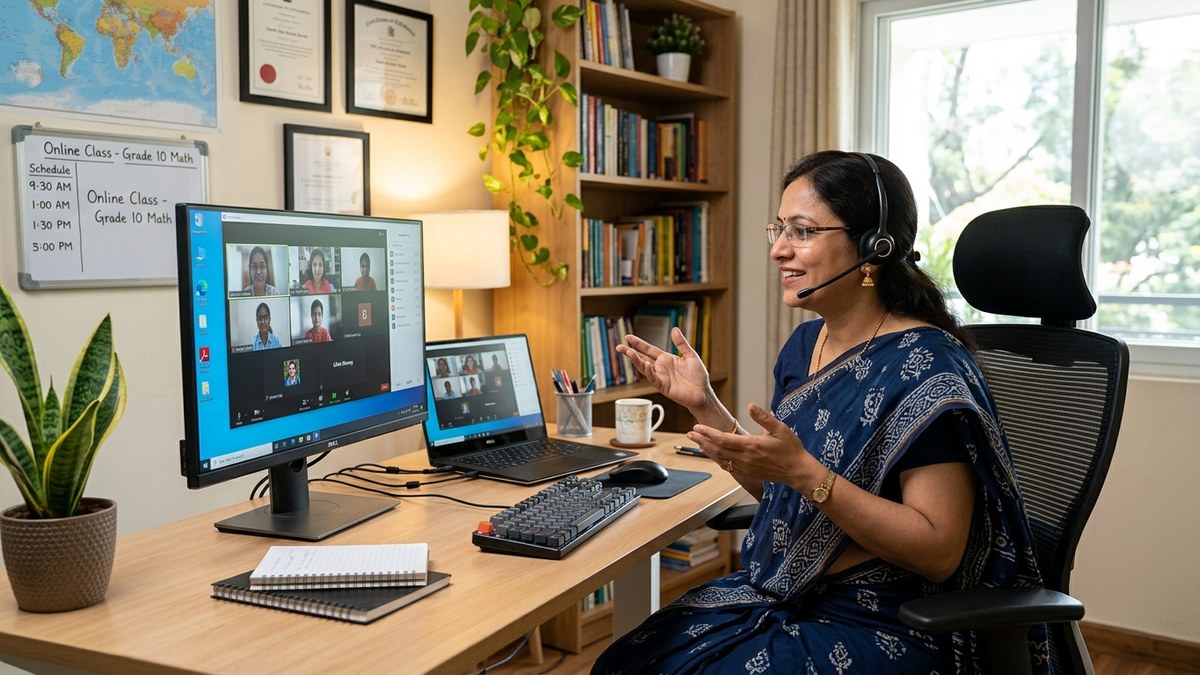
Meanwhile, digital teaching platforms are stealing your best students. Not because they teach better. Because they’re accessible. A student in Bangalore can learn from a teacher in Delhi at 6 AM. A parent can show a recorded lesson to their child at midnight. No commute. No fixed slots.
Most people don’t realise that 60% of Indian parents now prefer hybrid learning. They want in-person classes AND recorded content. They want flexibility AND personal touch. If you only offer one, you lose them to someone who offers both.
The Digital India initiative has already reached 85% of Indian households. The infrastructure is there. The demand is there. The only missing piece is you.
How Digital Teaching Multiplies Your Income
Going digital means three revenue streams instead of one.
- Live online classes: Teach 10 students in one session instead of 1-on-1. Same time. 10x the income.
- Recorded courses: Create once. Sell forever. A 40-hour course recorded once can earn you Rs.5,000-50,000 per month for years.
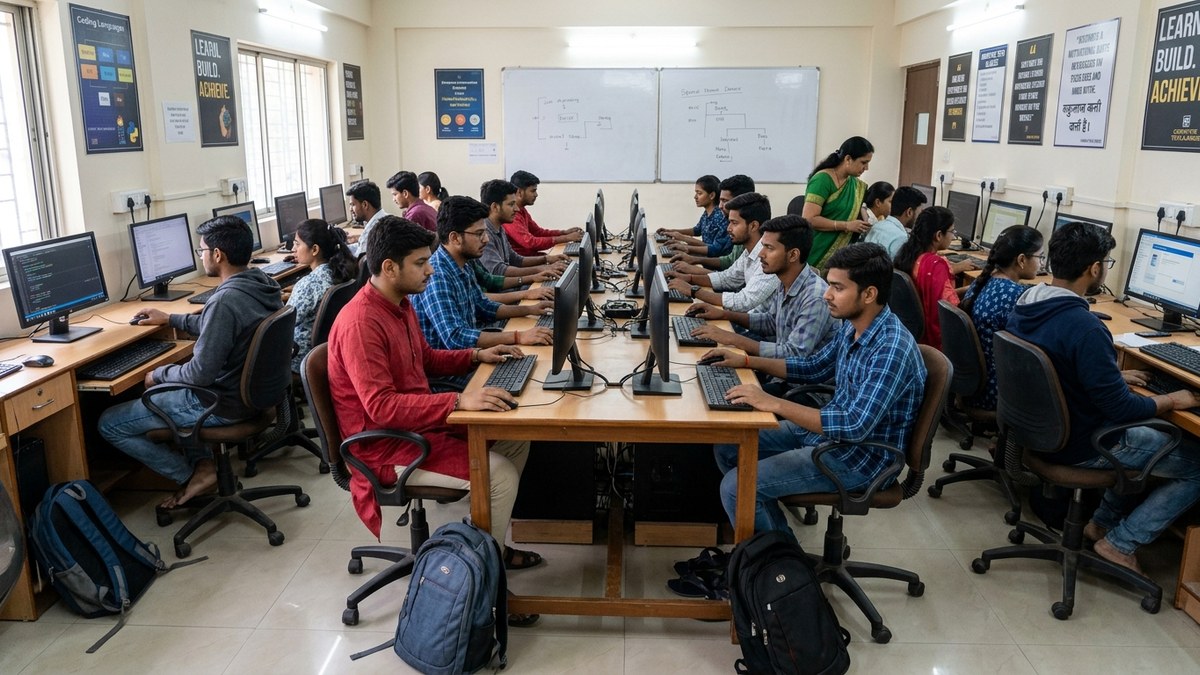
- Group coaching centres: Run a Point of Digital Learning (POD) from home or a rented space. Students learn on computers. You manage 3-4 batches simultaneously.
The math is simple. If you earn Rs.300 per hour teaching one student, and you work 6 hours a day, that’s Rs.1,800 daily. Now teach 8 students online in the same 6 hours. That’s Rs.14,400 daily. Same effort. Eight times the money.
But here’s what stops most tuition teachers: they think they need expensive tech. They think they need a fancy studio. They think they need to learn coding.
They’re wrong.
The Real Barrier: Equipment, Not Skill
You don’t need a Rs.1,00,000 laptop. You don’t need studio lighting. You don’t need a film degree.
What you need is reliable hardware that doesn’t crash mid-class. A computer that can handle 20 students on a video call without freezing. A setup that looks professional enough that parents respect you. A warranty so you’re not stressed about repairs.
This is where APNA PC changes everything.
For Rs.30,000, you get a complete bundle. Not just a computer. A full digital teaching station. Mini PC with i3 7th Gen processor. 8GB RAM. 128GB SSD. Monitor. Keyboard. Mouse. Webcam. Headset. Three-year warranty. Installation support.
That’s not an investment in a computer. That’s an investment in multiplying your income. You’ll earn back that Rs.30,000 in 2-3 months with just 5-10 extra online students.
And you can start a coaching class with APNA PC right now. No waiting. No delays.
Building a Point of Digital Learning (POD)
The future of coaching classes isn’t big buildings with 100 students in one room. It’s small, local, digital-first learning centres run by trained educators like you.
A POD is a home or community space where 15-20 students learn on computers under your guidance. You’re not replacing yourself. You’re amplifying yourself. Students get personalized attention. You manage multiple batches. Parents get affordable, quality education.
With APNA PC, you can run a POD from your home. No rent. No overhead. Just you, a few computers, and students who actually want to learn.
You can start a tuition business at home with this exact model. Hundreds of teachers are already doing it.
What You Need to Do Today
Stop waiting for the “right time” to go digital. There is no right time. There’s only now.
Your competitors are already recording lessons. Your students are already watching YouTube tutorials. Your income is already declining because you’re not adapting.
Here’s your action plan:
- Get APNA PC. Rs.30,000. Done.
- Set up one online batch. Start with 5 students.
- Record your first lesson. Just one. See how easy it is.
- Launch a POD from home. No rent. No risk.
- Scale to 3-4 batches within 6 months.
By 2026, you’ll either be a digital tuition teacher earning 3-4x more. Or you’ll be a traditional tuition teacher earning less each year.
The choice is yours. But the time to choose is now.
Ready to start? Launch your Point of Digital Learning today. Your future income depends on it.
For more resources, check the Ministry of Education guidelines on digital learning and the Digital India initiative to understand the landscape you’re entering.
Frequently Asked Questions About Tuition teachers going digital
What does it mean for a tuition teacher to go digital?
It means adding online elements like recorded lessons, live video batches, or digital assignments alongside existing in-person classes, not replacing them entirely. This lets a teacher reach students beyond their immediate neighbourhood and serve more than one physical batch at a time. Many teachers start small, recording just one weekly lesson before expanding.
Will going digital mean losing my existing in-person students?
No, most tuition teachers use digital tools to complement in-person classes rather than replace them, offering recordings as revision material or extending reach to new students in other locations. Existing students often appreciate having recorded lessons to revisit. The goal is multiplying reach, not abandoning the current teaching model.
How much more can a tuition teacher earn by going digital?
Some tuition teachers report earning several times more once they combine in-person classes with online batches and recorded content, since digital delivery removes the hard cap of physical teaching hours. Actual results vary based on subject demand and consistency. The core advantage is that one well-prepared lesson can be reused or sold multiple times.
What equipment does a tuition teacher need to start recording lessons?
A dependable computer, a decent webcam and microphone, and simple screen recording or video call software cover the basics. A phone can record short clips, but a computer handles longer sessions, screen sharing, and file organisation much more reliably for regular use. An APNA PC style dedicated setup keeps this process consistent instead of ad hoc.
Is it hard for an experienced offline tutor to learn digital teaching tools?
Most tuition teachers find the learning curve manageable, since the core teaching skill stays the same and the new part is mainly getting comfortable with video calls, screen sharing, and basic recording. Most pick up the essential workflow within a few sessions of practice. Starting with one simple tool rather than trying everything at once makes the transition smoother.
NEP 2020 encourages blended learning models that combine traditional teaching with digital delivery to widen access to quality education in India.