
Why Most Indian Schools Are Still Teaching Yesterday’s Skills
Your students will graduate into a job market that doesn’t exist yet. But your classrooms look exactly like they did in 2005.
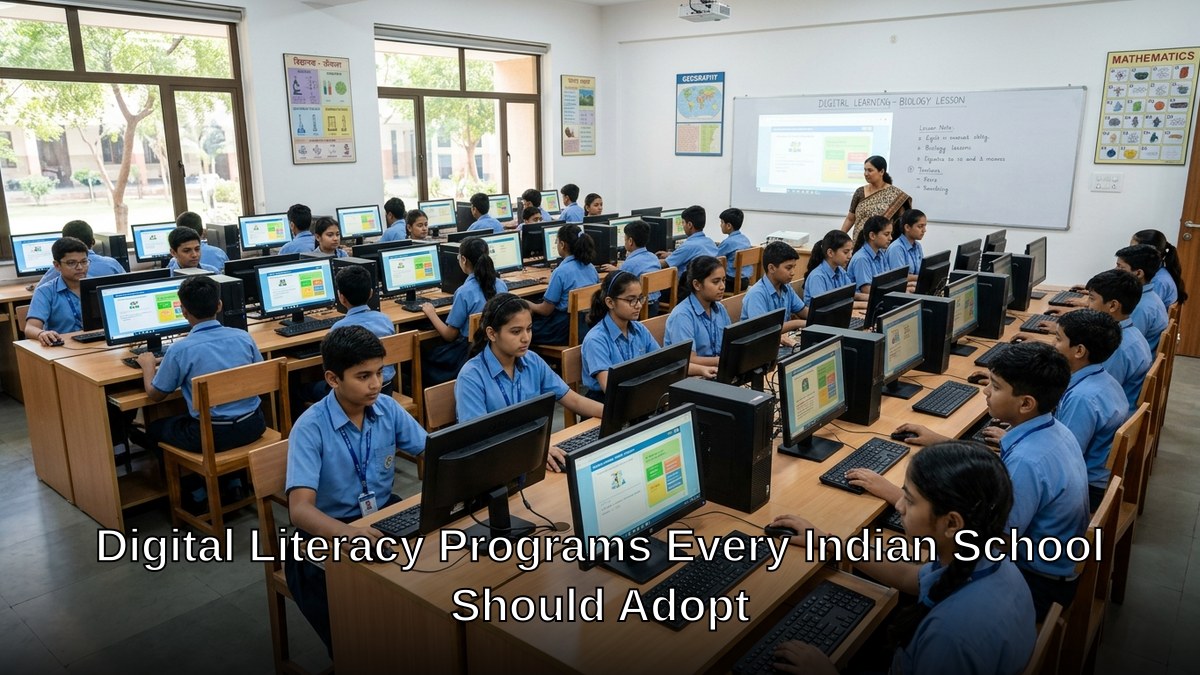
Here is the truth: digital literacy programs aren’t luxury add-ons anymore. They’re survival tools. When we talk about digital literacy programs, we’re not discussing coding bootcamps or AI workshops. We’re talking about basic competency. The ability to use a computer. To navigate the internet safely. To understand how technology shapes information. To create, not just consume.
Most people don’t realise that 70% of Indian students will work in jobs that didn’t exist five years ago. Yet we’re still teaching them to fill forms and memorise textbooks. The gap between classroom and career is widening every single day.
Let’s be honest: your school probably has a computer lab gathering dust. The teacher who was supposed to maintain it left three years ago. The software licenses expired. The machines are slow. And nobody knows how to fix them.
This isn’t your fault. The system failed you.
Key Takeaways
- Digital literacy programs in schools go beyond coding classes, they build basic computer, internet safety and information skills every student needs.
- A computer lab that sits unused all year defeats the purpose of a digital literacy program.
- Schools that treat digital literacy as a core subject, not an add-on, prepare students for jobs that do not exist today.
- Hands-on practice on a shared computer matters more than one weekly lab period with no follow-up.
- Teacher training and consistent practice time decide whether a digital literacy program actually works.
What Digital Literacy Programs Actually Need to Include
Forget the buzzwords. Here’s what works in Indian classrooms:
- Basic computer operation and keyboard skills
- Internet safety and identifying misinformation
- Word processing, spreadsheets, and presentations
- Email communication and online collaboration
- Problem-solving using technology
- Understanding digital rights and cybersecurity basics
These aren’t advanced topics. These are foundational. Yet thousands of Indian students graduate without these skills. Why? Because we’re waiting for the perfect program instead of starting with what we have.
The barrier isn’t knowledge. It’s infrastructure. It’s hardware that works. It’s software that doesn’t require a PhD to operate. It’s training that actually sticks because it’s practical, not theoretical.
School digital education needs three things: reliable computers, actual teaching materials, and teachers who understand the tech themselves. Not experts. Just people who can troubleshoot when something breaks at 2pm on a Tuesday.
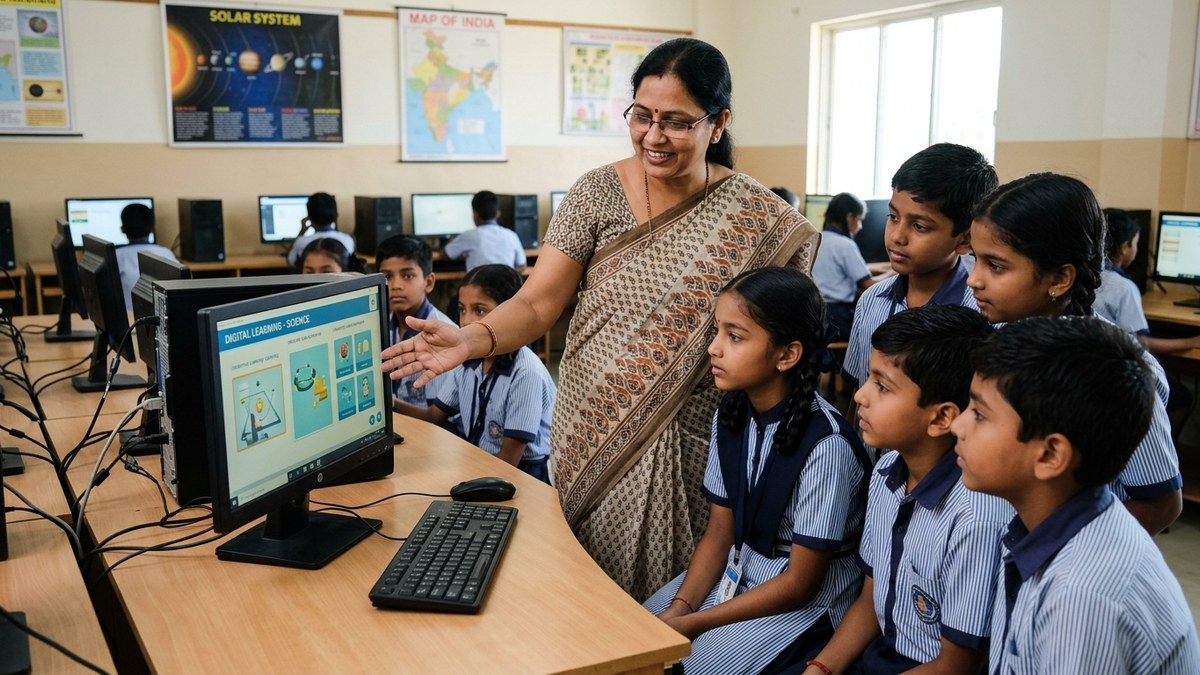
The Digital India initiative by MeitY has pushed policy in the right direction. But policy doesn’t install software. Policy doesn’t train teachers. Policy doesn’t replace broken monitors.
That’s where real digital literacy programs live. In the classroom. With actual students. With working equipment.
Building Digital Literacy in Your School: The Practical Path
Start small. Don’t wait for a government grant or a perfect master plan. Your school can implement digital literacy programs right now.
First, audit what you have. Count the working computers. Test the internet connection. Identify which software actually works. This takes one afternoon.
Second, identify your champion. One teacher who’s willing to learn, experiment, and teach others. Not the youngest teacher. Not the most tech-savvy. The one who actually cares about outcomes.
Third, invest in equipment that lasts. You need computers that won’t become obsolete in two years. Machines that can handle educational software without crashing. Systems that come with warranty and support because something will break.
APNA PC is built exactly for this. A complete bundle at Rs.30,000 that includes everything: a Mini PC with i3 7th Gen processor, 8GB RAM, 128GB SSD, monitor, keyboard, mouse, webcam, headset, plus education software and three years of warranty with installation. No hidden costs. No “you need to buy this separately” surprises.
But here’s what matters more than the hardware: the training. Your teachers need to understand not just how to use these tools, but why they matter. How they connect to the curriculum. How they prepare students for real jobs.
This is where a Point of Digital Learning (POD) helps. A POD is a home or community learning centre run by a trained educator. It’s where students can come outside school hours to practice digital skills. To get one-on-one help. To build confidence before they face a job interview.
Check out how digital literacy in rural India is being transformed by educators who refuse to accept the status quo.
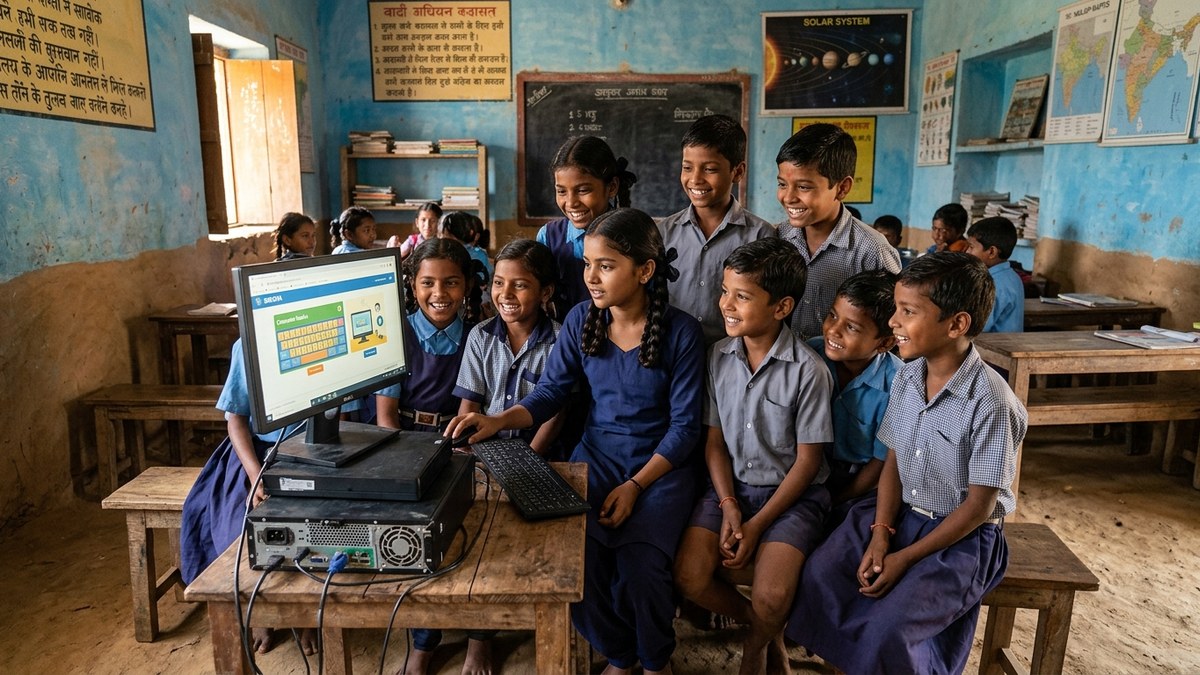
Most people don’t realise that digital literacy programs aren’t about technology. They’re about opportunity. They’re about giving your students a fighting chance in a world that’s already moved on without them.
When your students learn digital skills in school, they don’t just pass exams. They gain confidence. They understand how information flows. They can communicate across distances. They can learn independently. These are the skills that actually matter.
And yes, they also become more attractive to employers. But that’s a side benefit. The real benefit is agency. The ability to shape their own future instead of waiting for someone else to decide it for them.
Indian classrooms need digital literacy programs now. Not in five years when there’s more funding. Not when the perfect curriculum is written. Now. With what you have. With teachers who care. With equipment that works.
Your school can lead this. You can be the place where students actually learn the skills they need. Where digital literacy isn’t a checkbox. It’s a foundation.
The question isn’t whether your school can afford to implement digital literacy programs. The question is whether you can afford not to.
Start with APNA PC. Get your school equipped. Get your teachers trained. Get your students ready.
Also explore how digital skills for job seekers are reshaping career outcomes across India. And read more about Digital literacy on Wikipedia to understand the broader context.
Frequently Asked Questions About Digital literacy programs
What is a digital literacy program in schools?
It is a structured way of teaching students to use a computer, navigate the internet safely, and create digital content, not just consume it. It covers basic operating skills, safe browsing, and simple productivity tools rather than advanced coding.
Why do Indian schools need digital literacy programs now?
Many students will work in jobs that do not exist yet, and basic computer skills are now a baseline requirement for higher education and employment. Schools that skip this leave students unprepared for forms, applications, and everyday digital tasks.
What equipment does a school need to start?
A working computer lab with a few reliable systems is enough to start, it does not need to be large or expensive. Regular practice time on a shared computer matters more than having many machines.
Can a digital literacy program work in a low-resource school?
Yes, a program can start small with a handful of computers and gradually expand as more resources become available. What matters most is consistent, hands-on practice time rather than the number of devices.
How is digital literacy different from computer science class?
Digital literacy focuses on practical, everyday skills like navigating the internet safely and using basic software, while computer science covers programming and technical concepts. Most students need digital literacy first before advanced computer science makes sense.
NEP 2020 identifies digital literacy as a foundational skill area that schools are expected to build into the curriculum from an early stage.