Your Neighbourhood Needs a Learning Pod. Here is Why Nobody is Starting One.
Most people do not realise that education in India happens in isolation. A child sits alone with a tuition teacher. A homemaker scrolls through YouTube tutorials alone. A senior citizen struggles to learn digital skills alone. Meanwhile, your neighbourhood has dozens of people with identical learning needs, sitting in separate homes, paying separate fees, getting separate attention.
Here is the truth: a community learning pod changes this. Not someday. Now. A community learning pod is a neighbourhood space where local learners gather around trained educators and shared digital resources. It is not a school. It is not a franchise. It is your neighbourhood, reimagined as a learning ecosystem.
Let us be honest. You have probably walked past empty community halls, unused sports grounds, and idle balconies in your neighbourhood. These spaces are waiting. And if you are a homemaker, senior citizen, tuition teacher, or edupreneur, they are waiting for you to activate them.
Key Takeaways
- To launch a community learning pod in your neighbourhood you need just three things: a space such as a home room or community hall, one trained educator, and one shared computer setup.
- Unlike a school or franchise, a community learning pod is an informal neighbourhood space where ten to fifteen local learners of different ages gather around shared digital resources.
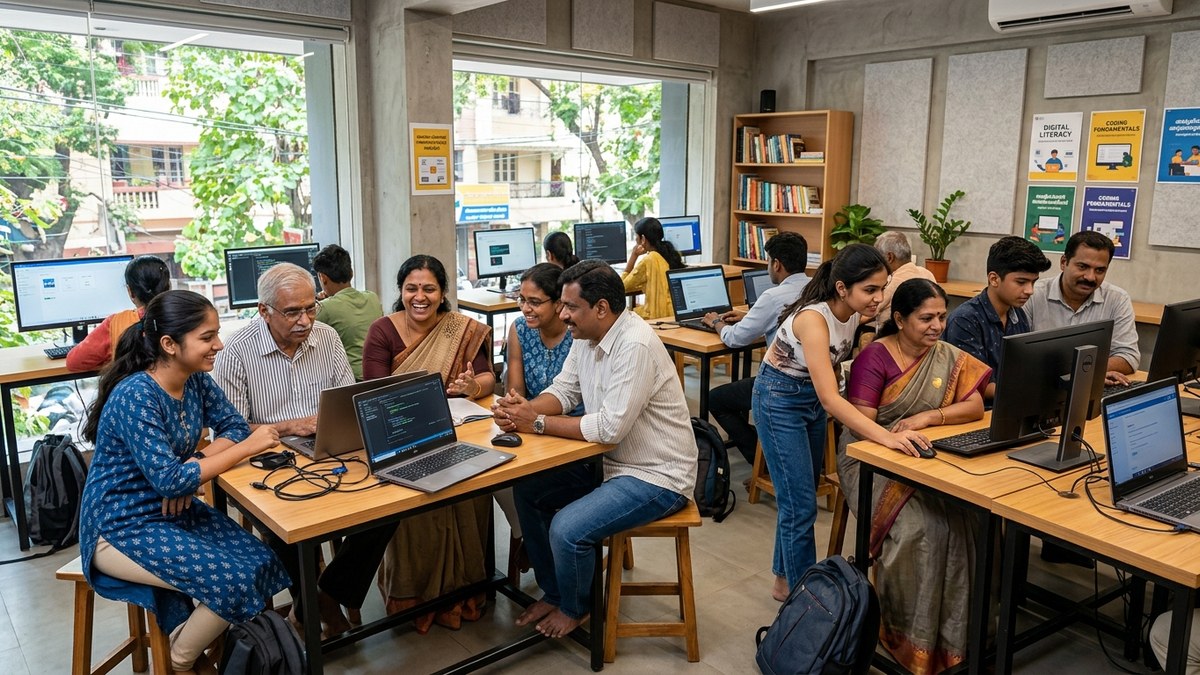
- The learners can be mixed groups: school students needing subject support, working professionals upskilling, homemakers learning financial literacy, and senior citizens learning basic digital skills together.
- Sharing one computer setup across fifteen learners brings the per-learner infrastructure cost down sharply compared with each family buying separate devices or hiring individual tutors.
- A bundle like APNA PC, around Rs.30,000 with a Mini PC, monitor, webcam, headset and education software, becomes the one shared resource the entire pod runs on, often connected to free content on platforms like DIKSHA.
Why Your Neighbourhood is Ready for This Right Now
Three things have changed. First, parents no longer trust one-size-fits-all schooling. Second, digital tools are cheap enough for group learning. Third, people are tired of isolation.
A community learning pod solves all three. Parents see their children learning alongside neighbourhood peers. Educators use affordable digital infrastructure. Learners build real connections, not just consume content alone.
The community learning concept is not new globally. But in India, it is still untapped. Your neighbourhood could be first.
What Does a Community Learning Pod Actually Look Like?
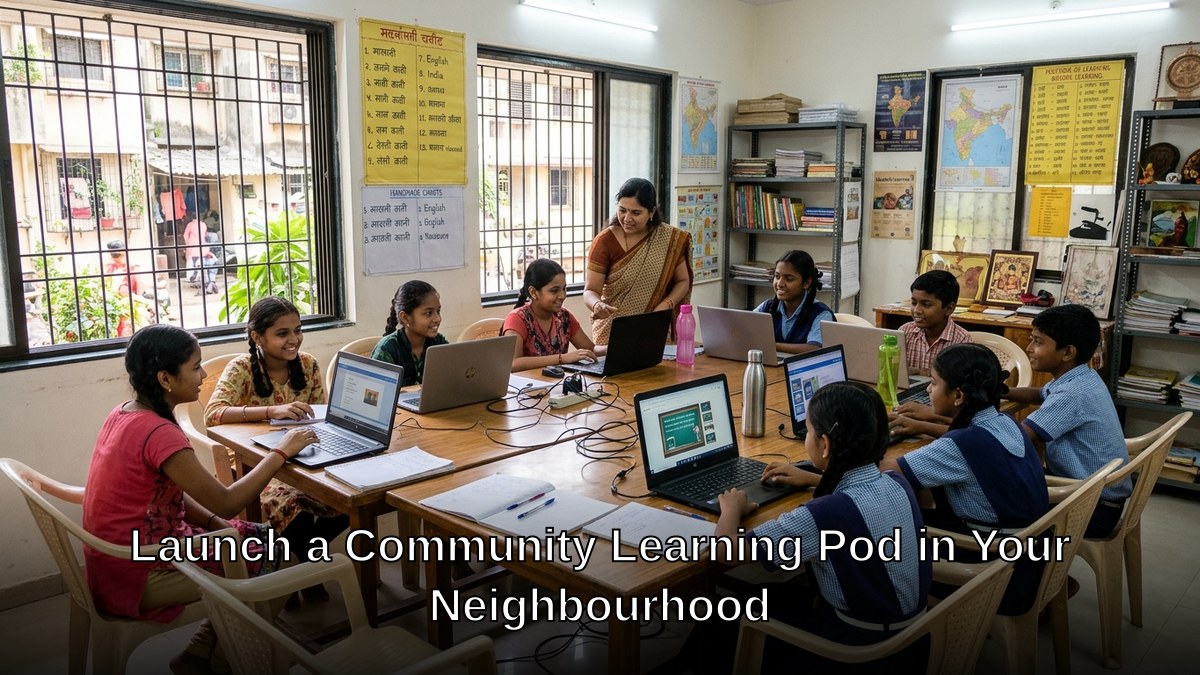
Stop imagining a fancy institute. Picture this instead: a 400 sq ft room in your neighbourhood. Ten to fifteen learners. One trained educator. One computer setup. A whiteboard. Real learning happening in real time.
The learners might be:
- Class 6-8 students needing math and science support
- Working professionals upskilling in digital tools
- Homemakers learning financial literacy or entrepreneurship
- Senior citizens learning to use smartphones and email
- Mixed groups learning together, cross-age mentoring naturally emerging
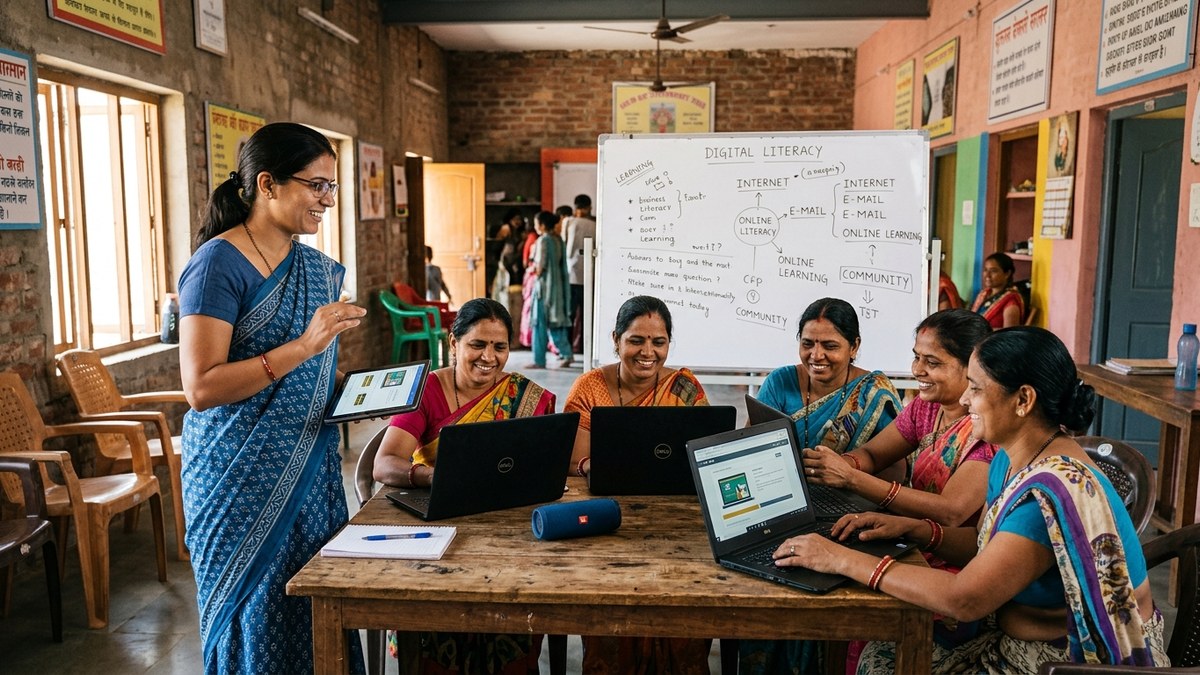
The educator is you. Or someone you train. Someone from the neighbourhood who knows the learners, understands their context, and can adapt teaching on the fly.
The Only Real Barrier: Equipment. We Solved It.
Most people do not realise that the biggest obstacle to starting a community learning pod is not motivation. It is the cost of setting up computers and software.
APNA PC changes this. For Rs.30,000, you get everything: a Mini PC with i3 7th Gen processor, 8GB RAM, 128GB SSD, monitor, keyboard, mouse, webcam, headset, complete education software, 3-year warranty, and installation. One machine. Shared by your entire pod. Connected to digital resources like DIKSHA digital platform for free learning content.
Do the math. If fifteen learners share one APNA PC setup, the per-learner infrastructure cost is Rs.2,000. No tuition teacher can match that. No online platform can replicate the human connection.
How to Actually Start This
You do not need permission. You do not need registration first. You need three things.
One: a space. Your home. A neighbour’s balcony. A community hall. A temple or mosque room. Anywhere with electricity and four walls.
Two: learners. Talk to five neighbours. Ask what they want to learn. You will find your first batch immediately.
Three: APNA PC. Order it. Install it. Start teaching.
The Point of Digital Learning model is designed exactly for this. You are not building an empire. You are solving a local problem and earning income while doing it.
The Real Numbers
If you run a community learning pod with fifteen learners, charging Rs.500-1,000 per learner per month, you earn Rs.7,500-15,000 monthly. Your APNA PC investment pays for itself in two to four months. After that, it is pure income. Plus impact.
You are not replacing schools. You are filling the gap between what schools offer and what neighbourhoods need.
Who Should Start This?
Homemakers: You already manage household learning. Scale it to your neighbourhood. Earn while you teach.
Senior citizens: You have time, wisdom, and neighbourhood relationships. Teach digital skills or life skills to younger generations. Stay engaged.
Tuition teachers: Your current model is fragmented. Consolidate learners into a pod. Teach more students. Earn more. Work less.
Edupreneurs: You have been waiting for the right infrastructure and model. It is here. Start a learning pod in your area and scale it to five pods, ten pods, fifty pods.
The Neighbourhood is Waiting
Most neighbourhoods in India have the same problem: disconnected learners, isolated educators, wasted community spaces. A community learning pod is the solution. It is local. It is affordable. It is immediate.
You do not need a business degree. You do not need a fancy office. You need clarity, commitment, and APNA PC.
Your neighbourhood is not waiting for the government to act. It is not waiting for big ed-tech companies to arrive. It is waiting for you.
Frequently Asked Questions About Launch a community learning pod in your neighbourhood
What do I need to launch a community learning pod in my neighbourhood?
You need a space of roughly 400 sq ft, such as a spare room, community hall or even a large balcony, one computer setup capable of running education software and video calls, and a trained educator willing to run regular sessions. No registration or special permission is required to start small.
How many learners can one community learning pod support?
A typical pod works well with ten to fifteen learners sharing one computer setup and one educator, which keeps the group small enough for personal attention while spreading the infrastructure cost across everyone. Mixed-age groups, from school students to senior citizens, can learn in the same space at different times.
Who can run a community learning pod?
Any committed local person can run one: a homemaker, senior citizen, tuition teacher or edupreneur who knows the neighbourhood and is willing to teach or coordinate sessions regularly. Deep technical expertise is not required, since the education software and training handle most of the content.
How much does it cost each learner to join a community learning pod?
If fifteen learners share one complete computer setup costing around Rs.30,000, the infrastructure cost works out to about Rs.2,000 per learner, far below what an individual tutor or private device would cost. Ongoing fees on top of that cover the educator’s time and space upkeep.
Is a community learning pod the same as a tuition centre?
No. A tuition centre is usually subject-focused and run as a straightforward business, while a community learning pod is built around shared neighbourhood space and mixed-age, mixed-purpose learning, from school support to digital literacy for seniors. It is closer to a neighbourhood learning hub than a conventional classroom.
India’s National Education Policy 2020 supports flexible, community-based learning models outside formal institutions, which is the framework a neighbourhood community learning pod operates within.