
Your Rural School Deserves Digital Access. Here is How to Build It.
A computer lab in a rural Indian school is not a luxury. It is survival. Every day, students in villages miss out on skills that urban children take for granted. Coding. Digital literacy. Online research. Job readiness. The gap widens every year. But here is the truth: setting up a computer lab in a rural school does not require a miracle budget or government committees that move at glacial speed.
Most people do not realise that a functional computer lab for rural education can be built with smart choices and the right hardware partner. This guide shows you exactly how.
Why Rural Schools Need a Computer Lab Right Now
Let us be honest. Rural students are competing for jobs in a digital economy. They cannot afford to wait. A computer lab in a rural school is not about gaming or entertainment. It is about survival in the job market.
- Students learn coding, digital design, and online communication
- Teachers access better teaching materials and training resources
- Schools can run digital literacy programs in Indian schools
- The lab becomes a community hub for skill development
- Enrollment increases when parents see real digital infrastructure
The National Education Policy recognizes this. MeitY Digital India initiatives push for exactly this kind of grassroots digital infrastructure. Rural schools are not forgotten. They are just under-resourced.
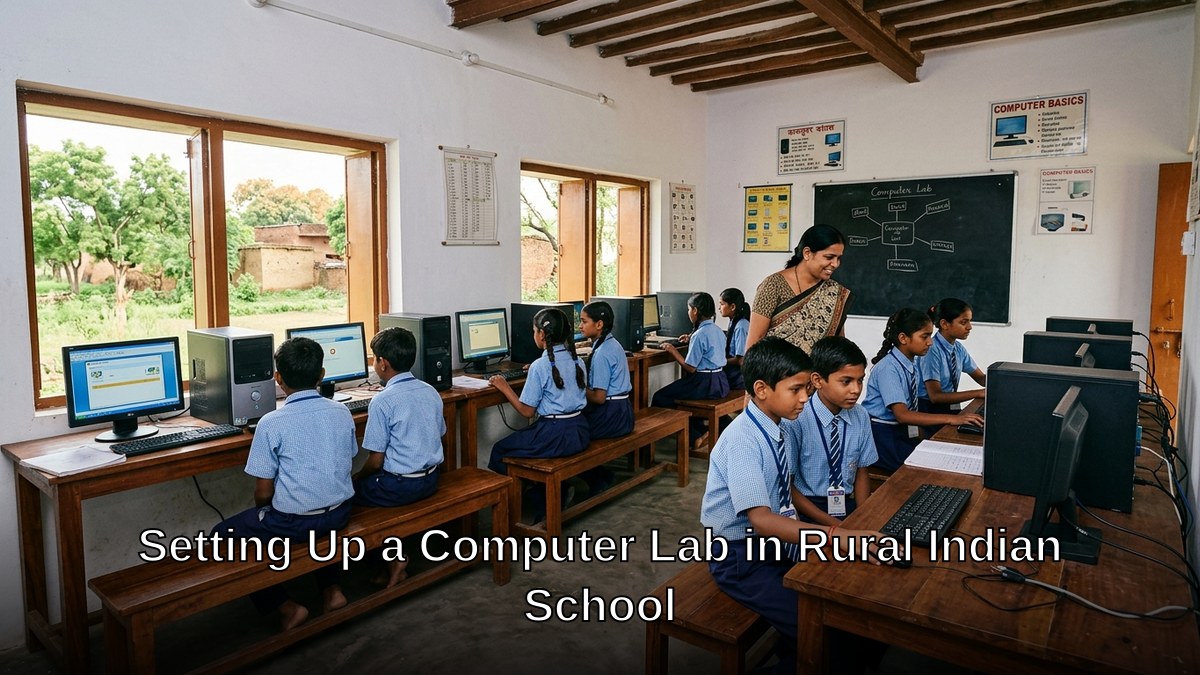
The Real Cost Barrier and How to Solve It
Most school administrators assume a computer lab costs 5-10 lakhs. That assumption kills the project before it starts. Wrong. You do not need fancy imported machines or bloated software licenses.
Here is what actually works: one solid personal computer per 2-3 students, education-specific software, and local technical support. That is it. No servers. No cloud nonsense. Just reliable machines that work.
APNA PC is built for exactly this scenario. At Rs.30,000 per unit, you get a complete bundle: Mini PC i3 7th Gen processor, 8GB RAM, 128GB SSD, monitor, keyboard, mouse, webcam, headset, education software, 3-year warranty, and installation support. For a 30-student classroom, you need 10-12 units. Total investment: Rs.3.6-3.9 lakhs. That is real money, but it is achievable through school funds, education committee budgets, or modest corporate sponsorship.
The warranty and installation matter more than you think. Rural schools do not have IT staff. When something breaks, it stays broken for months. APNA PC handles that.
Step-by-Step Setup for Your Rural School
Step 1: Identify the Space Find a room that can hold 10-15 computers. It needs basic electricity, a window for ventilation, and a lockable door. Do not overthink this. A converted storage room works fine.
Step 2: Plan the Layout Arrange desks in rows or clusters. Leave space for the teacher to move between stations. Ensure every monitor is visible from the teacher’s position.
Step 3: Set Up Power and Internet You need a stabilizer to protect machines from voltage fluctuations. Rural power is unpredictable. Invest Rs.5,000-10,000 in a good stabilizer. For internet, even 4G hotspot works if broadband is unavailable.
Step 4: Train Your Teachers This is non-negotiable. A computer lab without trained teachers is just expensive furniture. APNA PC includes education software designed for Indian classrooms, so teachers do not need to be tech wizards.
Step 5: Create a Usage Schedule Different classes rotate through the lab. Mathematics classes use it for coding and problem-solving. Language classes use it for typing and research. Science classes use it for simulations.
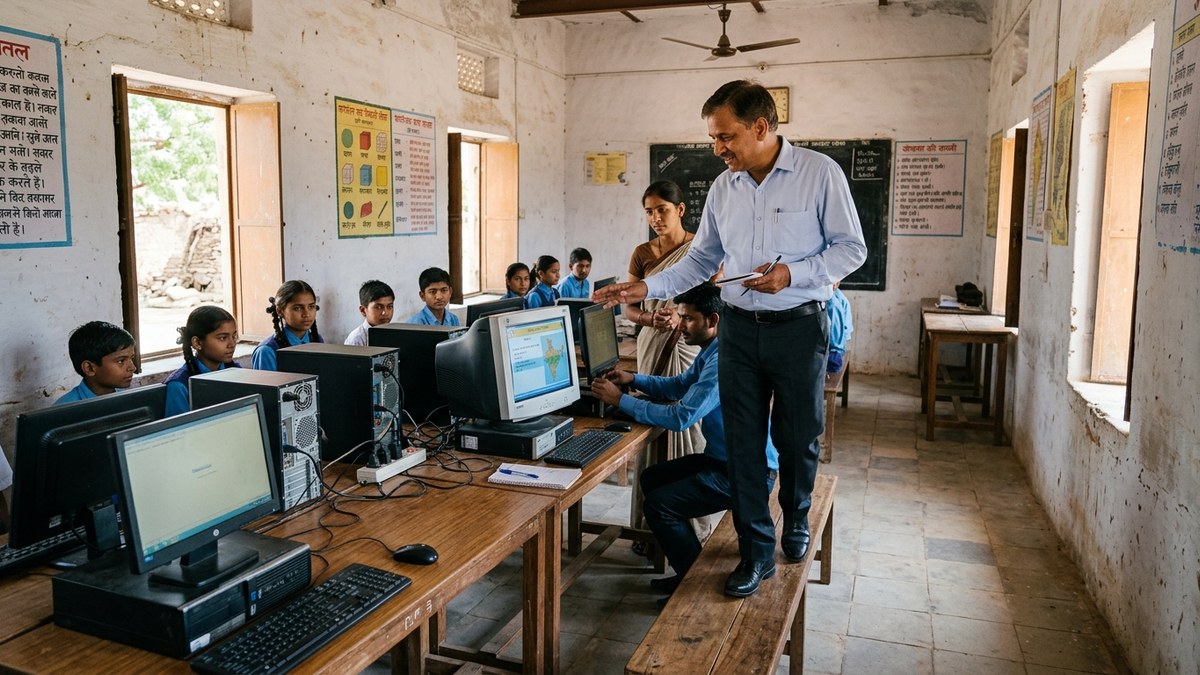
Building a Point of Digital Learning Beyond School Hours
Here is a provocative idea: your computer lab does not have to close at 3 PM. A POD (Point of Digital Learning) is a community learning centre run by a trained educator. It operates after school hours and on weekends. Adults learn digital skills. High school students prepare for competitive exams. The same machines work double duty.
This model transforms a school investment into a community asset. Parents pay modest fees. The educator earns income. The school builds reputation. You can start a microschool with Rs.30,000 using the same logic. One computer lab, multiple revenue streams.
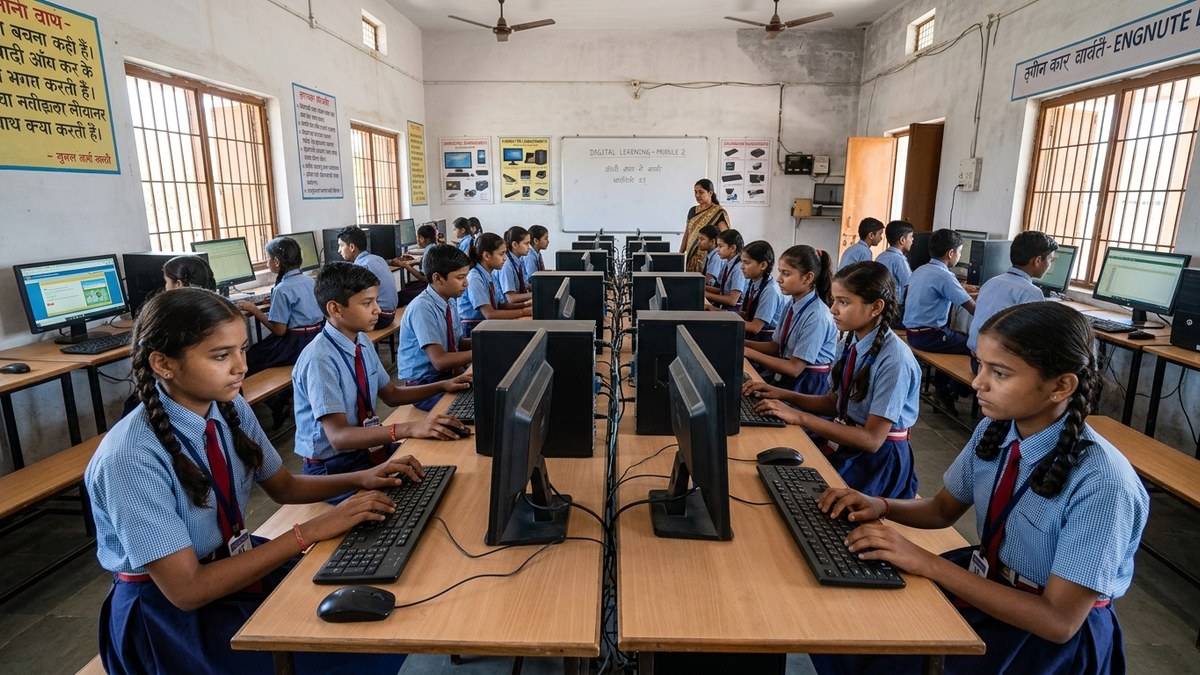
Sustainability and Long-Term Success
Most computer labs fail because schools treat them as one-time projects. Wrong mindset. Sustainability requires three things:
- Regular maintenance schedule: Clean machines quarterly, check cables monthly
- Software updates: Keep education software current. This is not optional
- Teacher refresher training: Skills decay. Retrain teachers every six months
- Usage tracking: Document which classes use the lab and for what. Data drives decisions
- Community involvement: Parents and local businesses should know the lab exists
APNA PC’s 3-year warranty covers most hardware issues. After that, budget Rs.3,000-5,000 per machine annually for maintenance. It is cheap insurance against failure.
Start Today, Not Tomorrow
Rural schools wait for perfect conditions that never arrive. Perfect funding. Perfect internet. Perfect buildings. Meanwhile, students fall further behind.
Start with what you have. APNA PC at Rs.30,000 per unit is the entry point. It is not fancy. It is not imported. It is built for Indian schools. Reliable. Supported locally. Backed by warranty.
Get APNA PC for your school today and stop waiting.