
Your Degree Alone Won’t Get You Hired
Here is the truth: a Bachelor’s degree from any Indian university no longer guarantees a job. Lakhs of graduates compete for the same roles every year. Employers are not looking for certificate holders. They are looking for people who can actually do things. Employability skills Indian students need today are completely different from what they needed ten years ago.
Most people do not realise that companies reject qualified candidates within seconds because they lack basic workplace competencies. Technical knowledge matters. But it is not enough. You need employability skills to survive in the real job market. Period.
Let us be honest: your college curriculum alone will not teach you these skills. You need to build them yourself. This is where intentional learning comes in. And this is where many Indian students fall behind.
Key Takeaways
- Employability skills for Indian students now matter more than the degree itself, since employers reject qualified candidates who lack basic workplace competencies.
- Employers consistently report the same gaps: fresh graduates struggle to communicate clearly, freeze in presentations, and cannot solve problems independently.
- Digital literacy, meaning comfort with computers, internet, email and basic office software, is treated as a non-negotiable baseline rather than a bonus skill.
- Most college curricula do not teach these skills directly, which means students have to build them intentionally outside the classroom.
- A home computer gives students real practice with documents, presentations and online tools, which a phone cannot substitute for when preparing for interviews and job tasks.
The Five Employability Skills Indian Students Must Master
Employers across India consistently report the same gap. Fresh graduates cannot communicate clearly. They freeze during presentations. They cannot solve problems independently. They do not know how to use basic digital tools. They lack teamwork experience.
Here are the non-negotiable employability skills every Indian student needs before graduation:
- Digital Literacy: You must be comfortable with computers, internet, email, MS Office, and basic coding. The Digital India initiative has pushed technology into every sector. If you cannot use a computer properly, you are already behind. Period.
- Communication Skills: Written and spoken English proficiency is non-negotiable in most Indian companies. You need to present ideas clearly. You need to write professional emails. You need to speak without stammering in meetings. These are not soft skills. These are survival skills.
- Problem-Solving and Critical Thinking: Companies do not hire people to follow instructions. They hire people to solve problems. You must learn to think independently. Analyse situations. Propose solutions. Test them. Iterate.
- Teamwork and Collaboration: No job exists in isolation. You will work with colleagues, managers, clients, vendors. You must learn to listen. You must learn to compromise. You must learn to contribute to group goals while maintaining your own standards.
- Time Management and Responsibility: Deadlines are real. Accountability is real. You cannot blame your college, your teachers, or your circumstances when you miss a deadline at work. You own your performance. Period.
Building these skills requires deliberate practice. Not passive learning. Not watching YouTube videos and hoping something sticks. You need structured guidance. You need feedback. You need real-world projects.
This is why many forward-thinking parents and students are now setting up computer lab setup at home or in community learning centres. Having access to proper technology and trained educators makes the difference between theory and practice.
Why Job-Ready Skills India Demands Are Different Now
The job market in India is changing fast. Remote work is now normal. Gig economy jobs are growing. Startups are hiring aggressively. Traditional corporate jobs are shrinking. The skills that mattered five years ago are becoming obsolete.
According to the Skills Development Act, India needs skilled workers across every sector. But the definition of “skilled” has shifted. It is not just about technical expertise anymore. It is about adaptability. It is about learning how to learn. It is about emotional intelligence.
Graduate employability in India depends heavily on practical experience. Internships matter. Projects matter. Real-world problem-solving matters. A student who has built three actual projects will outcompete a student with a 9.5 GPA who has never coded anything real.
The Ministry of Education recognizes this gap. They are pushing colleges to include more practical components in their curriculum. But this is still rolling out slowly. You cannot wait for your college to catch up. You need to start now.
Building Your Employability Skills Right Now
Do not wait until final year to panic about job readiness. Start building these skills from day one of your college.
First, get comfortable with technology. Learn MS Office properly. Learn basic coding. Learn how to use email professionally. If you do not have a good computer at home, this becomes a barrier. Many Indian students study on smartphones alone. This is a handicap. You need a proper setup to practice real work.
Second, practice communication relentlessly. Join debate clubs. Write for your college magazine. Give presentations in class. Record yourself speaking and listen back. Join Toastmasters. These are not optional activities. These are essential investments in your career.
Third, take on real projects. Do internships. Build a portfolio. Work on resume building with actual achievements, not just descriptions of what you studied.
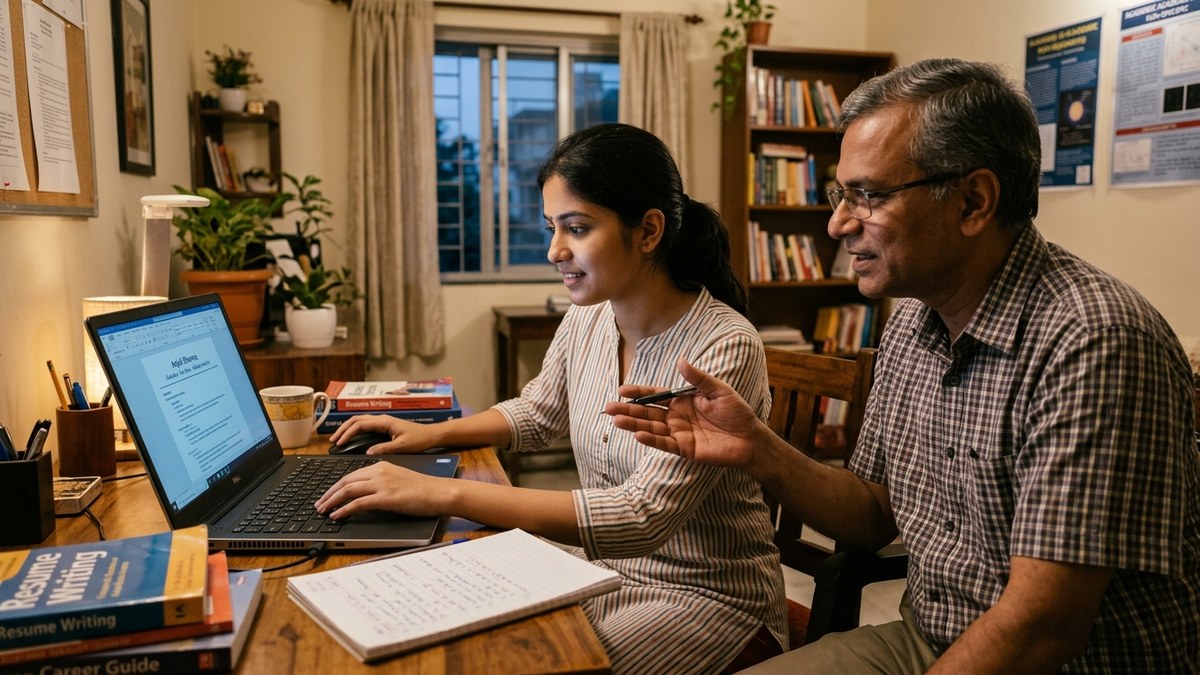
Fourth, seek mentorship. Find someone who is already working in your target field. Ask them what employers actually look for. Ask them what they wish they had learned in college. Most successful professionals are happy to mentor. You just need to ask.
Fifth, invest in your learning environment. If you are serious about building job-ready skills, you need access to a proper computer, internet, and ideally, guidance from trained educators. This is not a luxury. This is infrastructure for your career.
The Role of Parents and Educators
Parents: stop measuring success only by grades and college rank. Your child’s employability depends on skills that are not tested in exams. Encourage them to join clubs. Support their internships. Help them set up a proper learning space at home with a good computer and internet.
Teachers and edupreneurs: you have a responsibility here. Your students are competing in a global job market. Generic classroom teaching is not enough. They need mentoring. They need project-based learning. They need exposure to real tools and real problems.
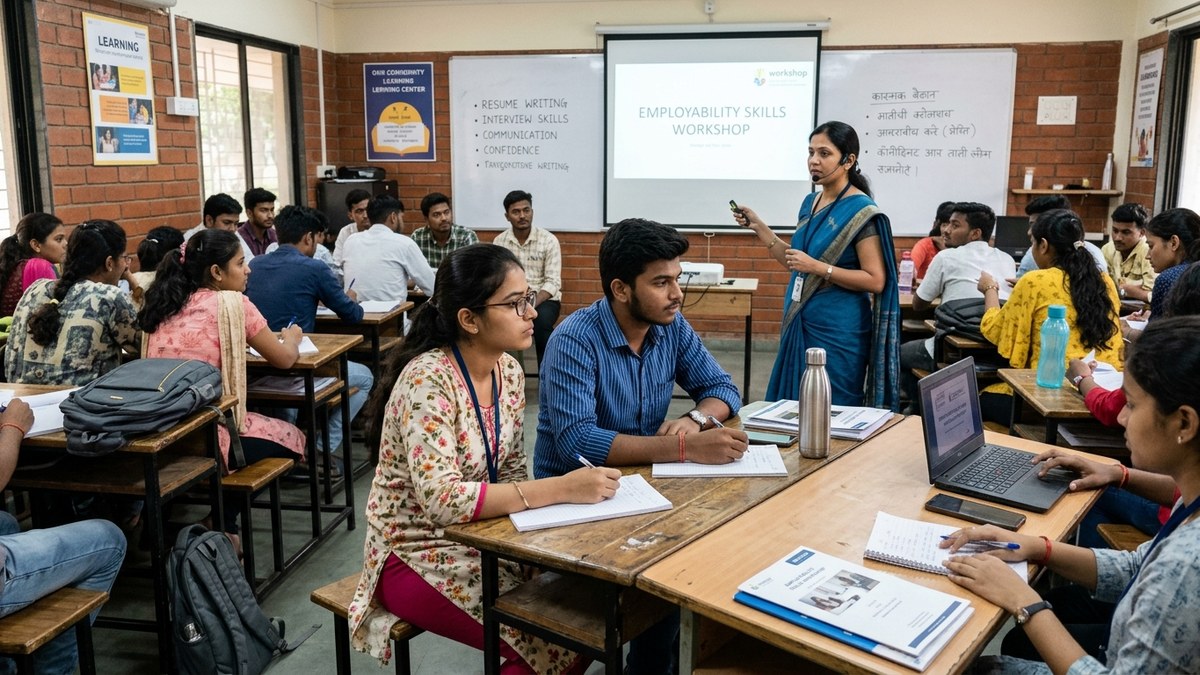
Many tuition teachers and homemakers are now starting Points of Digital Learning (POD) in their communities. These are spaces where students get hands-on training in employability skills. They learn coding, digital tools, communication, and problem-solving in a structured environment with trained educators. This model is working. Students who attend PODs are getting better internships and job offers.
If you are an educator or parent thinking about this, start small. You do not need a huge investment. APNA PC is a complete bundle designed for exactly this purpose. It includes education software, a Mini PC with i3 7th Gen processor, 8GB RAM, 128GB SSD, monitor, keyboard, mouse, webcam, headset, and 3-year warranty with installation. Everything you need to set up a functional learning space. At Rs.30,000, it is affordable for most Indian families and communities.
The time to act is now. Your students are competing with peers from metro cities who already have access to technology and quality mentorship. Do not let geography be a barrier to employability.
Start building employability skills today. Your future job depends on it. Visit APNA PC to learn more.
Frequently Asked Questions About Employability skills for Indian students
What are the most important employability skills for Indian students?
The core five are clear communication, digital literacy, problem solving, teamwork and basic workplace professionalism. Employers across India report these gaps consistently in fresh graduates, more often than gaps in technical subject knowledge. Building these alongside your degree matters as much as your marks.
Why do employers reject qualified graduates with good marks?
Strong grades do not automatically prove someone can communicate under pressure, use everyday digital tools confidently, or work through an unfamiliar problem without hand-holding. Employers screen for these practical signals quickly, often within the first few minutes of an interview. A degree alone does not demonstrate them.
Does my college teach employability skills, or do I need to build them myself?
Most Indian college curricula focus on subject content rather than practical employability skills, so students generally need to build these deliberately outside class. Options include college clubs, part-time work, online courses and consistent personal practice. Waiting for college to cover this gap usually means graduating without it.
How important is digital literacy specifically for employability?
It is treated as a baseline requirement, not an advanced skill, since almost every job now involves email, documents, spreadsheets or basic online tools. Students who are not comfortable with these on a full computer struggle even in interviews, let alone on the job. A phone alone rarely builds this comfort properly.
What is the fastest way for a student to build employability skills before graduation?
Practise regularly on a real computer with documents, presentations and basic problem-solving tasks, while actively seeking feedback through presentations, group projects or part-time work. Consistency over months builds these skills far more reliably than a single short course close to graduation.
India’s National Education Policy 2020 explicitly lists communication, critical thinking, digital literacy and collaboration as core capabilities every student should develop alongside academic subjects.