Why 2026 Demands a Skill Stack, Not Single Skills
Here is the truth: a single skill won’t survive 2026. Whether you’re a homemaker wanting financial independence, a senior citizen staying relevant, a tuition teacher competing with online platforms, or an edupreneur building your empire, the game has changed. The old playbook of mastering one thing and coasting is dead. What works now is building a skill stack for 2026 with tools that actually fit your life.
Most people don’t realise that skill stacking isn’t about becoming a jack-of-all-trades. It’s about combining complementary abilities that multiply your value. A tuition teacher who can teach online AND create digital content AND manage student data isn’t just better. They’re unstoppable. A homemaker who understands basic digital tools AND can tutor online AND manages a small learning centre has created three income streams from one foundation.
The barrier? Access. Not intelligence. Not motivation. Access to a computer that works, software that teaches, and someone who shows you how.
The Three Pillars of Your 2026 Skill Stack
Building a skill stack for 2026 requires three things working together. First, foundational digital literacy. Second, domain-specific expertise in your field. Third, the ability to teach or communicate what you know. None of these work in isolation.
- Digital Foundation: Basic computer operations, file management, internet safety, and productivity tools. This is non-negotiable. The Digital India initiative has pushed this hard, but implementation still depends on local access.
- Your Domain: Whether it’s teaching Mathematics, managing a household budget, or tutoring English, your expertise matters more than ever. But now it must translate to digital formats.
- Teaching and Communication: The ability to explain, demonstrate, and help others understand. This is where tuition teachers and edupreneurs create actual wealth. Check our guide on employability skills before graduation to see what students actually need.
The problem most face: they jump into domain expertise without the digital foundation. Then they get frustrated because the tools don’t work for them. The sequence matters.
Why Your Home Needs a Proper Computer in 2026
Lets be honest: a smartphone isn’t enough anymore. Online teaching, content creation, digital record-keeping, and skill development all demand a real computer. Not a fancy one. A reliable one.
A Point of Digital Learning (POD) runs on a computer. Whether you’re running it from your home or a community centre, you need hardware that doesn’t crash, software that actually teaches, and the confidence that it will work tomorrow like it works today. Senior citizens learning video calling with grandchildren need a stable setup. Homemakers creating online tuition content need storage and processing power. Teachers managing 50 students need a system that handles data without freezing.
This is exactly why APNA PC exists. Not as luxury. As necessity.
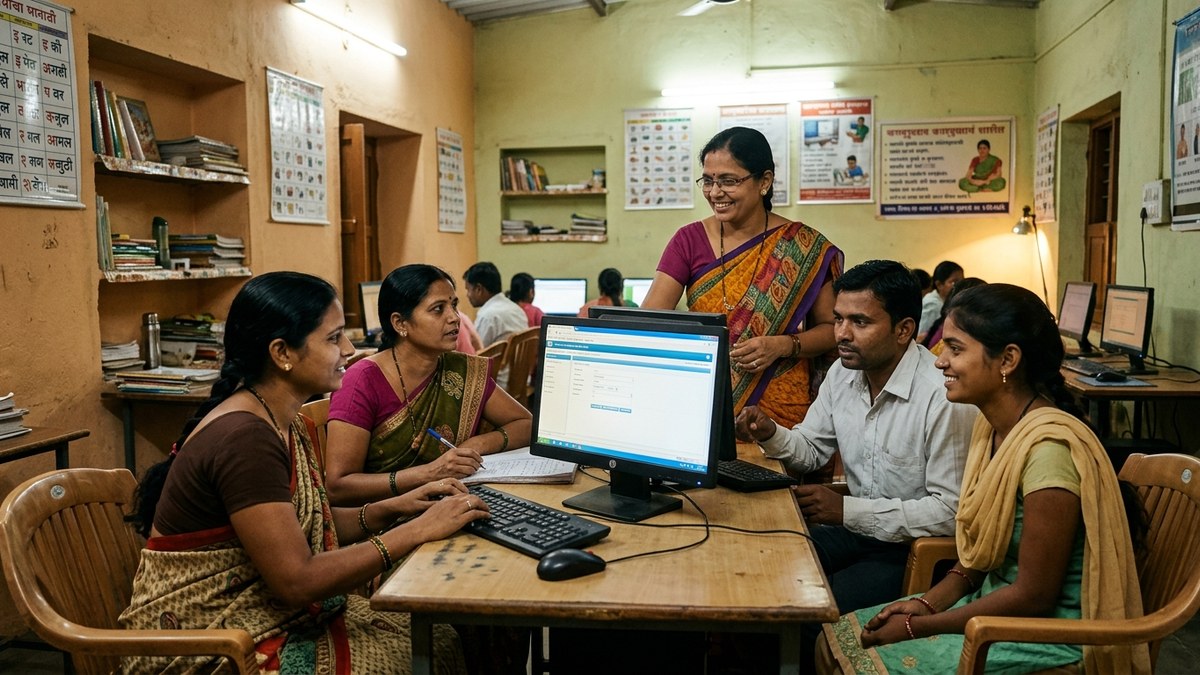
The APNA PC bundle is Rs.30,000 complete. Mini PC with i3 7th Gen processor, 8GB RAM, 128GB SSD. Monitor, keyboard, mouse, webcam, headset included. Three-year warranty. Installation at your home. Education software pre-loaded. No hidden costs. No “you need to buy this separately” trap.
For a tuition teacher, this is one month of extra students. For a homemaker, this is the entry point to financial independence. For a senior citizen, this is staying connected to family and learning new things. For an edupreneur, this is the foundation of your business.
The Real Skill Stack for Homemakers, Teachers, and Entrepreneurs
Here’s what actually matters when you’re building your 2026 skill stack:
- Online teaching platforms and video conferencing
- Content creation (documents, presentations, simple videos)
- Digital payment and financial management
- Basic data entry and spreadsheet skills
- Social media for promotion and student communication
- Understanding of cybersecurity and online safety
None of these are hard. All of them require practice. Most of them require a proper computer to learn on. The DIKSHA digital learning platform offers free courses. The Central Board of Secondary Education has digital resources. But you need a device to access them consistently.
When you have a reliable computer at home, you can learn at your pace. Practice without pressure. Build confidence. Then teach others. That’s how a skill stack grows.
Senior citizens especially benefit from this. Learning email, video calls, accessing government services online, managing health records digitally. These aren’t luxuries anymore. They’re survival skills. And they’re learnable with proper equipment and patient teaching.
From Learning to Earning: The POD Model
Most people don’t realise that a POD can be your home. You don’t need a fancy centre. You need a trained educator, a proper computer setup, and students who want to learn.
A homemaker runs a POD from her living room. She teaches digital skills to other homemakers and senior citizens. Charges Rs.500-1000 per month per student. With 20 students, that’s Rs.10,000-20,000 monthly. Her APNA PC paid for itself in 2-3 months. Now it’s pure income.
A retired teacher does the same. Combines his subject expertise with digital teaching. Reaches students beyond his locality. Multiplies his income.
This is what remote work skills for rural youth actually unlock. Not just employment. Entrepreneurship.
Start Your 2026 Skill Stack Today
Waiting for the perfect moment wastes 2025. The skill stack you build in the next few months determines your position in 2026. Not just your income. Your relevance. Your options.
You need three things: a computer that works, software that teaches, and commitment to learn. APNA PC handles the first two. The third is on you.
Your next step is clear. Get APNA PC. Set it up at home. Start with one skill. Teach someone else. Build from there. Within months, you’ll have multiple income streams, genuine expertise, and the confidence that comes from knowing you’re not left behind.