Your Child is Already Behind. Here’s Why.
A student in Delhi cannot code. A student in Mumbai cannot troubleshoot a laptop. A student in Bangalore cannot set up a professional email or use cloud storage properly. These are not edge cases. This is the norm across India, even in tier-1 cities. While the world moves faster, millions of Indian students are still writing exams by hand and submitting assignments on paper. Digital literacy in India is not a luxury skill anymore. It is survival.
Here is the truth: your child’s school curriculum does not prepare them for the real world. Most schools teach computer science as if it is optional. They treat digital literacy for students like a checkbox, not a foundation. Meanwhile, every job posting, every college application, every internship requires basic digital competence. The gap between what schools teach and what employers demand grows wider every year.
What Digital Literacy Actually Means (And Why Most People Get It Wrong)
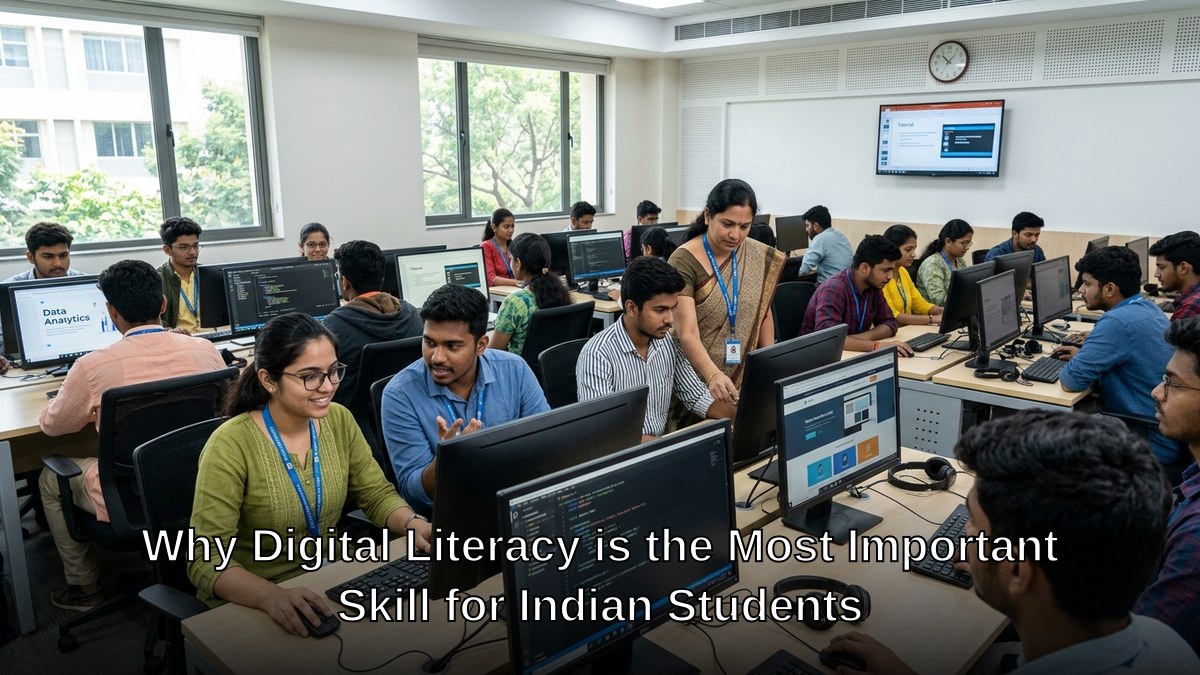
Digital literacy is not about knowing how to use Instagram or TikTok. Your teenager already knows that. Real digital literacy means understanding how to operate a computer, use productivity software, navigate the internet safely, create and edit documents, manage files, understand cybersecurity basics, and troubleshoot common problems. It means being able to learn new software independently because technology changes constantly.
Let us be honest: most Indian students cannot do these things. They can consume content. They cannot create, organize, or secure it. They are digital consumers, not digital citizens. This distinction matters because employers, colleges, and the job market do not care about consumption skills. They care about production skills.
The importance of digital skills for Indian students goes beyond job readiness. It affects how they learn, how they communicate, how they access opportunities. A student without these skills cannot:
- Take online courses to upskill or earn money
- Apply for scholarships or college admissions online
- Work remotely or access remote work skills for rural youth
- Manage health records or access digital health records for Indian families
- Protect themselves from online fraud or misinformation
These are not theoretical concerns. They are immediate, practical barriers to opportunity.
Why Schools Alone Cannot Solve This
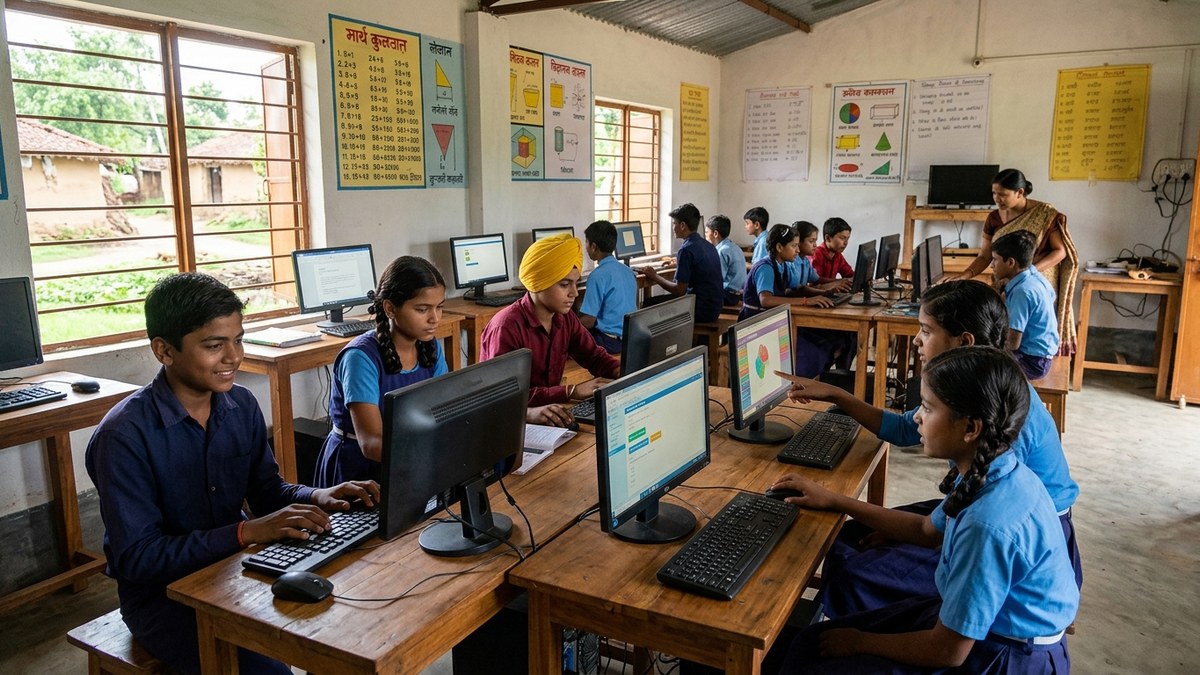
Most people do not realise that Indian schools are severely under-resourced when it comes to technology. Computer labs exist in maybe 30% of schools. When they do exist, the hardware is often outdated, the software is unlicensed, and the teacher training is minimal. Students get one hour per week in a lab with 40 other students. That is not learning. That is exposure theater.
Even private schools often fail here. They teach theory instead of hands-on skills. Students memorize definitions of RAM and ROM but never actually use a computer to solve problems. This gap between theory and practice is why a student can pass computer science with 95% and still not know how to format a USB drive.
The solution is not waiting for schools to improve. That takes years. The solution is creating alternative learning spaces where students can actually practice, make mistakes, and build real competence. This is exactly what a Point of Digital Learning (POD) does. A POD is a community learning centre run by a trained educator where students get hands-on training on actual computers, working at their own pace, with real projects and real outcomes.
The Real Cost of Digital Illiteracy
Imagine your child graduates from school and cannot use Microsoft Word properly. Imagine they get a job offer but fail the online assessment because they have never used Google Sheets. Imagine they miss a scholarship deadline because they did not know how to download a PDF or attach a file to an email. These scenarios are not rare in India. They happen every single day.
The economic cost is staggering. According to research from UNESCO global education research, students without basic digital skills earn 20-30% less over their lifetime compared to digitally literate peers. In India, where competition is fierce and opportunities are concentrated, this gap can determine whether a student escapes poverty or remains stuck.
But the cost goes beyond money. It is about agency. A digitally literate student can learn anything, access any resource, connect with anyone, and build their own opportunities. A digitally illiterate student is dependent on others. They are vulnerable to scams, misinformation, and exploitation. They cannot advocate for themselves online or build a professional presence.
What Real Digital Literacy Training Looks Like
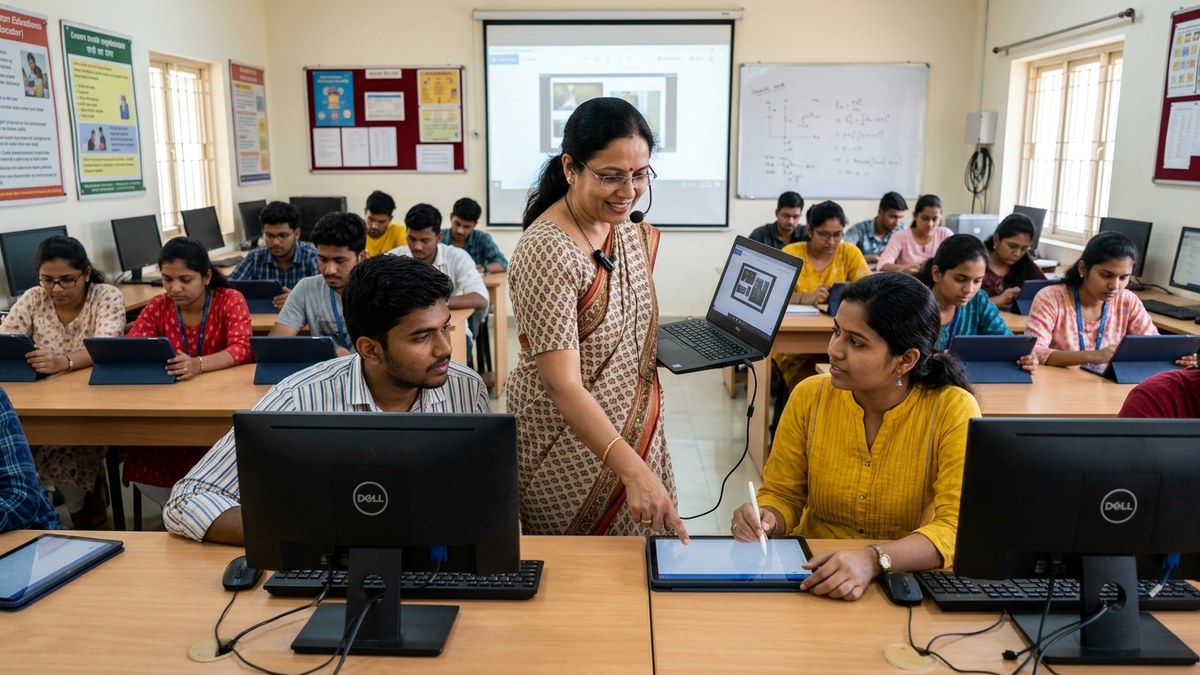
Real training means hands-on practice on actual machines. It means learning by doing, not by listening. It means having a trained educator who can answer questions, correct mistakes, and adjust the pace based on each student’s needs. It means using modern hardware and software, not equipment from 2010. It means creating a learning environment where students feel safe experimenting and failing.
This is why APNA PC exists. It is a complete bundle designed specifically for Indian learning contexts. For Rs.30,000, you get a Mini PC with i3 7th Gen processor, 8GB RAM, 128GB SSD, monitor, keyboard, mouse, webcam, and headset. But more importantly, you get education software pre-loaded and a 3-year warranty with installation support. This is not just a computer. This is a learning system.
APNA PC is designed to power a POD. When a trained educator uses APNA PC with structured curriculum and real projects, students do not just learn digital literacy. They build confidence, independence, and marketable skills. They can then pursue remote work skills for rural youth or other income opportunities while still in school.
The Window is Closing
Every month your child spends without these skills is a month they fall further behind their peers globally. The job market is moving faster. Remote work is becoming normal. Online learning is becoming standard. The tools and platforms change constantly. But the fundamental skills remain: operate a computer, use software, solve problems, learn independently.
Your child needs these skills now. Not in college. Not after graduation. Now. Because by the time they graduate, the baseline will have moved even higher.
The good news: digital literacy is teachable. It is not genetic. It is not tied to intelligence. Any student, regardless of background or previous experience, can learn these skills if they have access to the right equipment, the right training, and the right environment. A POD powered by APNA PC provides exactly that.
Do not wait for schools to catch up. Do not assume your child will figure it out on their own. Take action now. Start a learning pod in your community or enroll your child in one. Give them the foundation they need to thrive in a digital world.
Start a Teach to Earn Learning POD today and help students build real digital literacy.
For more context, check the India Ministry of Education initiatives on technology integration in schools.