
You Don’t Need Permission to Become a Home Tutor in India
Here is the truth: thousands of Indians are earning Rs.50,000 to Rs.2,00,000 monthly by teaching from home, and most started with nothing but confidence and a willingness to help students learn. If you want to become a home tutor in India, you are looking at one of the most accessible paths to financial independence. The barrier to entry is almost zero. Your living room is your classroom. Your knowledge is your asset. Let us be honest: you have been waiting for permission that nobody needs to give you.
The home tuition business in India is booming. Parents are desperate for quality one-on-one attention for their children. Schools are overwhelmed. Students need personalized support. And you can provide exactly that. Tutoring at home means no commute, no fixed hours, no boss, and complete control over your earnings. But how do you actually start?
Key Takeaways
- The steps to become a home tutor in India start with picking a specific niche instead of offering to teach every subject and grade to everyone.
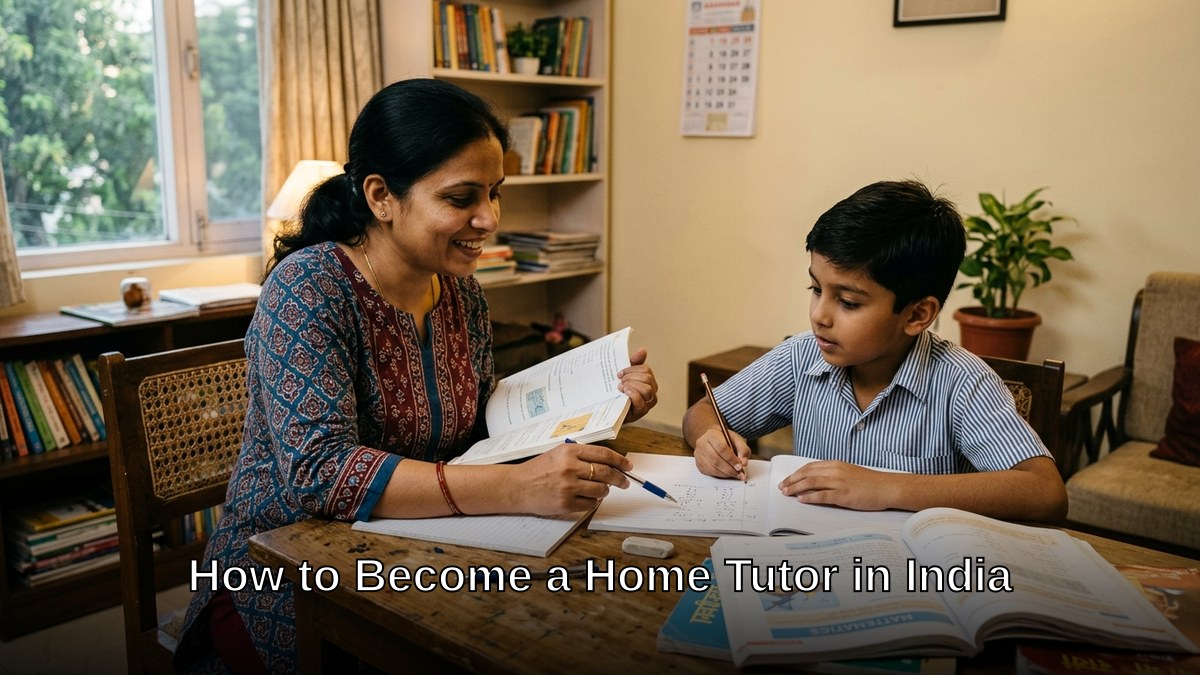
- Your living room can be your classroom; the barrier to entry is close to zero, with no commute, no fixed hours and no boss to answer to.
- Whatever background you bring, a retired teacher’s credibility, a student’s energy, or a homemaker’s patience, becomes the identity your tutoring is built around.
- Parents are actively looking for personalized attention because schools are overcrowded, which keeps steady demand for home tutors across most Indian cities.
- A reliable computer setup becomes necessary once you want to teach online or manage attendance, materials and payments professionally rather than casually.
Step 1: Decide Your Niche and Target Audience
Most people do not realise that specificity is your superpower. Do not say “I teach all subjects to all grades.” Instead, choose. Are you teaching Class 6-8 Math? Class 10 Science for board exams? English conversation to working professionals? Competitive exam prep for NEET or JEE? The more specific you are, the easier it is to find students and charge premium rates.
Your background matters. A retired school teacher has credibility. A college student with strong academics has energy. A homemaker with patience has value. A senior citizen with decades of experience has wisdom. Whatever you bring, own it. Build your tutoring identity around your actual strengths.
Step 2: Set Your Fees and Structure
Here is what works in India right now: Rs.300-500 per hour for basic subjects in Tier 2 and Tier 3 cities. Rs.500-1,500 per hour in metros for specialized coaching. Rs.1,000-5,000 per month for batch classes. Rs.2,000-10,000 per month for competitive exam prep. These are not fixed rules. They depend on your qualifications, experience, location, and demand. Start by researching what tutors in your area charge. Then decide if you are positioning yourself as budget-friendly, mid-range, or premium.
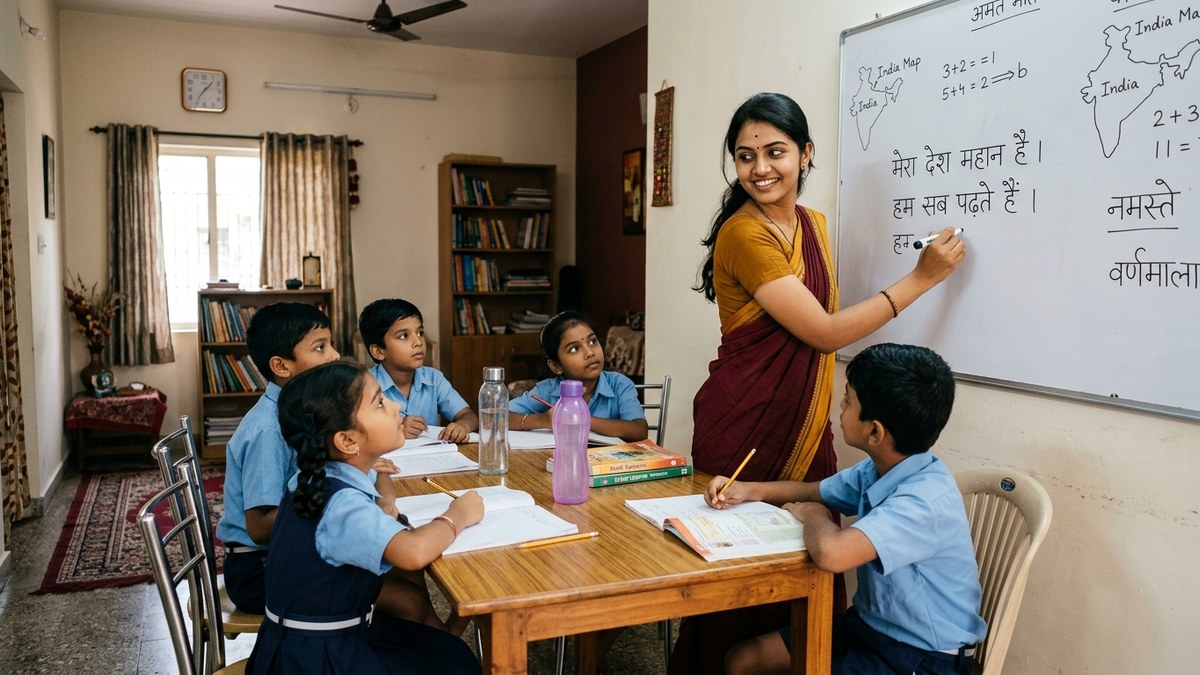
Offer flexible packages. One-on-one sessions. Small group batches. Online classes. Hybrid models. The more options you provide, the more students you attract. Many successful tutors run a Point of Digital Learning (POD) from home or a community space, serving 15-20 students daily across multiple batches.
Step 3: Find Your First Students
Do not wait for a website or fancy marketing. Start today with what you have.
- Tell your family, friends, and neighbors. Seriously. Word-of-mouth is 80% of home tuition business growth.
- Post on WhatsApp groups, local Facebook groups, and Nextdoor-like community apps.
- Create a simple WhatsApp status or Instagram post with your subject, grades, and phone number.
- Register on platforms like Care.com, Vedantu, Chegg, or local classified sites.
- Visit nearby schools and leave flyers with parents picking up children.
- Approach coaching centers and offer referral partnerships.
Your first five students will come from personal networks. After that, referrals take over. One satisfied student brings three more. This is how the home tuition business grows exponentially.
Step 4: Create a Basic Home Setup
You do not need an expensive setup to begin. A quiet corner, a small table, a chair, and good lighting are enough. But as you grow and want to reach more students, a digital setup becomes essential. This is where APNA PC changes everything.
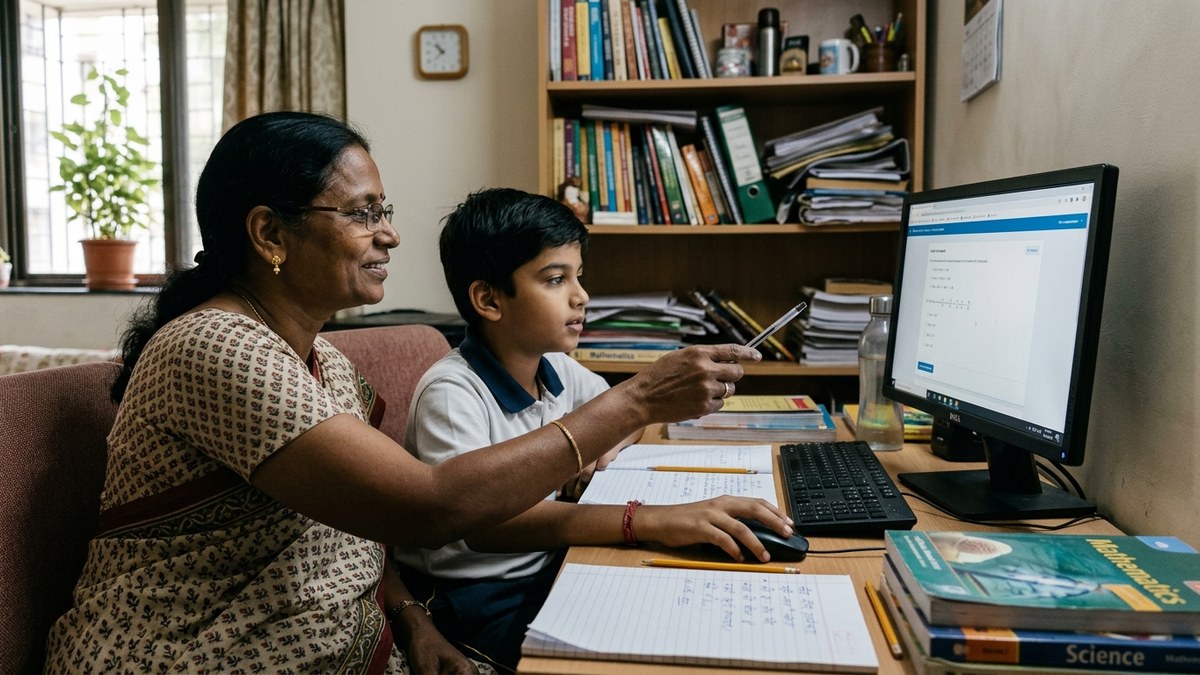
APNA PC is a complete bundle designed for educators like you. For Rs.30,000, you get education software, a Mini PC with i3 7th Gen processor, 8GB RAM, 128GB SSD, monitor, keyboard, mouse, webcam, headset, 3-year warranty, and installation. This single investment lets you conduct online classes, record lessons, manage student data, and run a Point of Digital Learning operation from home. No more struggling with a slow personal laptop.
With APNA PC, you can reach students across your city, state, or even nationally. Online tutoring at home opens up earning potential that offline tutoring alone cannot match. Most tutors who double their income do so by adding digital delivery to their services.
Step 5: Build Credibility and Consistency
Show up on time. Every single time. Prepare your lessons. Track student progress. Communicate with parents regularly. Ask for testimonials and referrals. These habits separate tutors earning Rs.20,000 monthly from those earning Rs.2,00,000 monthly.
Consider getting basic certifications. Check the Ministry of Education guidelines. Understand CBSE curriculum if you teach board exam students. Join educator communities like Apni Pathshala Blog to stay updated on teaching methods and trends.
Credibility attracts premium students. Premium students pay better rates. Better rates mean you work fewer hours for the same income.
The Real Opportunity
Becoming a home tutor in India is not just about earning money. It is about independence. It is about using your knowledge to change young lives. It is about building a business that scales with you. Whether you serve 5 students or 50, whether you teach offline or online, whether you work 10 hours weekly or 40, you control the outcome.
Most people do not realise that the best time to start was yesterday. The second best time is today. Your first student is waiting. Your first Rs.500 is waiting. Your first Rs.50,000 monthly income is waiting.
Do not overthink. Do not wait for perfect conditions. Do not seek permission. Start tutoring from home right now. And when you are ready to scale with digital tools, APNA PC is waiting to multiply your reach and your income.
Ready to turn your knowledge into income? Explore APNA PC today and unlock your full potential as a home tutor.
Also read: Start a Home Tuition Side Hustle and Double Your Tuition Income with Digital Tools.
Frequently Asked Questions About Steps to become a home tutor in India
What is the first step to become a home tutor in India?
Decide your niche before anything else. Choose a specific grade and subject, such as Class 6-8 Math or Class 10 Science board prep, rather than offering to teach everyone everything. Specificity makes it easier to find students and justify your rate.
Do I need a teaching degree to become a home tutor?
No formal degree is required for most home tuition in India. What matters more is solid subject knowledge, patience and the ability to explain a concept a different way when a student is stuck. Credibility can come from your own academic background, experience or demonstrated results.
How do I decide what to charge as a new home tutor?
Start by checking what tutors in your area charge for the same grade and subject, then price near that range based on your experience. Specialized subjects like board exam prep or competitive exam coaching can command meaningfully higher rates than general homework help.
Can I become a home tutor without my own space?
Yes. Many tutors start in their own living room or a shared family space, since that is usually enough for one-on-one or small group sessions. A separate office is not necessary to begin.
Do I need a computer to become a home tutor in India?
For in-person tutoring, a computer is not strictly required at the start. Once you want to teach online, track attendance, or manage multiple students, a reliable computer with a webcam becomes necessary, since a phone struggles with screen sharing and proper class management.
India’s Ministry of Statistics has documented in national surveys how widespread private home tuition already is, reflecting the steady demand a new home tutor can tap into.