The Microschool Business Model: A Real Path Forward
You have a spare room. You have passion for teaching. You have maybe Rs 50,000 to invest. Can you actually start a microschool?
The answer is yes. Not “maybe.” Not “theoretically.” Yes.
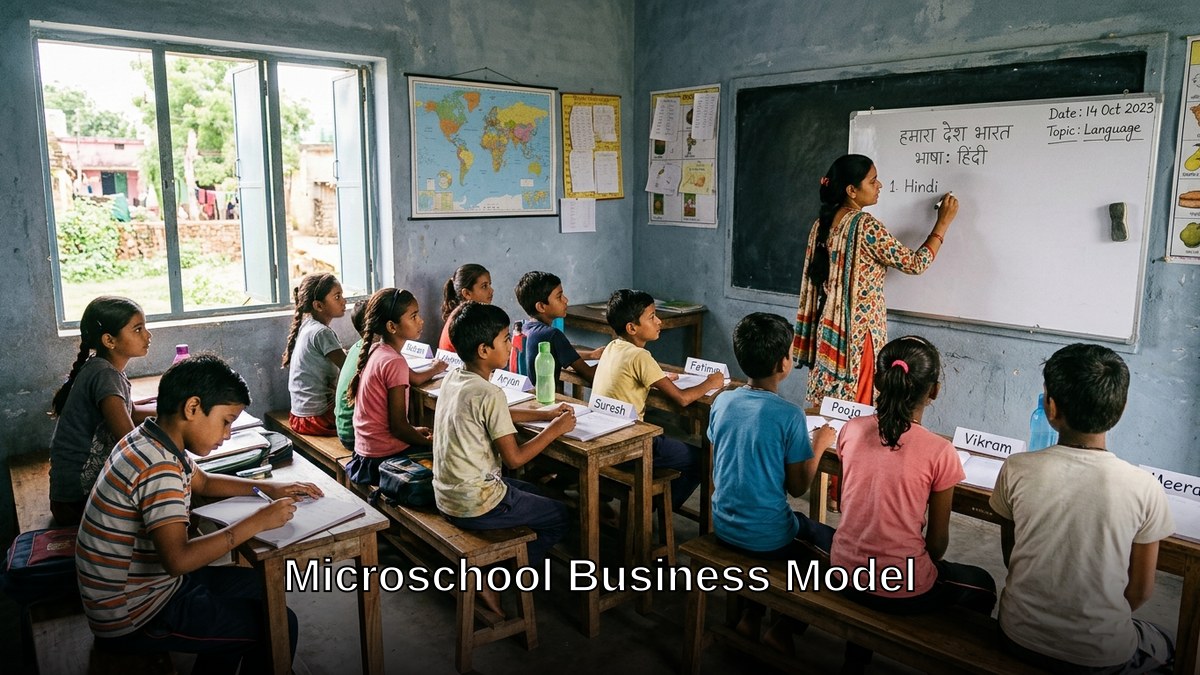
The microschool business model is reshaping education in India. Unlike traditional schools that need massive infrastructure, a microschool operates lean. It serves 10-30 students. It runs from a home, community center, or small rented space. It generates real income. Here is the truth: most people do not realise that the barrier to entry is far lower than they think, and the demand is far higher than they expect.
Let us be honest. The conventional tuition center model is saturated. Parents are tired of cramming centers. Teachers are tired of batch-based, one-size-fits-all instruction. There is a hunger for something different. Something personal. Something that actually works.
That something is the microschool business model.
Why the Microschool Model Works (And Why Now)
A microschool is not a tuition center. It is not a full school. It sits in the middle. It is a school model designed for the modern Indian family. Parents want quality. They want accountability. They want flexibility. Microschools deliver all three without the Rs 5-10 lakh annual fees of private schools.
The microschool setup cost is the game changer. You do not need:
- A large building
- Expensive infrastructure
- Massive staff
- Government approvals for most variations
What you do need:
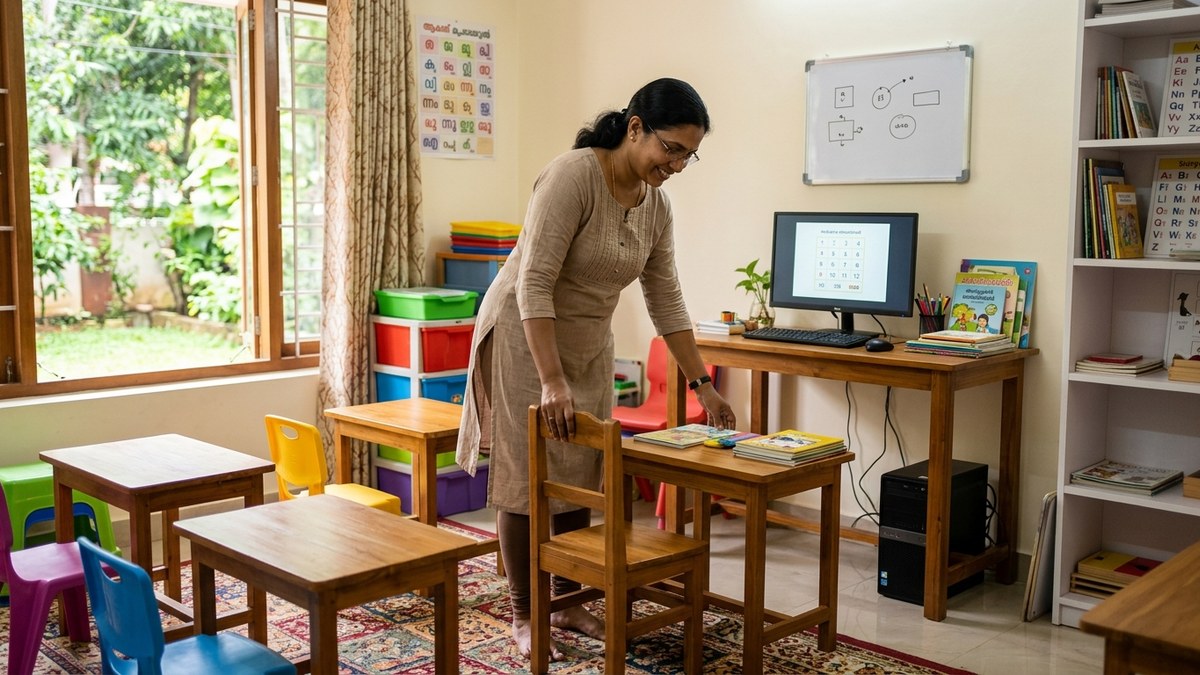
- A dedicated space (even 400 sq ft works)
- A structured curriculum
- Digital tools for learning
- A trained educator
- Real commitment to student outcomes
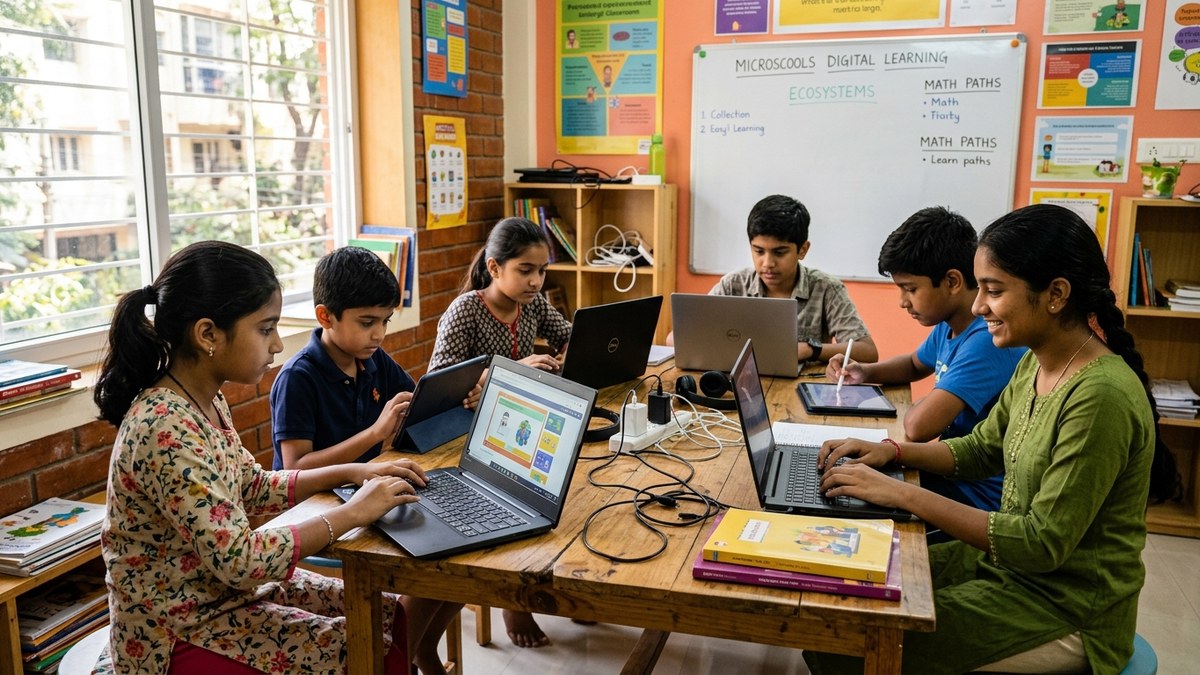
Most people do not realise that digital learning is no longer optional. It is foundational. Students expect it. Parents demand it. But here is what separates winners from the rest: you do not need expensive enterprise software. You need practical tools that work in a small setting.
The Rs 50,000 Reality Check
Let us break down what Rs 50,000 actually covers in a microschool startup:
- Space setup: Rs 10,000-15,000 (basic furniture, whiteboard, shelving)
- Digital infrastructure: Rs 30,000 (APNA PC bundle)
- Curriculum materials: Rs 5,000
Notice something? The APNA PC bundle handles your entire digital layer. It is not just a computer. It is a complete education solution. Rs 30,000 gets you a Mini PC (i3 7th Gen, 8GB RAM, 128GB SSD), monitor, keyboard, mouse, webcam, headset, education software, 3-year warranty, and installation. This is the backbone of your Point of Digital Learning (POD).
A POD is a home or community learning centre run by a trained educator. It is exactly what you are building.
Here is what makes this work: you are not competing with big schools. You are not trying to replicate their model. You are offering something they cannot. Personal attention. Flexible schedules. Customized learning paths. Digital integration without the corporate bloat.
Revenue Model: How You Actually Make Money
Most people do not realise that microschool revenue is predictable and scalable.
Start with 15 students at Rs 3,000-5,000 per month. That is Rs 45,000-75,000 monthly revenue. After basic costs (rent, utilities, part-time help), your margin is 60-70%. This is not a side hustle. This is a real business.
As you grow to 25-30 students, revenue scales to Rs 75,000-150,000 monthly. You can hire an assistant. You can expand to two batches. You can add specialized programs in STEM education in microschools and charge premium fees.
The beauty of the microschool business model is that it does not require massive scale to be profitable. You need consistency. You need results. You need parents who see their children learning and thriving.
Legal and Compliance Considerations
Before you launch, understand the landscape. India’s education regulations vary by state. Some states allow home-based learning centers under specific guidelines. Others have restrictions. The official education portal has state-specific rules.
Check your state’s requirements. Understand homeschooling options in India and how they apply to your model. Most PODs operate as tutoring centers or skill development programs, which have minimal compliance burden.
Get your space registered. Keep records. Be transparent with parents. Operate with integrity.
Your Next Step
The microschool business model is not theoretical. It is happening right now across India. Teachers are leaving corporate tuition chains and launching their own PODs. Parents are pulling children from large schools and enrolling them in microschools. The demand is real. The economics work. The impact is measurable.
You have the opportunity. You have the tools. You have the cost structure that actually makes sense.
What you need now is a structured plan. A clear roadmap. Support from people who have done this before.
Start your microschool journey today. Learn exactly how to set up your POD, structure your curriculum, acquire your first 20 students, and build a sustainable education business.
The microschool revolution is not coming. It is here. The question is whether you will lead it or watch from the sidelines.