
Your Notes Are Useless (And Here’s Why)
Let’s be honest: most Indian students write notes that they never read again. You scribble frantically during class, fill page after page, and then shove the notebook into your bag. Exam time arrives. You panic. You flip through those notes and realise you’ve forgotten half of what you wrote. Sound familiar?
Here’s the truth: the problem isn’t that you’re taking notes. The problem is that you’re taking them wrong. The cornell method is a structured note-taking technique that forces you to engage with information twice, which is exactly why it works. This isn’t some fancy new trend. It’s been proven in classrooms across the world, and Indian students who use it remember significantly more.
What Is the Cornell Method?
This method divides your notebook page into three sections. On the left, you create a narrow column about 2 to 3 inches wide. On the right, you leave a wider space for main notes. At the bottom, you add a short summary section. That’s it. Simple. But the magic happens in how you use it.
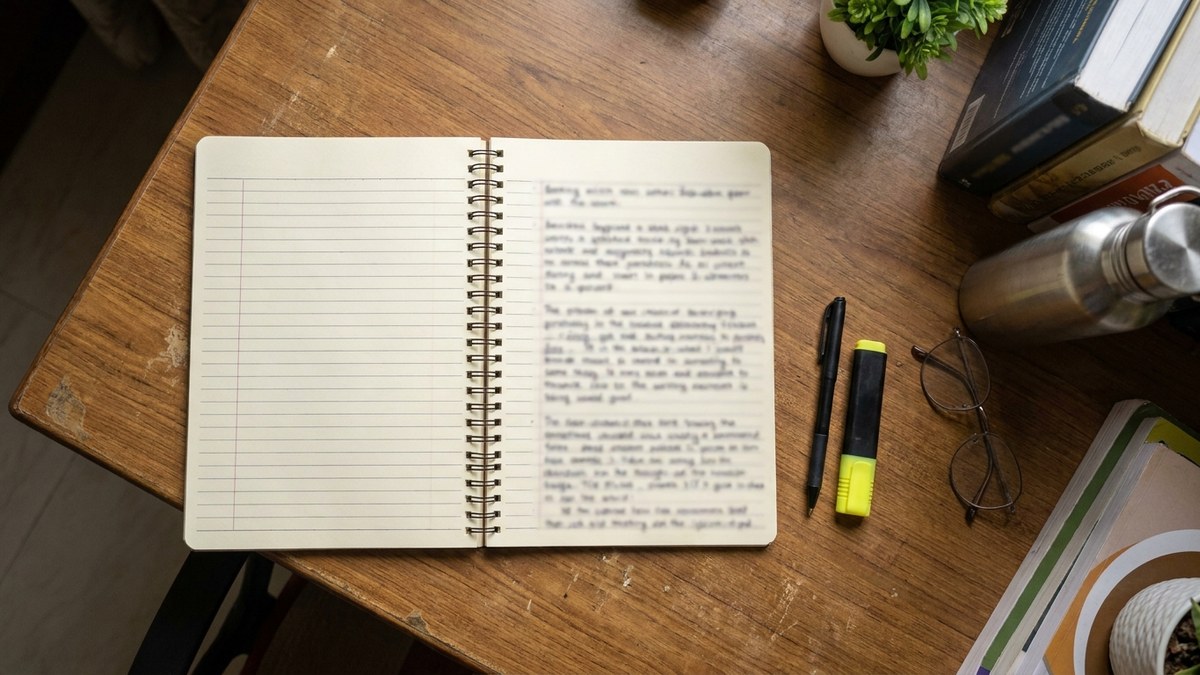
During class, you write your main notes in the right column. You capture concepts, examples, formulas, and explanations as your teacher explains them. Don’t overthink it. Just write clearly.
Here’s where the cornell method becomes powerful: after class, you review your notes and write key questions or cue words in the left column. These are triggers that make you recall the entire concept from the right column. When exam time comes, you cover the right side and test yourself using only the left column.
Why the Cornell Method Works for Indian Students
Most Indian students are taught to memorise. Teachers give you facts. You memorise them. You regurgitate them. This approach breaks that cycle because it forces active recall. Your brain has to work. That work is what creates lasting memory.
When you write cue questions in the left column, you’re not just passively reviewing. You’re asking yourself what matters. You’re deciding what’s important enough to remember. Then, when you try to answer those cue questions using only the left column, your brain retrieves the information from memory instead of just reading it again.
The summary section forces you to compress everything into a few sentences. This is brutally effective. If you can’t summarise a topic in three or four sentences, you don’t understand it well enough. That gap shows up immediately, long before the exam does.
Most people don’t realise that this system also saves time during exams. Your left column becomes a quick reference guide. Scan it in seconds and know exactly which topics to revise before you enter the exam hall. No more endless flipping through unorganised pages.
How to Implement This Method in Your Study Routine
Start today. Here’s how to put the cornell method into practice:
- Divide your page before class starts. Draw a vertical line about 2.5 inches from the left edge. This takes 30 seconds and sets you up for success.
- Write main notes in the right column during class. Use your own words. Don’t copy verbatim from the board. If your teacher writes a long definition of photosynthesis, rewrite it in your own words: “plants convert light energy to chemical energy.” Shorter. Clearer.
- Review within 24 hours. This is non-negotiable. Your memory is strongest when you review soon after learning. Spend 10 to 15 minutes reading your notes and writing cue questions in the left column.
- Test yourself weekly. Cover the right column. Read the cue question. Try to answer it from memory. If you can’t, you know you need more practice on that topic.
- Write a summary at the bottom. One paragraph. What was this page about? Why does it matter? This forces compression of knowledge.

Common Mistakes Students Make With This System
You can mess this up. Here’s how to avoid the worst traps:
Writing too much in the right column. If your right column looks like a textbook, you’re doing it wrong. This technique isn’t about transcribing everything. It’s about capturing key ideas. Write less. Understand more.
Waiting too long to add cue questions. If you wait a week to review your notes, the information is already fading. Review within 24 hours. The system works because of timing, not magic.
Making cue questions too easy. If your cue question is “What is photosynthesis?” and your answer is “the process by which plants make food,” you’re not testing real understanding. Ask harder questions. “Why do plants need chlorophyll?” “What happens if a plant doesn’t get enough light?” These force deeper thinking.
Take Your Notes Beyond the Notebook
Tuition teachers can use this system too. Introduce it to your students. Model it during your first class. Then hold them accountable. Check their left columns. Ask them to summarise topics. Students who learn structured note-taking early develop better study habits for life.
The structure works with digital tools too. The medium matters less than the method. If you’re learning through platforms like DIKSHA or following the official CBSE website for syllabus and exam updates, the same steps apply: capture key information, create cue questions, summarise, and test yourself.
If you want to see how AI can support your study process, check out our guide on how to use Gemini AI for homework help. You can also find more study techniques on the Apni Pathshala blog.
Why This Method Beats Other Note-Taking Techniques
Linear notes? You read them once and forget them. Mind maps? They look pretty but take forever to create. This system is efficient, proven, and built for retention. It doesn’t require fancy materials. Just a notebook, a pen, and discipline.
It’s also flexible. It works for every subject: maths, languages, history, science, everything. The structure stays the same. Only the content changes. Once you master it in one subject, you can apply it everywhere. Research backs this up: students who use structured note-taking systems score higher on exams than students who scribble randomly. This isn’t opinion. It’s data.
Start Taking Better Notes This Week
Don’t wait for perfect conditions or next semester. Get a notebook today. Draw that line. Attend your next class and use the cornell method. You’ll notice the difference immediately. Your notes will be clearer. Your understanding will be deeper. Your exam preparation will be faster.
If you’re serious about your studies, invest in your setup too. A proper desk, good lighting, and reliable tools make a difference. You can’t study effectively at a cramped table with poor lighting. Consider APNA PC, a complete bundle at Rs.30,000 that includes a Mini PC (i3 7th Gen, 8GB RAM, 128GB SSD), monitor, keyboard, mouse, webcam, headset, education software, 3-year warranty, and installation. It’s built for students who are serious about their learning environment.
This technique isn’t a shortcut. It’s a smarter way to work. Your brain will thank you. Your grades will improve. Your confidence will grow. That’s not a promise. That’s what happens when you use proven techniques consistently.