
The EdTech Startup India Opportunity in 2026
Most people don’t realise that India’s edtech market isn’t saturated. It’s just poorly distributed. While Bangalore and Delhi overflow with funded startups chasing the same urban middle-class student, 80% of India’s population lives outside metro cities with zero access to quality education technology. This is where your edtech startup opportunity actually lives.
Starting an edtech startup in India doesn’t require venture capital, a Stanford degree, or even a fancy office. It requires clarity, guts, and the right infrastructure. Here’s how to build one in 2026.
Why EdTech Startups Fail (And How You Won’t)
Let’s be honest: most edtech startups in India fail because founders chase scale before proving unit economics. They build apps nobody uses. They spend lakhs on marketing to acquire students who churn within weeks. They ignore the fundamental problem: teaching online requires actual teaching skills, not just software.
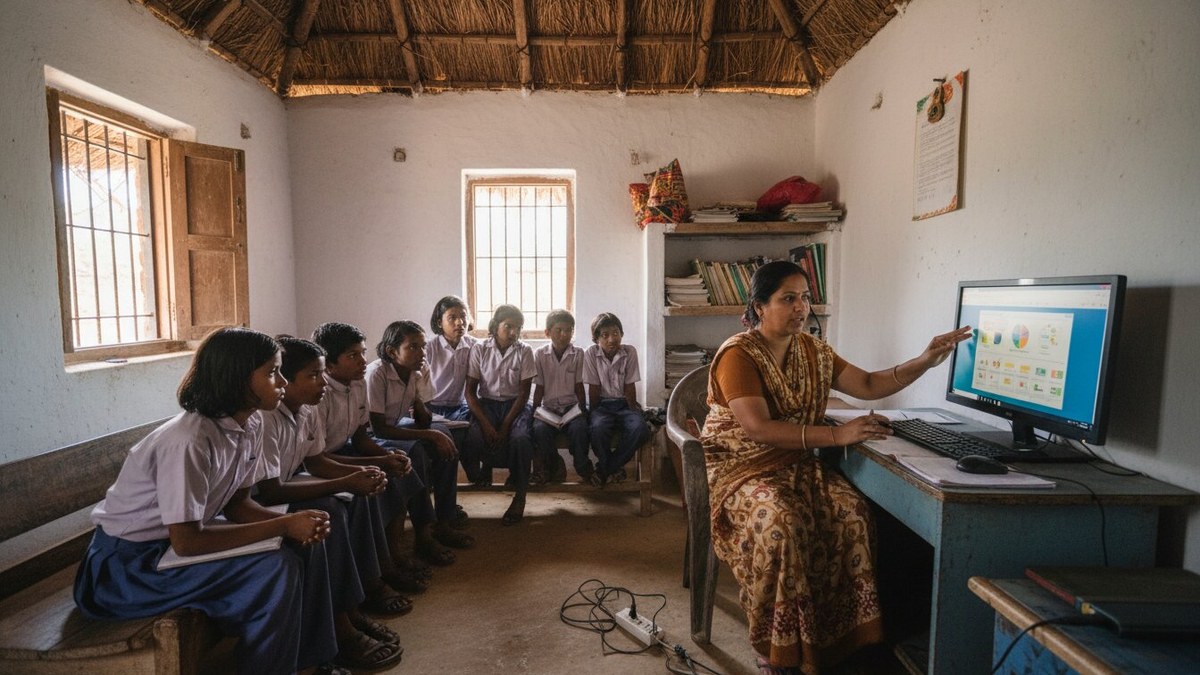
The winning model in 2026 isn’t a platform. It’s a Point of Digital Learning, or POD. A POD is a physical or hybrid learning centre run by a trained educator using proven digital tools. Think of it as a tuition centre 2.0. Your students get personalised attention. You get sustainable margins. Everyone wins.
This is why edtech business plan India models that work focus on educator enablement, not just student acquisition. You’re not competing with Byju’s. You’re competing with the tuition teacher down the street. And you can beat them. The edtech startup India winners of 2026 will be local, lean, and educator-led.

Step 1: Choose Your Niche and Student Base
EdTech startup India success starts with specificity. Don’t try to teach “everything to everyone.” Pick one subject, one age group, one problem you can actually solve.
- Teaching Class 6-8 math to tier-2 city students
- Spoken English for working professionals
- Coding basics for rural teenagers
- Skill training for school dropouts
- Competitive exam prep for underserved regions
Your niche determines everything: curriculum design, teacher training, pricing, and technology stack. Pick wrong and you’re dead. Pick right and you’re unstoppable.
Step 2: Build Your EdTech Startup India Business Plan
Here’s the truth: your business plan doesn’t need to impress investors. It needs to work. Write it down anyway.
- Revenue Model: How much per student per month? How many students per educator? What’s your gross margin target? (Aim for 40-50% minimum.)
- Educator Model: Will you hire full-time teachers or train part-timers? What’s their cut? How do you ensure quality?
- Technology Stack: Which LMS platforms for teachers in India will you use? What hardware do you need?
- Unit Economics: Cost per student acquired. Cost per student retained. Lifetime value per student.
- Scaling Path: How do you go from one POD to ten? From ten to fifty?
Most edtech founders skip this. Don’t. A one-page business plan beats a 50-page deck that nobody reads.
Step 3: Get the Right Hardware and Software
Your technology doesn’t need to be fancy. It needs to work reliably in Indian internet conditions.
This is where APNA PC changes the game. For Rs.30,000, you get a complete bundle: education software, 3-year warranty, installation, and a Mini PC with i3 7th Gen processor, 8GB RAM, 128GB SSD, monitor, keyboard, mouse, webcam, and headset. Everything pre-configured. Everything ready to teach.
No more hunting for hardware. No more compatibility issues. No more wasted time. You unbox it, plug it in, and start teaching.
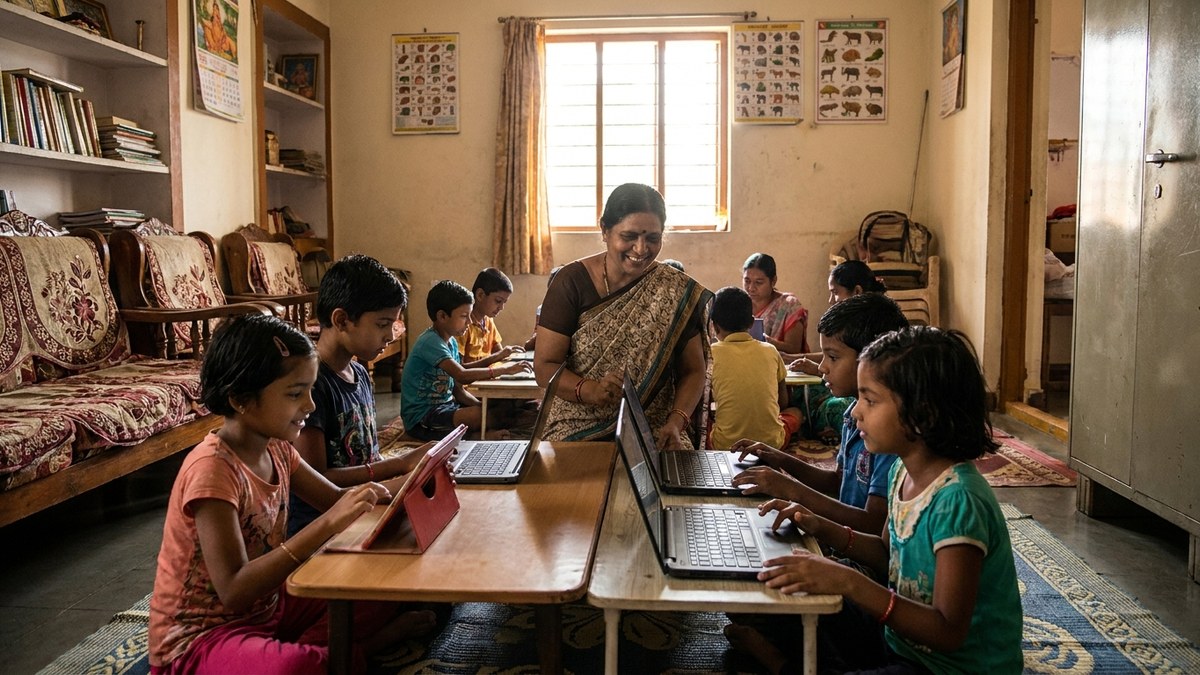
Pair this with a solid LMS platform to manage courses, track student progress, and automate admin work. Your tech stack is complete.
Step 4: Train Your Educators
Software doesn’t teach. People do. Your competitive advantage isn’t your app. It’s your teachers.
Recruit teachers who understand your niche. Train them rigorously on pedagogy, your curriculum, and your tools. Teach them the Cornell method note-taking technique so students actually retain what they learn. Create a culture of continuous improvement.
Pay them fairly. Treat them like founders, not contractors. Their success is your success.
Step 5: Launch Your First POD
Don’t overthink this. Your edtech startup India journey starts with one small batch of students. Pick a location: your home, a community centre, a small office space. Recruit 10-15 students. Run one batch. Get feedback. Iterate.
Measure everything: student satisfaction, learning outcomes, teacher utilisation, revenue per student. After three months, you’ll know what works and what doesn’t.
Step 6: Scale Thoughtfully
Once your first POD is profitable and your unit economics are proven, replicate the model. Open a second POD in a nearby city. Hire and train a second educator. Document everything you’ve learned.
Growth should follow proof, not precede it. Too many edtech startups India founders scale before they’ve figured out how to make money. Don’t be that founder.
The Unfair Advantage You Have
You’re not a VC-backed startup burning investor cash. You don’t have board meetings or quarterly targets. You can move fast. You can serve underserved markets. You can build a sustainable, profitable business that actually helps students.
Check out Education in India and UNICEF India’s education programmes to understand the scale of the opportunity. Hundreds of millions of students need better education. Most of them will never use an app. But they’ll show up to a local learning centre run by a caring teacher with good technology.
That’s your market. That’s your edtech startup India.
Ready to start? Your first step is building your first POD. Join thousands of edupreneurs across India who are proving that edtech success doesn’t require Silicon Valley hype. It requires local impact, sustainable margins, and educators who actually care.