
The Microschool Revolution Starts at Your Dining Table
Your spare room isn’t just empty space. It’s a classroom waiting to happen. Thousands of Indian homemakers, retired teachers, and education enthusiasts are discovering that how to register a microschool from home is far simpler than they imagined. The formal school system has failed millions. Rigid curricula. Overcrowded classrooms. Zero personalization. But there’s an alternative that’s legal, profitable, and life-changing for students.
Let’s be honest: most people don’t realise microschools operate under different regulations than traditional schools. You don’t need a sprawling campus or government recognition to start a microschool registration India. You need clarity on the rules, the right setup, and genuine commitment to student outcomes.
Understanding Your Legal Options: POD vs. Formal Registration
Here’s the truth: India doesn’t have a single “microschool registration” law. What you register depends on your model. The easiest path? Become a Point of Digital Learning (POD). A POD is a home or community learning centre run by a trained educator. It operates under flexible regulations and requires minimal paperwork compared to formal schools.
The alternative is registering as a formal private school, which demands land ownership, building compliance, and state board affiliation. That takes 18-24 months and Rs.5-10 lakhs minimum investment.
For most people starting small, the POD route wins.
- POD Registration: 2-4 weeks, minimal documentation, home-based, flexible curriculum
- Formal School Registration: 18-24 months, extensive compliance, land/building requirements, state board affiliation mandatory
- Tuition Centre (Unregistered): No legal status, vulnerable to raids, no credibility with parents
Most people don’t realise that start homeschool India options now include hybrid models. You’re not choosing between traditional schooling and complete homeschooling. You’re creating something in between: structured, accountable, and personalised.
Step-by-Step Registration Process for Your Microschool
Step 1: Choose Your Model and Verify Local Rules
Contact your state’s Ministry of Education office. Ask specifically about POD registration or non-formal education centre guidelines. Rules vary by state. Maharashtra, Karnataka, and Tamil Nadu have clearer frameworks. Document everything in writing.
Step 2: Register Your Business
Get a UDYAM registration (free, online, 10 minutes). This gives you formal business status without becoming a company. Then register under your state’s Shops and Establishments Act. This is mandatory for any learning centre operating from a fixed location.
Step 3: Secure Your Space
Your home qualifies if it has proper ventilation, lighting, and safety compliance. Most PODs operate from 1-2 rooms. Ensure fire safety measures. Get a basic NOC (No Objection Certificate) from your local municipal corporation if required.
Step 4: Curriculum and Learning Framework
This is where skill-based learning in India becomes your competitive advantage. Don’t copy the formal school system. Design a curriculum around outcomes. Mix academics with practical skills. This attracts parents tired of traditional models.
Step 5: Document Your Teacher Qualifications
You need teaching credentials or equivalent experience. B.Ed, M.A. in relevant subjects, or 5+ years teaching experience strengthens your application. Some states accept subject expertise without formal degrees.
Step 6: Apply for POD Registration
Submit your application to the district education officer with: business registration, curriculum details, teacher qualifications, safety certificates, and NOC. Processing takes 2-4 weeks typically.
Step 7: Set Up Your Technology Infrastructure
Here’s what separates successful microschools from mediocre ones: proper digital infrastructure. You need reliable hardware and education software. The APNA PC bundle (Rs.30,000) gives you everything: Mini PC i3 7th Gen with 8GB RAM and 128GB SSD, monitor, keyboard, mouse, webcam, headset, plus education software and 3-year warranty with installation. This single investment handles attendance, assessments, parent communication, and student progress tracking.
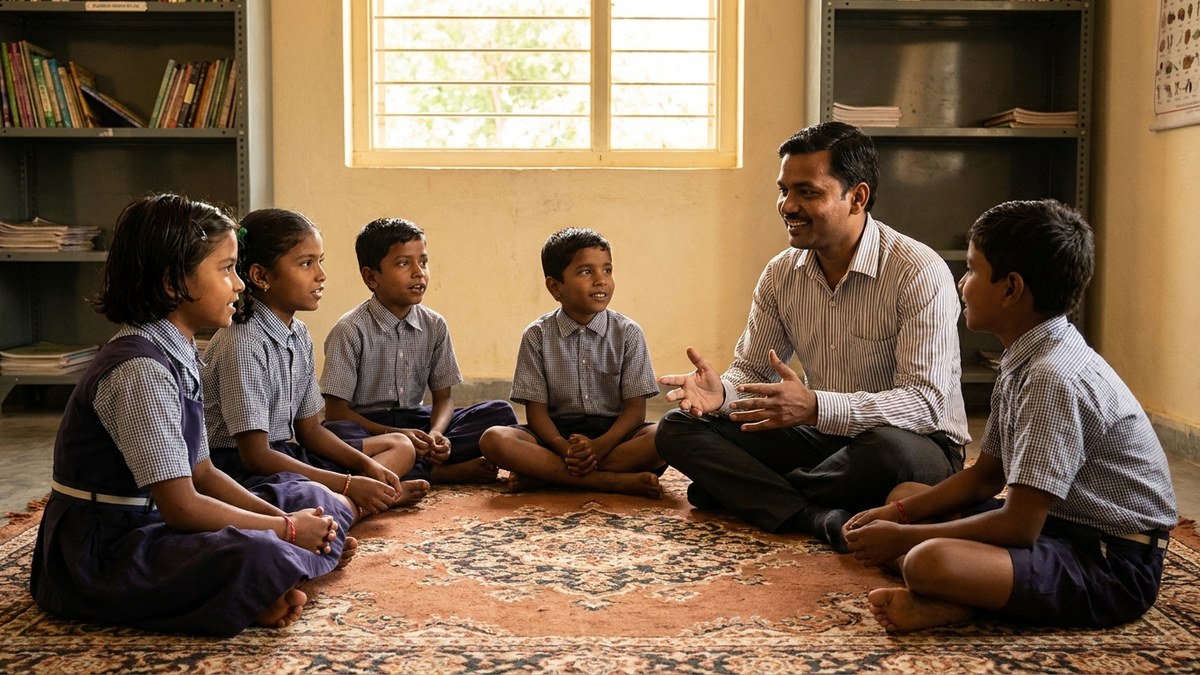
The Reality of Home School Legal India Operations
Legal operation means transparency. Parents deserve to know your registration status. Display your certificates. Share your curriculum. Maintain attendance records. This builds trust faster than any marketing.
Most people don’t realise that mixed age classrooms are your strength, not weakness. Unlike rigid formal schools, your microschool can group students by learning level rather than age. A 7-year-old advanced in maths learns with 9-year-olds. A 9-year-old struggling with reading gets support from the 7-year-old’s group. This flexibility is impossible in traditional systems.
Fees matter too. Legal microschools charge Rs.3,000-8,000 monthly depending on location and services. This undercuts formal private schools (Rs.8,000-15,000+) while providing superior personalisation.
Common Mistakes That Kill Microschools
- Skipping registration because “everyone else does.” You’ll face raids, penalties, and parent distrust.
- Copying traditional curriculum. Parents choose microschools for alternatives, not imitation.
- Poor technology setup. Handwritten records and cash-based fees look unprofessional and invite scrutiny.
- Ignoring parent communication. Update parents weekly on progress. Transparency converts one student into five referrals.
- Underpricing. Legal operation costs money. Charge fairly or you’ll burn out within a year.
Your Next Move
Registration takes weeks, not months. You can start this month. The demand for alternatives to traditional schooling has never been higher. Parents are desperate for personalised, skill-focused education.
Ready to launch? Start your TeachToEarn Learning POD today and join thousands of educators changing Indian education from home.