You Don’t Need a Building to Start a Microschool in India
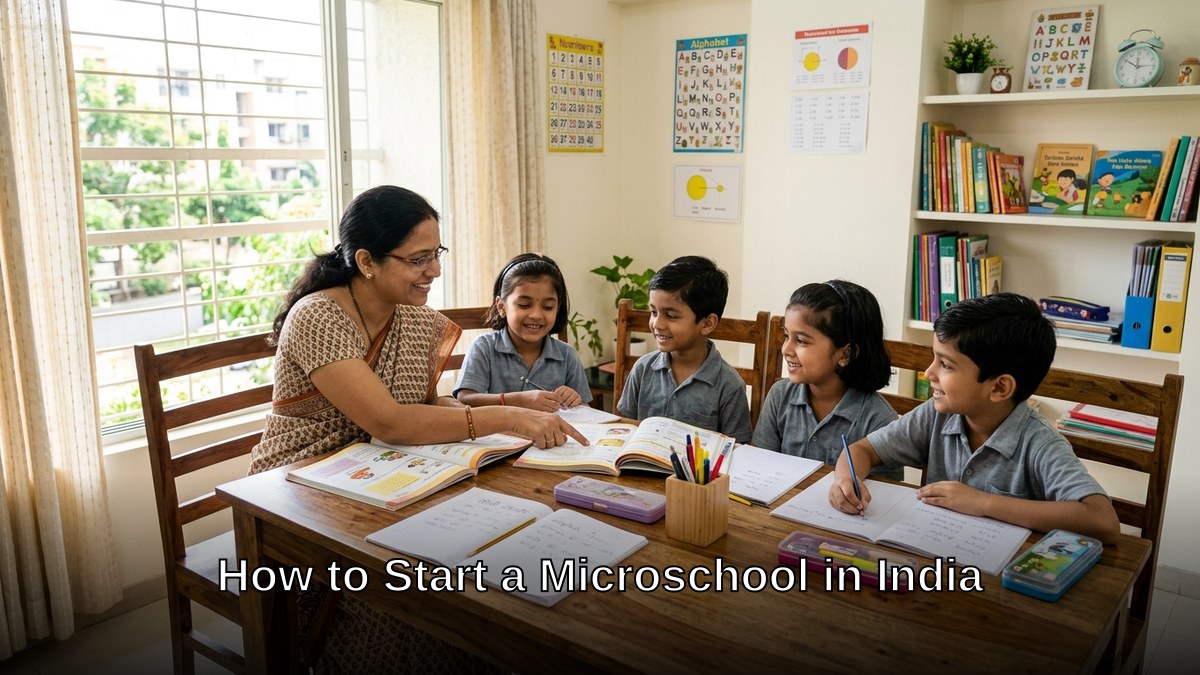
Here’s the truth: the traditional school model is broken, and thousands of Indian educators already know it. You’re sitting at home right now, possibly frustrated with low tuition fees or inconsistent student batches. You’ve got the teaching skills. You’ve got the passion. What you’re missing isn’t permission or a fancy campus. It’s a clear path to start a microschool in India that actually works.
A microschool isn’t some Silicon Valley fantasy. It’s a lean, focused learning environment with 15-50 students, personalized attention, and real outcomes. Most people don’t realise that microschools are already thriving across India, from Bangalore to small towns in Maharashtra. Teachers are running them from home, community centres, and rented spaces. The barrier to entry isn’t capital anymore. It’s clarity.
Let’s be honest: you’ve probably thought about this before. Maybe you dismissed it as too risky or too complex. That changes today.
The Five Non-Negotiable Steps to Launch Your Microschool
Step 1: Define Your Niche and Target Student Base
Don’t try to teach everyone. That’s how traditional schools fail and how microschools die young. Pick your lane. Are you targeting Class 6-8 students struggling with Math? Are you building a Montessori-inspired learning space for early childhood? Are you focusing on competitive exam prep? Your specificity is your strength.
Research your local market. Talk to 20 parents in your neighbourhood. Ask what problems they’re facing with their child’s current schooling. Write down the exact problems, not vague complaints. This becomes your positioning.
Step 2: Sort Out the Legal and Regulatory Framework
Contact your state’s Department of Education. You’ll need to register under the relevant education act. Most states have provisions for private schools and learning centres. Get clarity on:
- Minimum infrastructure requirements (classroom size, ventilation, safety)
- Teacher qualification standards
- Curriculum alignment (CBSE, state board, or custom curriculum)
- Health and hygiene compliance
- Insurance and liability coverage
Don’t skip this. A compliant microschool is a sustainable one. Check the Central Board of Secondary Education guidelines if you’re planning to follow their curriculum.
Step 3: Secure Your Physical Space
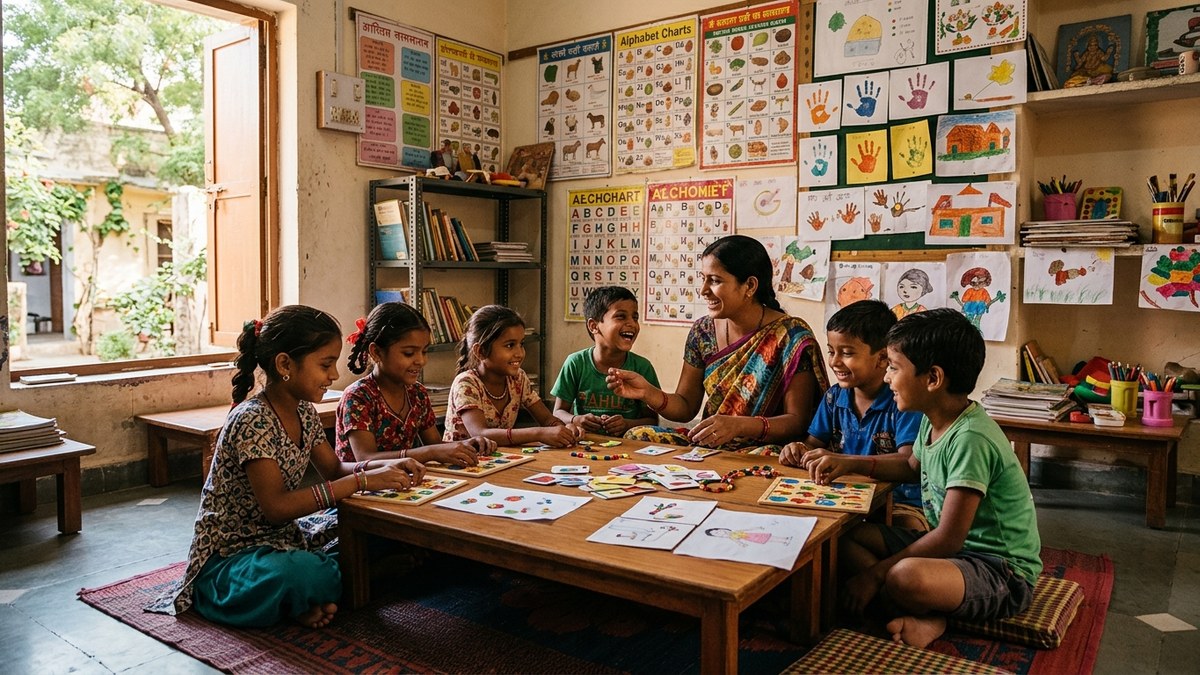
You don’t need a palace. A 1000-1500 sq ft space with 2-3 rooms works. This could be your home, a rented community hall, or a shared office space. Ensure it has proper lighting, ventilation, and a safe outdoor area if possible. Many successful microschools operate from residential spaces with parents’ full approval.
Budget: Rs.5,000-15,000 monthly for rent in most Indian cities. Negotiate a 2-3 year lease to keep costs predictable.
Step 4: Build Your Curriculum and Teaching Model
This is where microschools win. You’re not bound by the bloated textbook approach. Create a hybrid model: core academics plus skills development. Blend online resources from platforms like DIKSHA digital learning platform with personalized offline instruction.
Your curriculum should reflect your niche. If you’re targeting exam prep, align with the board’s syllabus but add problem-solving workshops. If you’re doing early childhood, integrate play-based learning with foundational academics.
Step 5: Set Up Your Digital Infrastructure
Most teachers underestimate this. You need a system to manage attendance, track student progress, communicate with parents, and deliver hybrid lessons. This isn’t optional anymore. Parents expect transparency and digital access to their child’s learning journey.
Here’s where APNA PC changes the game. For just Rs.30,000, you get a complete bundle: education software, 3-year warranty, installation, and a Mini PC (i3 7th Gen, 8GB RAM, 128GB SSD) plus monitor, keyboard, mouse, webcam, and headset. This single investment sets up your entire digital backbone. No more juggling multiple devices or expensive subscriptions.
With APNA PC, you’re running a professional operation from day one. Attendance tracking, grade management, parent communication, and even online class delivery all work seamlessly. This is the infrastructure that separates amateur tutoring from a real microschool.
The Microschool Economics That Actually Work
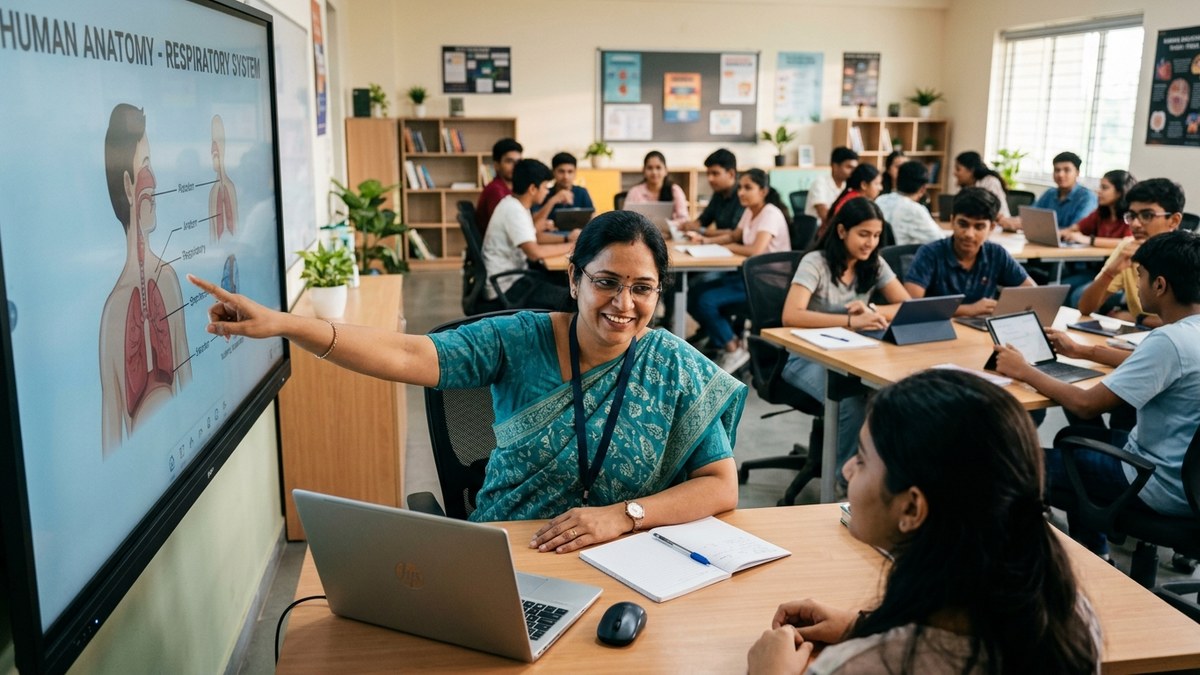
Let’s talk money without the nonsense. A microschool with 25 students at Rs.3,000-5,000 per student per month generates Rs.75,000-125,000 in monthly revenue. Your fixed costs are roughly Rs.15,000-20,000 (rent, utilities, compliance). Your variable costs are Rs.10,000-15,000 (teacher salary if you hire, materials, software). You’re looking at 30-40% margins in year one.
Compare this to traditional tuition centres where you’re grinding for every student and margins are razor-thin.
The real opportunity? Check out our microschool 101 guide for detailed financial projections and operational templates. You’ll also want to explore how to double income with digital tools by leveraging hybrid models.
Why POD (Point of Digital Learning) is Your Competitive Edge
A POD is a home or community learning centre run by a trained educator. It’s the microschool model on steroids. Instead of competing with every tuition centre in your area, you’re building a branded learning environment. Parents aren’t just hiring a tutor. They’re enrolling their child in a structured program with accountability and outcomes.
The POD model works because it combines the intimacy of home tutoring with the professionalism of a school. Your APNA PC setup makes this possible. You track every student’s progress. You send weekly reports to parents. You run live online sessions when needed. You’re not just teaching. You’re running a business.
Your First 90 Days: The Action Plan
Month 1: Finalize your niche, secure space, complete registrations. Month 2: Build your curriculum, set up APNA PC, create your digital systems. Month 3: Soft launch with 8-10 students, gather feedback, refine your model.
Don’t aim for 50 students on day one. Build with intention. Your first cohort becomes your proof of concept. Their results become your marketing.
Research from UNESCO global education research shows that smaller, personalized learning environments consistently outperform large classrooms on student outcomes. You’re not just building a business. You’re part of an education revolution.
Ready to start? The infrastructure, the legal clarity, and the market opportunity are all here. What’s missing is your first step. Launch your POD today and turn your teaching into a sustainable, scalable business. Your students are waiting.