
Your child came home from school last week and asked you to help with an online assignment. You sat next to them, stared at the screen, and quietly hoped they wouldn’t notice you had no idea what to click next. Sound familiar? You’re not alone, and honestly, most parents feel exactly the same way. This parents’ digital education guide is written for you.
Why So Many Parents Feel Left Behind
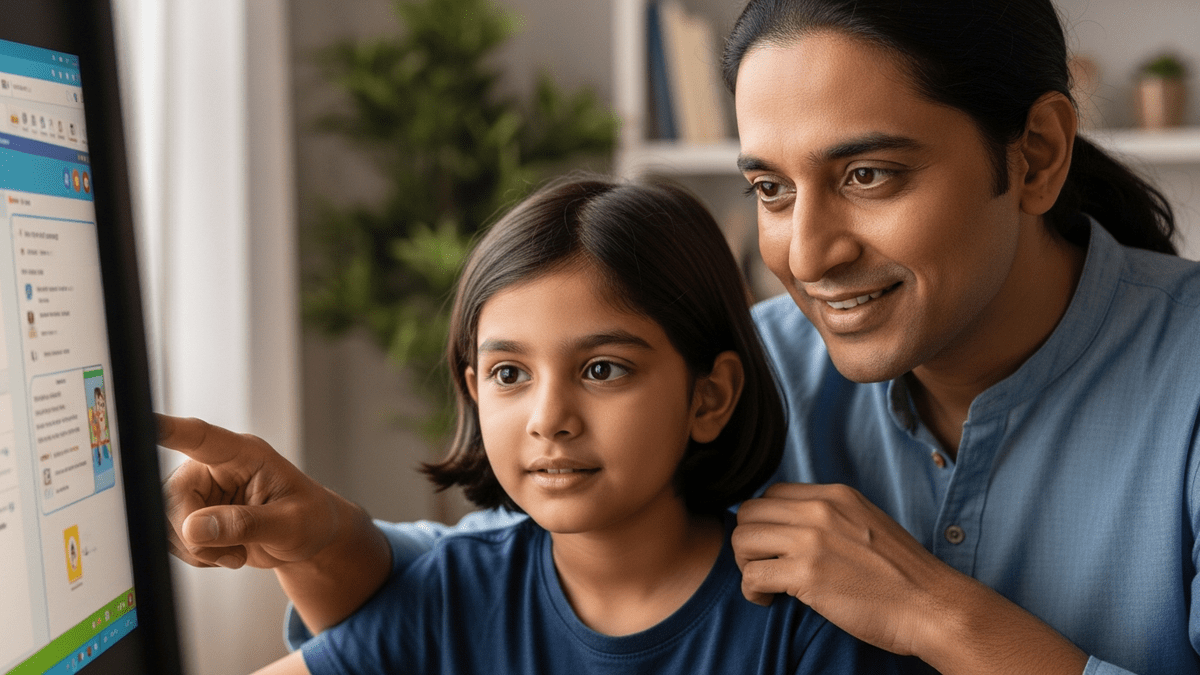
Digital parenting isn’t something anyone taught us. Most of us grew up with textbooks and blackboards, and suddenly we’re expected to guide our kids through online classrooms, coding tools, and digital homework portals. That gap is real, and it’s okay to admit it.
The problem isn’t a lack of love or effort. It’s a lack of access and familiarity. Many families in India don’t have a dedicated computer at home. Sharing a smartphone with three or four family members isn’t a learning environment, it’s a daily juggle. When a child needs to practice typing, watch an educational video, or complete a digital project, a small phone screen simply doesn’t cut it.
Research from UNESCO global education research consistently shows that children learn better when parents are actively involved in their education. But involvement requires the right tools and a basic level of comfort with technology.
The Real Opportunity Sitting in Front of You
Here’s the thing: you don’t need to become a tech expert. You just need to show up. Parent involvement in education, even in small ways, makes a measurable difference in how children perform and how confident they feel about learning.
India’s Digital India initiative is actively pushing to bring technology into every household. Schools are shifting to blended learning. Government exams are going online. Competitive opportunities like scholarships and skill certifications are increasingly digital. Your child needs to be ready, and so do you.
The good news is that getting involved doesn’t require a degree in computer science. It requires curiosity, consistency, and the right setup at home.
What Practical Digital Parenting Actually Looks Like
Practical digital parenting means sitting with your child while they learn, not just handing them a device and walking away. It means asking questions about what they’re doing online, setting healthy screen time boundaries, and creating a space at home where focused digital learning can happen.
It also means making sure your child has the tools they need. A proper computer, a stable internet connection, and a quiet corner to work in. These aren’t luxuries anymore. They’re the new pencil and notebook.
When you invest in a proper learning setup, you’re sending your child a message: what you’re doing matters, and we’re taking it seriously. That signal alone can change how a child approaches their education.
Steps You Can Take Starting This Week
First, have an honest conversation with your child about what tools they need for school and self-learning. Ask their teachers what platforms or software they use regularly. You might be surprised how much clarity that one conversation brings.
Second, explore affordable options that bring a full computer experience into your home. The APNA PC — affordable computer for learners from Teach to Earn is designed exactly for families like yours. At just ₹30,000, APNA PC gives your child a proper machine built for learning, not just casual scrolling.
Third, if you want to go further and help other children in your community, consider the option to Start a TeachToEarn Learning POD. It’s a powerful way to turn your support for education into something that benefits your entire neighbourhood.
Fourth, commit to spending even fifteen minutes a week sitting with your child while they use their learning tools. Ask what they built, what they read, or what they’re struggling with. Your presence matters more than your expertise.
Fifth, stay curious yourself. Watch a short tutorial, try a free online course, or simply explore the same platform your child uses. You’ll connect better with their learning journey when you understand a little of what they experience.
Being a parent in a digital age isn’t about having all the answers. It’s about staying close enough to your child’s world to guide them through it.
Give your child the setup they deserve and take the first step today. Visit APNA PC — affordable computer for learners and get your family ready for the future of learning.