The Learning Pod India Movement is Already Happening. Are You Part of It?
Your living room. A tuition centre. Your neighbour’s home. These are becoming classrooms. Not because schools have failed, but because parents, homemakers, senior citizens, and tuition teachers have realised something crucial: personalised learning works. A learning pod in your community isn’t a luxury anymore. It’s becoming the default for families who want better outcomes.
Let’s be honest: the traditional model isn’t serving everyone. Some kids need slower pacing. Others need acceleration. Parents juggle schedules. Quality tutoring is expensive. Here’s the truth: when you start a learning pod, you solve all of this at once. And you don’t need to be a tech genius to do it.
Most people don’t realise that a learning pod India operates on a simple principle. One trained educator. A small group of learners (8-12 is ideal). A structured curriculum. Real relationships. Real progress.
Key Takeaways
- To start a learning pod as an educator you need three essentials: a clear curriculum, reliable technology and a steady system for parent communication.
- A learning pod is a small group taught by one trained educator from a home or rented space, blending traditional teaching with digital tools.
- Homemakers, retired teachers, tuition teachers and edupreneurs can all run one; teaching passion and organisation matter more than formal business training.
- Free resources like DIKSHA help build a standards-aligned curriculum without buying expensive content.
- A dependable computer with a webcam and headset keeps lessons running smoothly and supports both in-person and online sessions.
What Exactly is a Learning Pod?
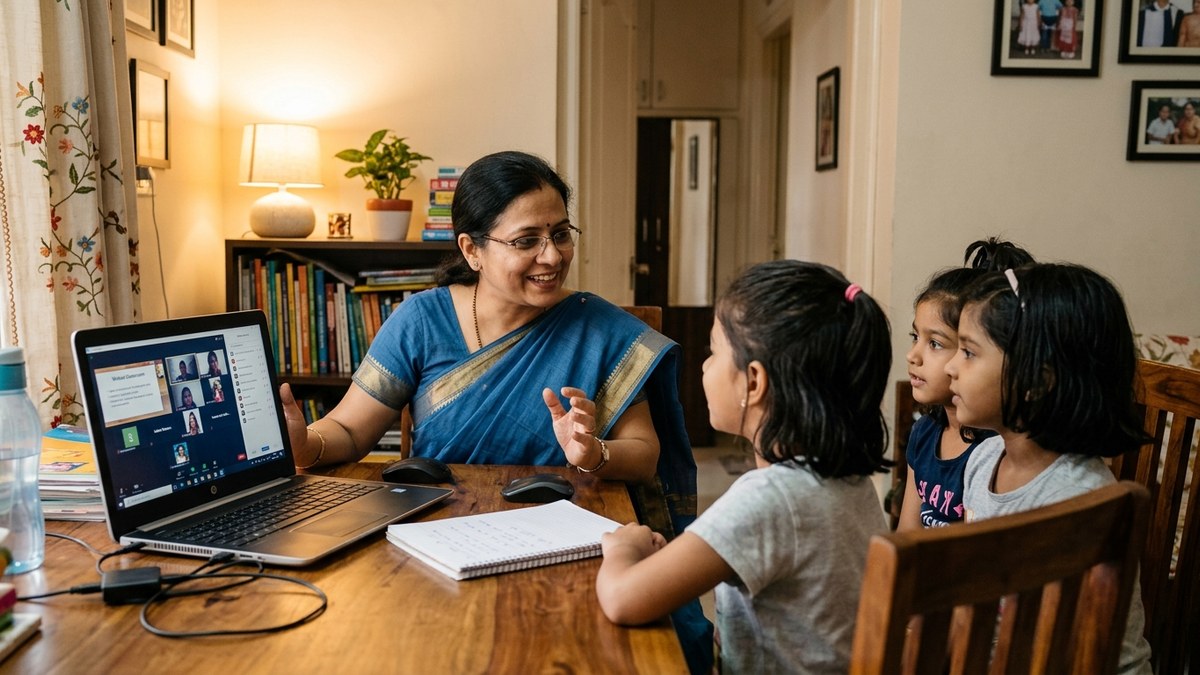
A learning pod is a Point of Digital Learning. POD. A community educator runs it from home or a rented space. Students attend regularly. The educator uses digital tools alongside traditional teaching. It’s hybrid. It’s flexible. It works.
Think of it as the middle ground. Not a massive school with 50 kids per classroom. Not isolated home tutoring. Something smarter.
- A home learning centre with 8-12 students
- Run by you, a trained educator
- Using proven curriculum and digital resources
- Serving your actual community
- Generating consistent monthly income
The community learning model has deep roots globally. But in India, it’s fresh. It’s growing. Parents are hungry for it.
Who Should Start a Learning Pod?
You. Specifically you, if you fit any of these profiles:
- Homemakers wanting to earn without leaving home or working rigid hours
- Senior citizens with teaching experience and time to give back
- Tuition teachers ready to scale beyond one-on-one tutoring
- Edupreneurs building sustainable education businesses
You don’t need an MBA. You need passion for teaching, basic organisational skills, and willingness to learn new tools. That’s it.
A home learning pod for kids can focus on academics, skills, languages, or coding. The model scales across all age groups and subjects. Your expertise plus community need equals opportunity.
The Three Non-Negotiables for Your Pod
You need three things to launch successfully. Not ten things. Three.
First: A clear curriculum. Don’t wing it. Know exactly what you’ll teach, in what sequence, how you’ll assess progress. Use resources like DIKSHA digital learning platform for quality content aligned to standards.
Second: Reliable technology. This doesn’t mean expensive. A basic PC with internet, video conferencing capability, and learning management access. You’ll need something dependable. Something that doesn’t crash mid-lesson. Something that lasts. APNA PC delivers exactly this. Rs.30,000 complete bundle. Mini PC i3 7th Gen, 8GB RAM, 128GB SSD, monitor, keyboard, mouse, webcam, headset. Plus 3-year warranty and installation. Education software included. You unbox it and teach.
Third: A system for parent communication. Monthly progress reports. Regular updates. Transparent fees. Parents trust educators who communicate clearly. Use WhatsApp, email, or a simple parent portal. Consistency matters more than sophistication.
How to Actually Start Your Learning Pod
Stop planning. Start doing. Here’s the sequence:
- Define your focus (age group, subject, schedule)
- Identify 5-8 potential families in your network
- Meet them. Pitch simply. Offer a trial week
- Set up your space (even a corner of your home works)
- Get your tech sorted (APNA PC handles this completely)
- Create a basic curriculum outline
- Launch with your first batch
- Refine based on feedback
That’s genuinely it. You don’t need regulatory approval for a small community learning pod. You don’t need fancy branding. You need results.
When you start a learning pod, you’re not just earning. You’re building something real in your community. Kids get personalised attention. Parents get affordable, quality education. You get autonomy and income.
The Money Question
Let’s talk numbers. A learning pod with 10 students, each paying Rs.3,000-5,000 monthly (depending on your location and offering), generates Rs.30,000-50,000 monthly revenue. After basic costs (space, materials, internet), your take-home is Rs.15,000-30,000. Scale to two batches (morning and evening). Double it.
This isn’t get-rich-quick. It’s sustainable income. Built on trust. Built on results.
Your first investment is minimal. APNA PC at Rs.30,000 is your biggest expense. It runs for years. The rest is your time and teaching skill, which you already have.
Why Now?
Parents across India are exhausted with large classrooms and generic teaching. They’re ready to invest in pods. Government initiatives like DIKSHA are creating digital infrastructure. Communities are hungry for local solutions. The timing is real.
A learning pod India isn’t a trend. It’s a response to what families actually need. And educators who move now will build the strongest communities.
Ready to start? Learn exactly how to start a learning pod with TeachToEarn’s complete framework. We’ll walk you through everything.
Frequently Asked Questions About Start a learning pod as an educator
How do I start a learning pod in my community?
Decide what you will teach and for which age group, then plan a clear curriculum and assessment routine. Set up a quiet space with a reliable computer and internet, fix your fees and timing, and reach out to local parents. Start with a few students and grow through word of mouth.
Who can run a learning pod?
Anyone with subject knowledge and a real interest in teaching can run one. Homemakers, senior citizens with teaching experience, tuition teachers and small education entrepreneurs are common examples. Willingness to learn digital tools is more important than any degree.
What technology do I need to run a learning pod?
A dependable computer, stable internet, a webcam and a headset cover most needs. These let you show digital content, run online sessions and keep student records. A phone alone struggles with this kind of daily teaching work.
Where can I find curriculum material for a learning pod?
DIKSHA offers free content aligned with NCERT and state boards, and NCERT textbooks are free to read online. You can combine these with your own worksheets and activities. Keeping a clear sequence of topics matters more than having lots of material.
How should I communicate with parents in my pod?
Share short progress reports every month and send quick updates on homework or concerns. WhatsApp, email or a simple shared sheet are enough. Clear fees and regular, honest updates are what build parents’ trust.
DIKSHA, the national digital learning platform run by NCERT, offers free curriculum-aligned content that independent educators can use to plan lessons for CBSE and state board students.