
A ten-year-old in Pune sat through six months of coding theory classes and could recite the definition of a loop perfectly. But when her teacher asked her to write a simple program that printed numbers one to ten, she froze. She knew the words. She just couldn’t use them. This gap between knowing and doing is exactly why coding practice for students must go beyond textbooks and slide decks.
The Problem With Theory-Heavy Coding Education
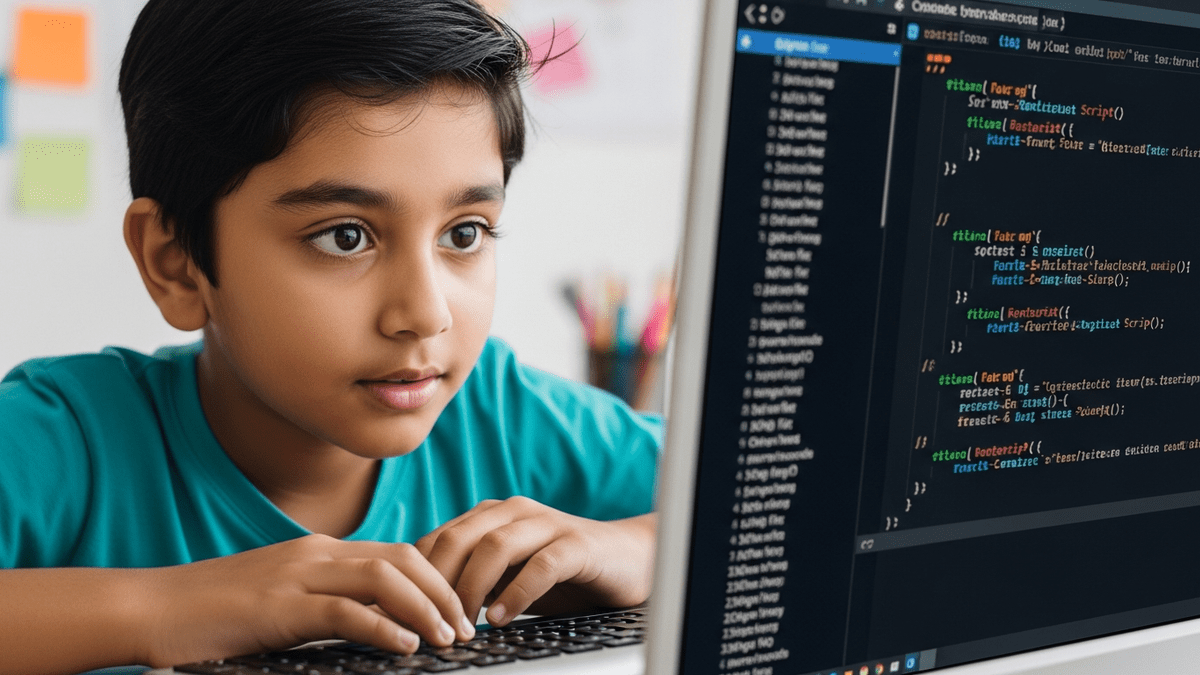
Most school curricula still treat coding like a subject to be memorized. Students read about variables, watch demonstrations, and take written tests. It feels productive, but it skips the most important part: actually writing code, making mistakes, and fixing them.
The India Ministry of Education has been pushing for more skill-based learning, and coding sits right at the heart of that shift. Yet many classrooms haven’t caught up. Teachers are often trained in theory delivery, not in guiding students through real project work.
The result? Kids who can define “algorithm” but can’t build one. Kids who score well on paper but feel lost the moment they open a code editor. That’s not their fault. It’s a structural problem with how coding is taught.
There’s also an access issue. Many families, especially in Tier 2 and Tier 3 cities, don’t have a dedicated computer at home. Without regular access to a machine, even the most motivated student can’t get the repetitions needed to build real, practical coding skills.
Why Hands-On Practice Changes Everything
When a student actually types out a program, runs it, sees it fail, figures out why, and fixes it, something clicks that no lecture can replicate. That cycle of writing, testing, and debugging is where real learning happens. It builds problem-solving instincts that stay with a child for life.
The Digital India initiative has made it clear that the country’s future depends on a generation that doesn’t just consume technology but creates with it. Hands-on coding is the bridge between those two things. Kids who learn to code by doing are already thinking like creators.
Research consistently shows that project-based learning leads to better retention and deeper understanding. When a child builds a small game, a quiz app, or a simple website, they’re not just learning to code. They’re learning to think logically, break problems into smaller pieces, and persist through challenges. These are skills that transfer into every area of life.
For educators who want to be part of this shift, there’s a real opportunity here. Become an Edupreneur with TeachToEarn and help bring practical, hands-on coding education to students in your community. The demand is there. The tools are available. What’s needed are teachers who are willing to move beyond the textbook.
How to Make Coding Practice Work for Your Child or Student
The first step is consistency. A child who spends twenty minutes coding every day will outpace one who attends a two-hour theory class once a week. Short, regular sessions where the student is actually typing and building something are far more effective than passive listening.
Start with projects that feel meaningful to the student. If a child loves games, have them build a simple number guessing game. If they’re into stories, help them create an interactive story using Scratch. When the project matters to the student, they’ll push through the frustration that comes with debugging.
Access to a personal computer is non-negotiable for this kind of learning. Sharing a family phone or waiting for a school computer lab slot simply doesn’t give students enough practice time. This is where learn coding India families need a practical, affordable solution that lets kids code at home, at their own pace, without restrictions.
For families looking to support coding for kids at home without spending a fortune, the APNA PC — affordable computer for Indian learners is worth serious consideration. At ₹30,000, APNA PC gives students a dedicated machine designed for learning, so they can practice every single day and build the skills that actually matter.
Encourage mistakes. A child who’s afraid to get an error will never experiment, and experimentation is the engine of learning. Celebrate the debugging process as much as the working program. That mindset shift alone can transform how a student relates to coding.
Connect learning to real outcomes. Show students what coders actually build. Let them see apps, websites, and games made by people who started exactly where they are now. Inspiration is a powerful motivator when it’s grounded in something real and achievable.
Give your child the daily coding practice they need to genuinely thrive. Visit the APNA PC page today and get them set up with their own computer so they can start building, experimenting, and growing their skills from home.