Why Digital Literacy in Indian Schools Matters Now
The COVID-19 pandemic exposed a harsh reality: many Indian students couldn’t transition to online learning because they lacked basic digital skills. Even as schools reopened, the World Economic Forum’s Future of Jobs Report highlighted that 50% of all employees will need reskilling by 2025. Building digital literacy in Indian schools early isn’t optional, it’s survival.
Digital literacy in Indian schools isn’t just about teaching coding or using computers. It encompasses digital citizenship, online safety, information evaluation, and productivity tool mastery. Students who master these skills early gain competitive advantages in college admissions and job markets. This is why digital literacy Indian schools programs must evolve beyond outdated computer lab sessions.
The Government of India’s Digital India initiative has invested heavily in infrastructure, but the real challenge lies in implementation at the grassroots level. Home-based learning centers fill this gap by providing personalized, community-driven digital education. According to DIKSHA, millions of students already access digital content through government platforms, yet the gap remains enormous.
The Gap: Student Digital Skills in Indian Education
Urban-rural divides remain stark. While metropolitan students access coding bootcamps and tech clubs, rural and semi-urban children often attend schools with limited computer labs and outdated equipment. Even where infrastructure exists, teachers frequently lack training in modern pedagogical approaches to digital literacy Indian schools programs.
The psychological aspect matters too. Many Indian students, especially girls and those from underprivileged backgrounds, experience tech anxiety. Learning in a trusted community space reduces this barrier and builds confidence faster than traditional school settings.
How PODs Build Digital Literacy Indian Schools Need
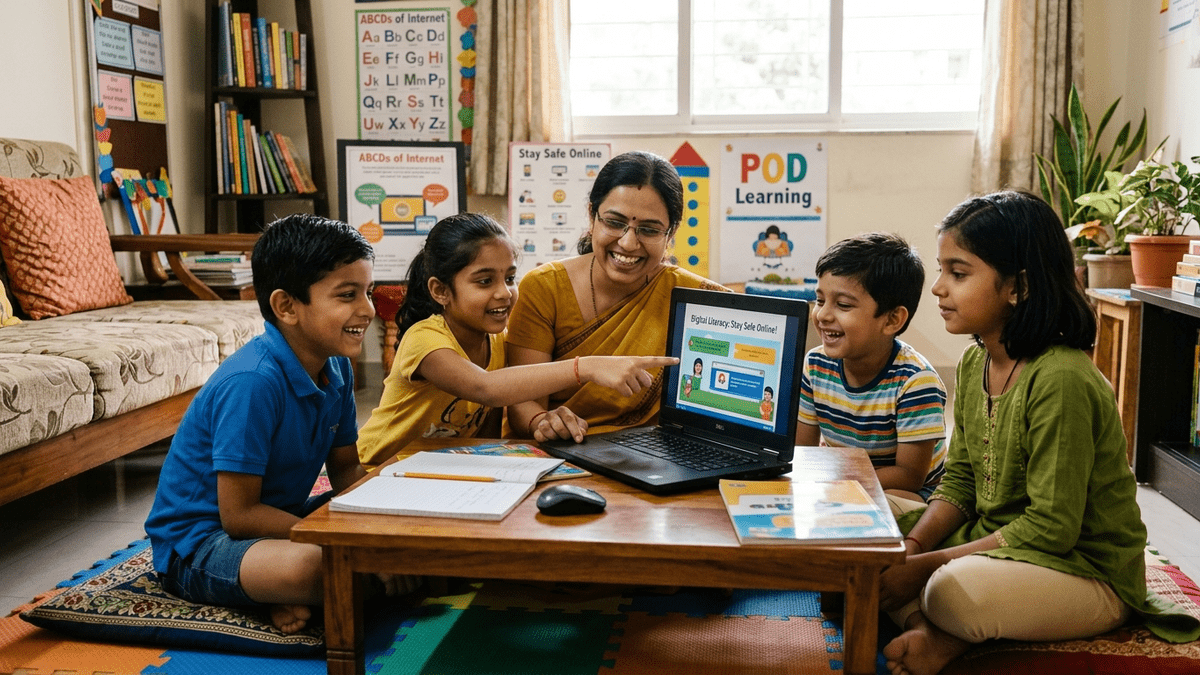
A POD digital literacy program operates differently from conventional computer classes. Rather than rote memorization of software features, PODs emphasize problem-solving, creativity, and real-world application. Students learn to research online safely, create digital portfolios, understand cybersecurity threats, and use productivity tools for academic and personal growth.
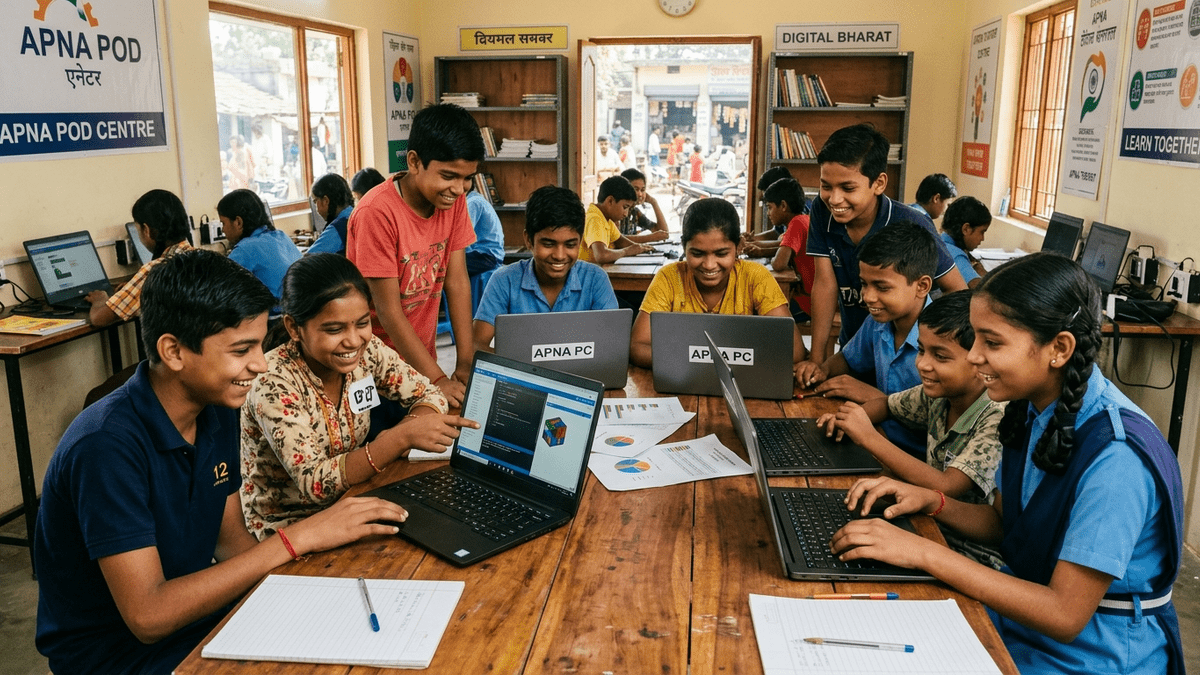
Consider this: a POD in a semi-urban neighborhood can serve 50-100 students monthly, each gaining hands-on experience with tools their school computers rarely offer. The POD Growth Engine model shows how community educators scale impact by offering tiered programs, from foundational computer skills to advanced digital marketing and coding. These initiatives reach students who would otherwise be left behind.
The beauty of POD digital literacy initiatives is their flexibility. They adapt to local needs. In one neighborhood, the focus might be digital citizenship and online safety. In another, it’s coding and app development. Parents and students drive the curriculum, ensuring relevance and engagement.
APNA PC: The Backbone of Affordable Digital Learning
For educators and parents wanting to launch a POD, affordability is crucial. The APNA PC bundle, priced at just Rs.30,000 (complete bundle), democratizes access to quality digital learning infrastructure. This isn’t a basic computer. It’s a comprehensive solution designed for Indian home-based learning centers.
The APNA PC includes pre-loaded educational software, offline digital literacy resources, and a structured curriculum framework. Educators can immediately begin teaching digital skills without investing in expensive software licenses or high-speed internet connectivity. For rural areas where bandwidth is limited, this is revolutionary.
With APNA PC, a home-based POD becomes viable. A teacher or entrepreneur can set up a learning center in their living room, serve 10-15 students, and generate sustainable income while building digital literacy Indian schools capacity at the community level.
Real-World Impact: Digital Literacy Indian Schools Achieve
Across India, PODs powered by APNA PC are already making waves. In Gujarat, a former homemaker launched a POD and now trains 40 girls monthly in digital skills. In Maharashtra, a retired teacher uses APNA PC to teach cybersecurity awareness to school children. These aren’t corporate training centers. They’re community-driven initiatives solving real problems.
Students emerge from these PODs with tangible skills: they can create presentations, manage digital calendars, understand online privacy, troubleshoot basic tech issues, and navigate learning management systems. These competencies directly translate to better academic performance and future employability. Building digital literacy capacity through PODs creates a ripple effect across entire communities.
Building a Sustainable POD: The Edupreneur Path
Educators interested in launching a POD should understand the business model. With APNA PC at Rs.30,000 (complete bundle), startup costs are minimal. Monthly fees of Rs.500-1,000 per student create sustainable revenue. A POD with 20 active students generates Rs.10,000-20,000 monthly, enough to cover rent, utilities, and the educator’s income.
The key to success is positioning the POD as a solution to real community problems. Parents want their children digitally ready. Schools welcome PODs as supplementary learning spaces. Employers value job candidates with proven digital skills. Your POD bridges all these needs.
Marketing is straightforward: word-of-mouth in your community, social media presence, partnerships with local schools, and transparent communication about learning outcomes build trust quickly.
The Future of Digital Literacy in Indian Schools
Government initiatives like Digital India and the National Education Policy provide macro-level support, but micro-level change happens through educators like you. Every POD launched is a victory for digital literacy Indian schools and for the students who gain skills their schools cannot yet provide.
The demand is clear. The solution is proven. The barrier, cost and complexity, has been removed with APNA PC. What remains is action.
Your community needs a POD. Your students need digital skills. You need a sustainable income source. APNA PC makes all three possible. Build digital literacy with a POD near you. Launch your own learning center today. Transform your neighborhood, empower students, and build a thriving edupreneur business, all for an investment of just Rs.30,000 (complete bundle) with APNA PC.