
Walk into any rural school in India and you will see the same pattern. Enthusiastic teachers, eager students, and almost zero access to digital tools. While urban classrooms have moved to smart boards and coding labs, rural schools digital learning remains a distant dream for millions of children. The gap is not about talent or motivation. It is about infrastructure and access. A Point of Digital Learning (POD) can change this equation entirely, bringing technology-enabled education to villages without waiting for government school upgrades.
The Real State of Rural Schools Digital Learning Today
According to the research on learning outcomes, students who lack digital exposure score 30-40% lower on comprehension tests compared to peers with regular computer access. In rural India, this translates to millions of children falling behind before they even reach high school. The problem is not intelligence. These students simply never get a chance to interact with technology that urban children take for granted.
Rural schools digital learning infrastructure is patchy at best. Many government schools have a single computer locked in a room that nobody knows how to use. Internet connectivity is unreliable. Teachers themselves may have limited digital literacy. Without intervention, this gap will only widen as the world becomes increasingly digital.
Why a POD Works Better Than Waiting for School Upgrades
Government initiatives like Digital India have made significant progress in expanding digital infrastructure. But the reality on the ground is that rural schools digital learning programs take years to reach every village. A POD fills this gap immediately. For Rs.30,000 (complete bundle), an educator in any village can set up a fully functional learning center with the APNA PC bundle, complete with educational software, a three-year warranty, and installation support.
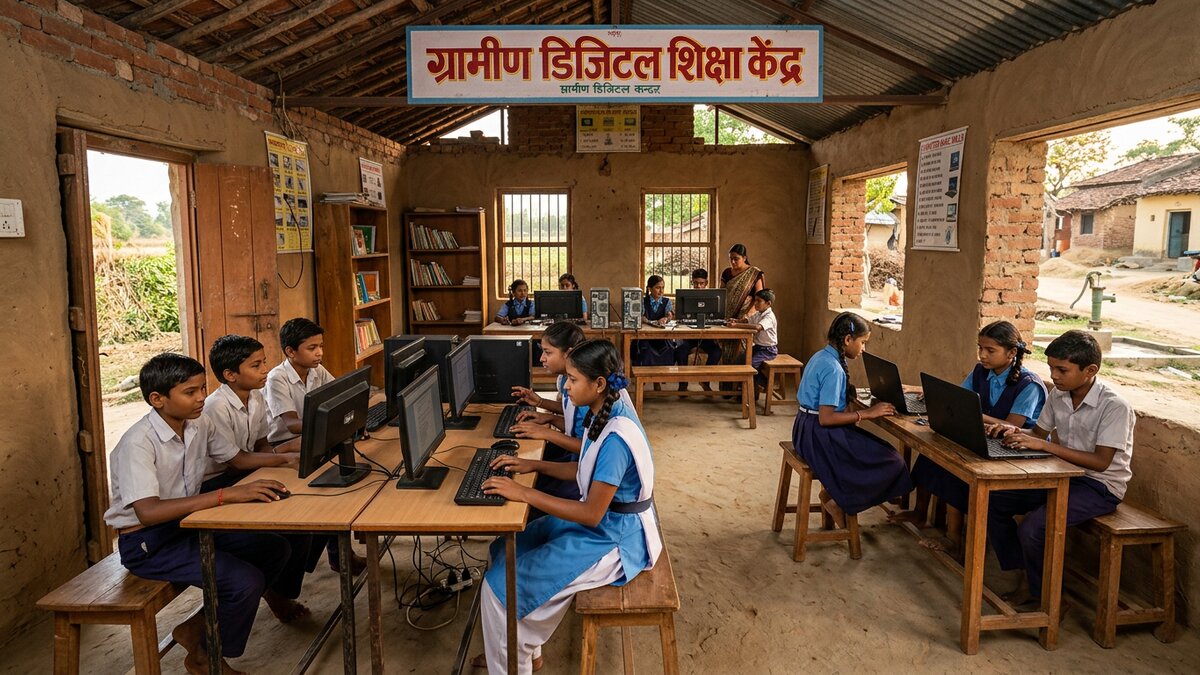
Unlike traditional computer labs that need dedicated rooms, air conditioning, and technical staff, a POD operates from any clean, dry space. A spare room in a house, a community hall corner, or even a converted shop. The APNA PC bundle is designed for low-maintenance, high-impact use in environments where infrastructure is limited.
How Rural Schools Digital Learning Transforms Communities
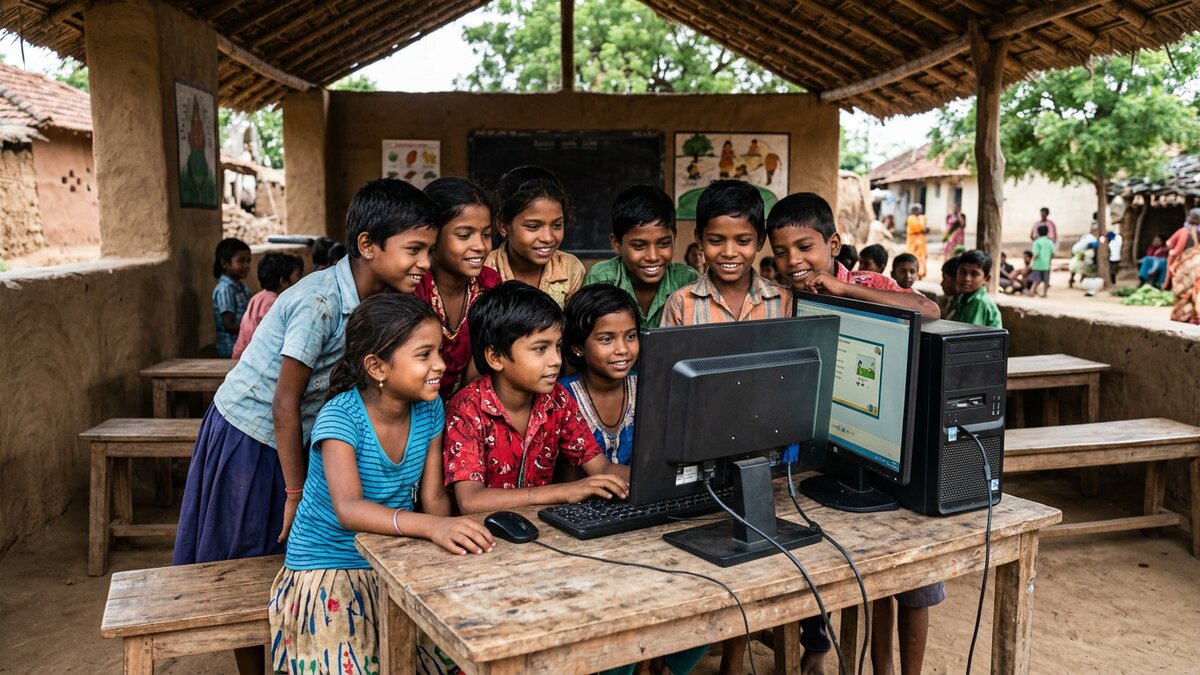
When a POD opens in a village, the impact goes far beyond the students who attend. Parents see their children using computers and start believing that technology is not just for city kids. Local educators gain digital skills they can apply in their own teaching. The entire community starts viewing education differently.
In small towns across India, PODs have already shown how quality education in small towns can match urban standards when the right tools are available. Students who learned basic computer skills in a POD went on to score higher in board exams, qualify for competitive entrance tests, and pursue careers in technology that their parents could never have imagined.
The ripple effect is powerful. One POD in a village of 500 families can reach 30-50 students directly. Those students share what they learn with siblings and friends. Within a year, digital literacy spreads through the community naturally.
Funding Your Village POD Through CSR and Community Support
Many educators hesitate because Rs.30,000 feels like a large investment for a rural area. But funding options exist that most people do not know about. Corporate Social Responsibility (CSR) funds from companies are specifically allocated for education and digital literacy projects. CSR funds for community learning PODs can cover the entire setup cost if you know how to apply.
Local self-help groups, panchayat funds, and community crowdfunding are other avenues. In many villages, a single motivated teacher has pooled resources from 10-15 families to launch a shared POD. The cost per family comes down to less than Rs.2,000, making it affordable even in economically weaker communities.
Getting Started: Your POD Journey Begins Now
Launching a POD requires minimal prerequisites. Passion for education, basic computer literacy, and commitment to community service suffice. The APNA PC bundle at Rs.30,000 (complete bundle) provides everything needed technically. Training resources, mentorship, and community support round out the ecosystem.
The first step involves assessing local needs. How many students lack digital access? What subjects need strengthening? What community resources exist? Answering these questions informs your POD’s design and operations.
Bring digital learning to your village and transform educational outcomes in your community. Rural schools digital learning is not a distant dream. It is an achievable reality starting today. Visit TeachToEarn to learn how you can establish your POD and become an education entrepreneur. Join thousands of educators empowering rural India through accessible, technology-enabled learning.