
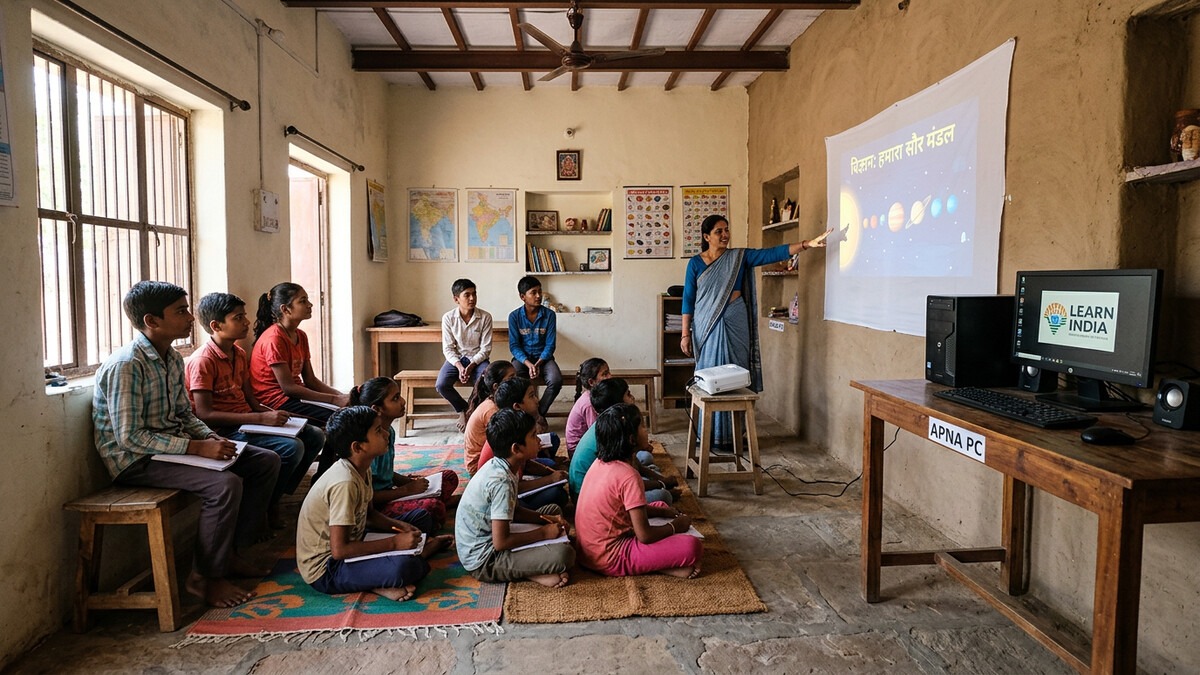
Rural India is witnessing a quiet revolution in education. Teachers and retired educators in small towns are no longer waiting for government support or expensive infrastructure. Instead, they are building a smart classroom at home using affordable technology and proven teaching methods. This shift is transforming how students access quality computer education, breaking the cycle of costly coaching centres that drain family budgets.
The problem is real. Families in villages often spend thousands of rupees on coaching classes in nearby towns, traveling long distances and sacrificing study time. Yet, a smart classroom at home offers an alternative that is both affordable and effective. With APNA PC, a Rs.30,000 complete bundle, rural educators can now establish their own Point of Digital Learning (POD) and serve their communities without heavy investment.
Why Rural Teachers Need a Smart Classroom at Home
Rural areas face a critical gap in digital education access. According to Education in India, technology adoption in smaller towns remains limited. Students miss out on computer skills that are essential for competitive exams, job applications, and modern careers. Parents struggle to afford coaching centre fees, and quality instructors are scarce.
A smart classroom at home solves these problems directly. Teachers can use their existing knowledge and local trust to create a learning environment that serves 15 to 20 students at a time. The Point of Digital Learning (POD) model allows educators to operate from their homes, eliminating rent, commute costs, and administrative overhead. The result is affordable education that remains profitable for the teacher.
APNA PC makes this possible. For Rs.30,000, educators receive everything needed: software, curriculum content, teaching materials, and technical support. No need for expensive computer labs or sprawling infrastructure. A simple room, a projector, and APNA PC transform any home into a functional smart classroom.
How a Smart Classroom at Home Works
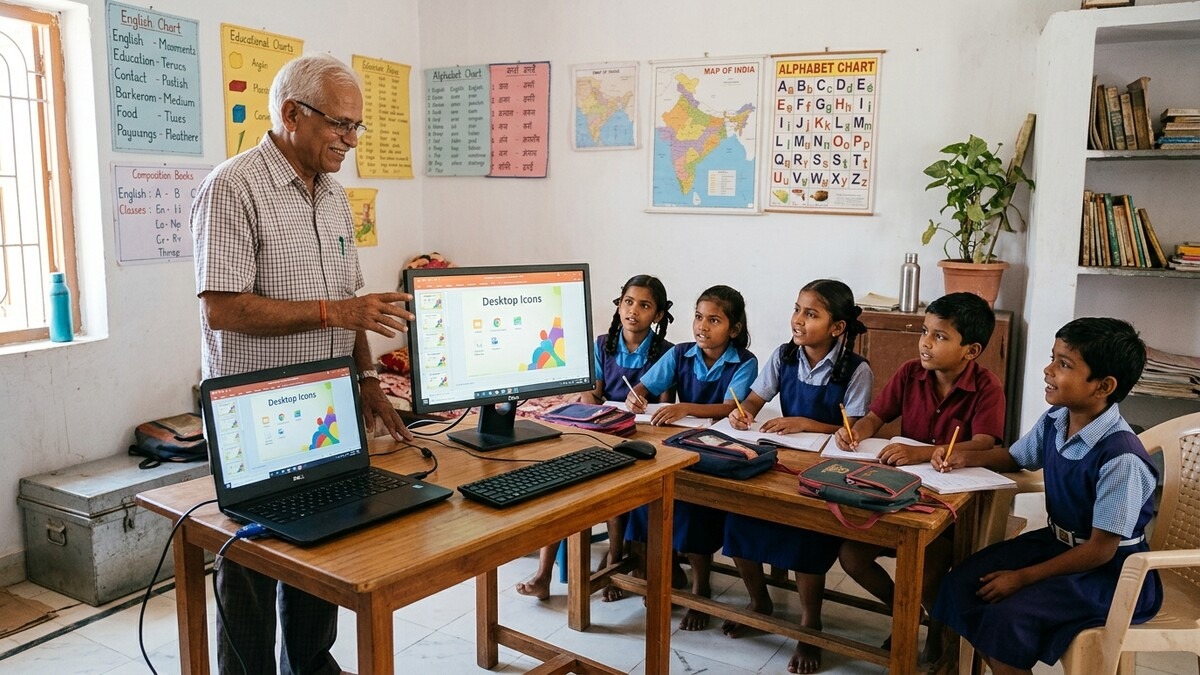
The mechanics are straightforward. Teachers install APNA PC on a single system and connect it to a projector or large monitor. Students gather in the home-based POD to learn computer fundamentals, MS Office, typing, coding basics, and other in-demand skills. Classes are interactive, practical, and tailored to local needs.
The smart classroom at home approach uses blended learning. Teachers combine live demonstrations with hands-on practice. Students can use their own devices or share systems during practice sessions. This flexibility is impossible in traditional coaching centres but natural in a POD setup.
APNA PC provides structured lessons, progress tracking, and certificates. Teachers do not need to create content from scratch. The bundle includes everything, allowing educators to focus on teaching rather than preparation. This efficiency is why a smart classroom at home is sustainable even with modest fees of Rs.500 to 1,000 per student per month.
Real Benefits for Rural Communities
Cost savings are immediate. Students no longer travel 20 to 30 km to coaching centres. Parents save on transport and accommodation. Teachers earn steady income without office overhead. The entire ecosystem becomes more efficient.
Quality improves too. A smart classroom at home allows personalized attention. Teachers know their students, understand local context, and adapt lessons accordingly. This is far superior to large, impersonal coaching centres where students are just enrollment numbers.
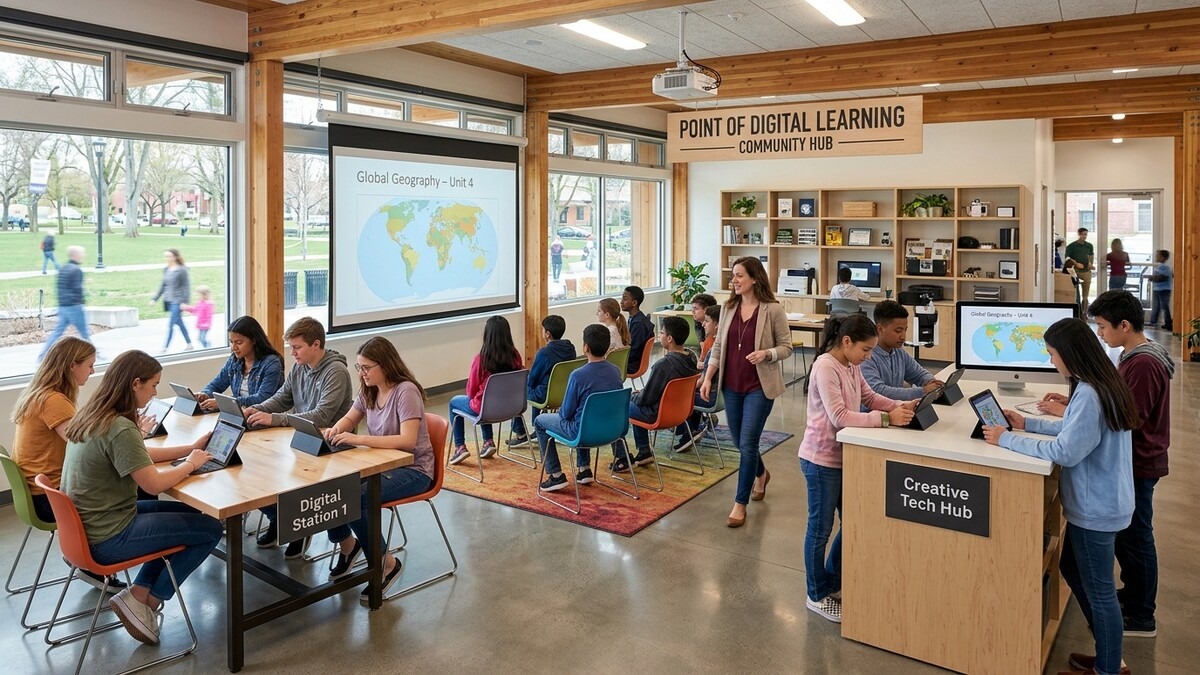
Community impact is profound. When a retired teacher or tuition educator establishes a POD, the entire village benefits. Students gain digital skills, parents save money, and the educator builds a sustainable livelihood. UNICEF India Education emphasizes that local, affordable education is key to rural development. A smart classroom at home embodies this principle.
Getting Started: From Idea to Smart Classroom at Home
The path is clear. First, assess local demand. Talk to parents and students about their needs. Computer skills are universally valued, so demand exists in every village.
Second, invest in APNA PC (Rs.30,000 complete bundle). This covers software, curriculum, support, and training. No hidden costs, no recurring licensing fees.
Third, prepare your space. A 200 to 300 sq ft room is sufficient for a small POD. Arrange basic furniture, ensure electricity supply, and set up the projector.
Fourth, enroll students and launch classes. Start with a batch of 10 to 15 students. Offer flexible timings, including evenings and weekends, to accommodate school schedules. As the smart classroom at home grows, expand capacity and add more batches.
Learn more about Computer Coaching at Home to understand the full setup process. Also explore Computer Course for Village Students to see how curriculum is designed for rural learners.
Why This Model Replaces Coaching Centres
Traditional coaching centres are expensive to run. They require high rent, staff salaries, and marketing budgets. Fees must be high to cover costs, making education inaccessible to many families.
A smart classroom at home flips this model. Lower overhead means lower fees. Lower fees mean more students can afford education. More students mean sustainable income for the teacher. It is a win for everyone.
The Point of Digital Learning (POD) approach also offers flexibility. Teachers can scale up gradually, add new courses, or serve multiple batches without infrastructure strain. APNA PC supports this growth with regular updates and new content.
Rural coaching centre alternatives like this are not just economically smart. They are socially necessary. They democratize access to digital skills and create local opportunities.
The time to act is now. Rural India is ready for education that is affordable, accessible, and effective. A smart classroom at home powered by APNA PC can be your vehicle to serve your community while building a thriving business.
Start your own smart classroom today. Visit https://www.teachtoearn.in to explore APNA PC, understand the POD model, and join hundreds of educators transforming rural education.