
Smart Classrooms Are No Longer a Luxury. They’re Becoming Standard in Indian Schools.
Walk into most Indian schools in 2026 and you’ll see something that would have seemed impossible five years ago: classrooms where every student has access to digital learning tools, teachers use interactive boards instead of chalk, and learning happens both inside and outside four walls. This isn’t fantasy. It’s happening now. And if you’re a parent, teacher, or someone building a learning business, you need to understand how smart classrooms India are reshaping education.
Here is the truth: the traditional classroom is broken. Not because teachers are bad. Not because students don’t want to learn. But because a one-size-fits-all approach doesn’t work when every child learns differently. Smart classrooms fix this. They personalise learning. They make teaching easier. And they prepare students for a world that runs on information technology.
Most people don’t realise that smart classrooms aren’t just about screens and software. They’re about fundamentally changing how knowledge moves from teacher to student.
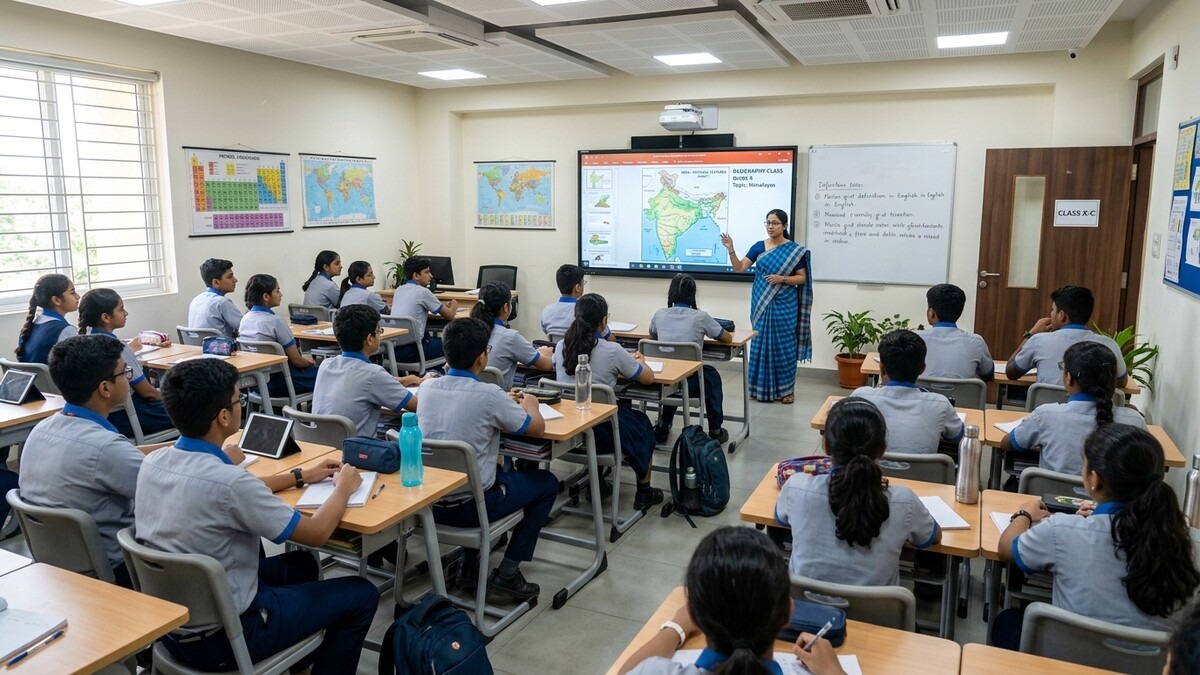
What Makes a Classroom “Smart” in 2026?
Let’s be honest: most Indian schools still use blackboards and textbooks. Nothing wrong with that. But the schools winning right now? They’ve added three things.
- Digital classroom technology that lets teachers create interactive lessons, not just deliver them
- Student devices (tablets, computers, or even smartphones) where learning content is accessible anytime
- Data tracking that shows teachers exactly where each student is struggling, so they can help immediately
The result? Students engage more. Teachers work smarter. And parents can actually see their child’s progress instead of guessing based on report cards.
Here’s what changed: five years ago, smart education India meant having a projector and a laptop. Now it means integrated systems. Learning management platforms. Real-time assessment. Adaptive content that adjusts to each student’s pace. Schools in Delhi, Bangalore, and Mumbai have already made this shift. Tier-2 and Tier-3 cities are catching up fast.
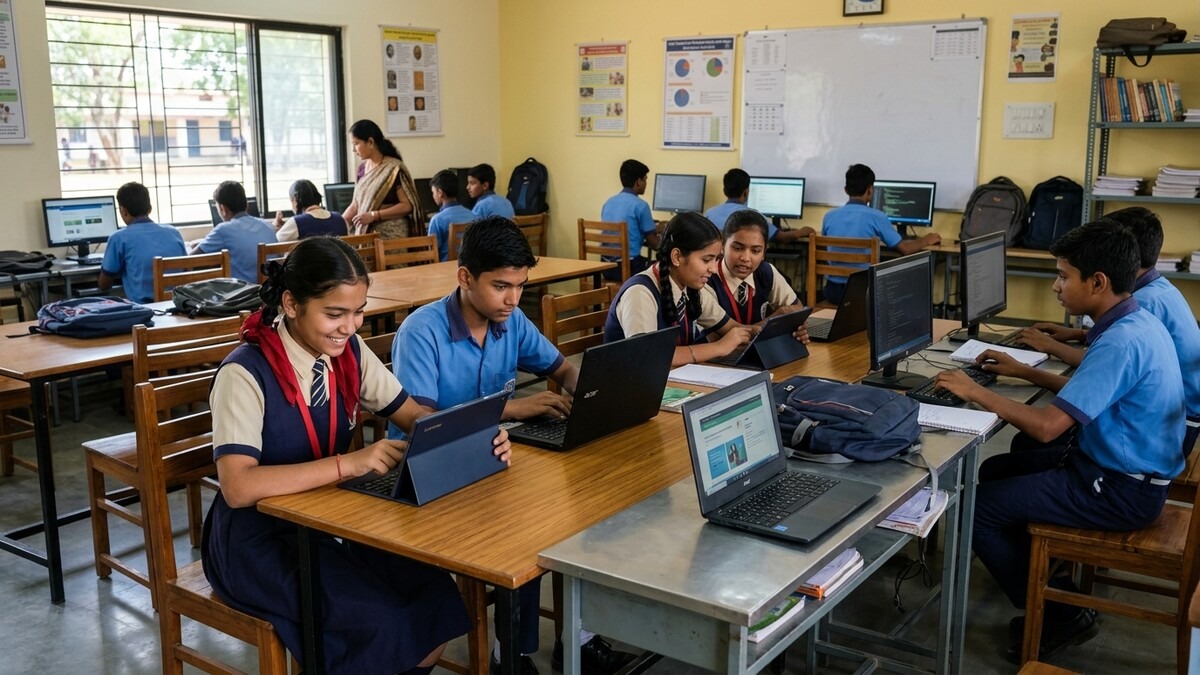
Why Parents Should Care (And What Teachers Need to Know)
If your child is in school, smart classrooms matter to you. Here’s why.
Smart education India doesn’t just mean better grades (though that happens). It means your child learns how to think, not just what to memorise. They use software that teaches coding, data analysis, and problem-solving alongside traditional subjects. They collaborate with classmates on digital projects. They get feedback instantly, not weeks later.
For teachers, smart classrooms are a game-changer. You spend less time managing discipline and more time teaching. You see which students need help before they fall behind. You can create lessons once and reuse them, saving hours every week. And honestly? Teaching becomes less exhausting when technology handles the repetitive stuff.
But here’s the catch: smart classrooms only work if teachers are trained. And if the hardware actually works. Broken projectors and outdated software don’t help anyone.
The Rise of PODs: Where Smart Education Happens Outside School
Not every student learns in a traditional school. Some parents run tuition centres. Some educators are starting setting up a coaching centre at home. Others are building community learning centres. These are PODs: Points of Digital Learning.
A POD doesn’t need to be fancy. It needs three things: a trained educator, smart education India tools, and access to quality content. Platforms like DIKSHA digital learning platform provide free content. AI tools for coaching classes automate grading and personalisation. And hardware like APNA PC makes it affordable to set up a proper learning space.
Most people don’t realise that you can run a high-quality learning centre from your home or a small community space. The barrier used to be cost. Not anymore.
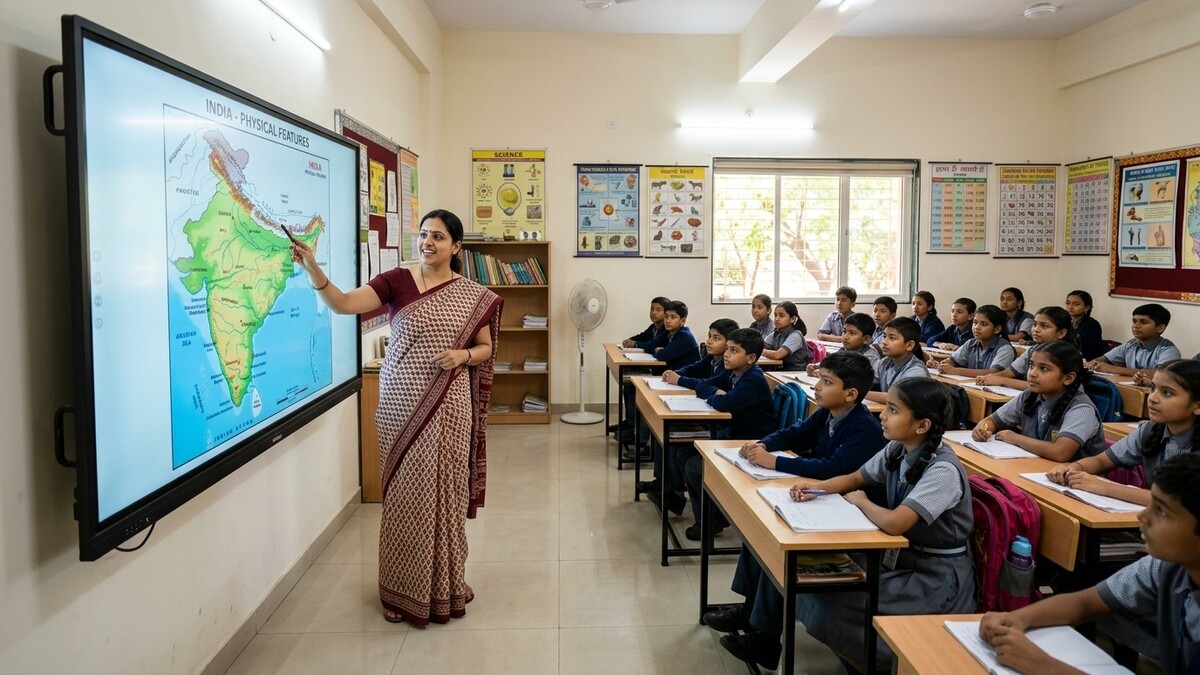
The Hardware Problem (And How APNA PC Solves It)
Here’s what schools and learning centres struggle with: good computers are expensive. Maintenance is a nightmare. And when something breaks, learning stops.
This is why APNA PC exists. It’s built specifically for Indian education. Mini PC. i3 7th Gen processor. 8GB RAM. 128GB SSD. Monitor, keyboard, mouse, webcam, headset. Everything you need. Everything included. One price: Rs.30,000. Three-year warranty. Installation included. No hidden costs.
You get a complete bundle. Not just a computer. A system designed for digital classroom technology. Fast enough for video lessons. Reliable enough for daily use. Affordable enough that schools and POD operators can actually buy multiple units.
Whether you’re a school upgrading to smart classrooms or an educator starting a POD, APNA PC removes the hardware barrier. You can focus on teaching, not troubleshooting.
What’s Actually Changing in Indian Schools Right Now
Government schools are rolling out digital initiatives. Private schools are competing on tech. Coaching centres are going online. Parents are demanding smart education India. Teachers are learning new skills.
The shift isn’t complete. Many schools still lack reliable internet. Many teachers haven’t been trained on new tools. Many parents don’t understand the value yet. But the direction is clear. Smart classrooms are coming. The question isn’t “if” but “when” and “how fast.”
Schools that move now will have a massive advantage. Teachers who upskill now will stay relevant. Educators building PODs now will capture the market before competition gets fierce.
Your Next Step
If you’re running a school, coaching centre, or learning space, you need to think about smart education India. Not next year. Now.
Start with the hardware. Get APNA PC and build your smart classroom today. It’s the foundation. Everything else builds on it.
Then train your team. Explore free platforms. Start small. Learn what works. Scale up.
The schools and learning centres winning in 2026 won’t be the ones with the most expensive equipment. They’ll be the ones that started early. That trained their people. That actually used technology to teach better, not just to look modern.
Smart classrooms aren’t coming. They’re here. The question is: are you ready?