
Every school says it is improving. Every school says it cares about technology, skills, confidence, and future readiness. Parents have heard these promises before. In 2026, the sharper question is simple: can your school show proof?
Not a poster. Not a computer lab photo. Not a brochure line about digital learning. Proof means a parent can see what the child created, how the child improved, and what the school will do next. Many schools, tuition centres, and learning PODs work hard, but the work stays invisible.
TeachToEarn has a practical opportunity here. APNA PC should not be treated only as a device in a room. It can become the school’s learning proof station. When children use it to research, type, build, revise, save, and present real work, the school gets evidence parents can understand immediately.
Parents Trust Visible Progress
Most Indian parents are willing to support education when they believe the school is serious. But vague claims lose power quickly. Digital learning, smart classroom, AI education, skill development, and future readiness sound impressive for a few minutes. Then parents want to know what changed for their child.
Can the child type a clean paragraph without fear? Can the child prepare a short presentation? Can the child compare information instead of copying blindly? Can the child use AI with guidance, then explain the final answer in their own words? Can the child save work in a folder and open it again next month?
These are practical signs of transformation. They are small enough to execute, but strong enough to build trust. A school that can show these signs every month feels more credible than a school that only announces new facilities once a year.
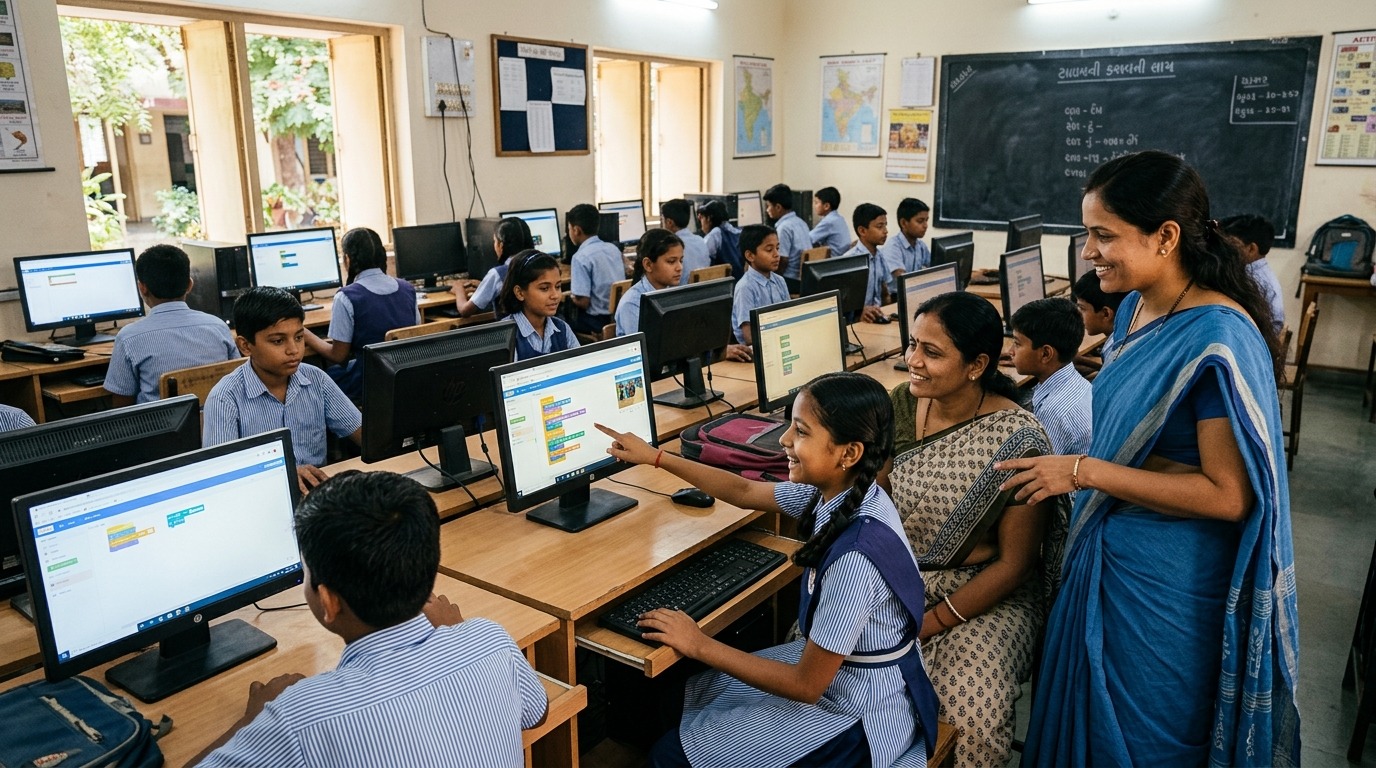
Turn the Lab Into a Proof System
In many schools, the computer lab exists but does not influence the parent conversation. Students visit, complete an activity, and leave. By the time a parent meeting happens, there is no trail of learning to show.
This is the mistake. A computer setup should produce visible learning assets. Each session should create something saved: a worksheet, paragraph, slide, table, quiz reflection, image description, coding exercise, local problem research note, or project summary. If nothing is saved, the session becomes hard to prove.
APNA PC helps because it gives the school a focused workstation for this habit. The goal is not to make the device look glamorous. The goal is to make student work easy to create, store, review, and show. Digital literacy is now a core skill that schools must demonstrate, not just mention in brochures.
Build a Learning Proof Wall
A learning proof wall is a simple school system where selected student work is collected, organized, and reviewed every month. It can live in APNA PC folders, printed samples, a classroom display, or a digital portfolio that teachers update regularly.
The proof wall should answer three questions. What did the child make? What skill did the child practise? What improvement is visible from the earlier version? This keeps the school away from random activity photos and toward measurable learning evidence.
For example, Grade 5 students can save one typed story with teacher comments. Grade 7 students can prepare a short science presentation with a source list. Grade 9 students can create a career research document. A TeachToEarn POD batch can create local business posters, simple budget sheets, or AI-assisted writing samples where the first draft and final draft are both visible.
Make Parent Review Concrete
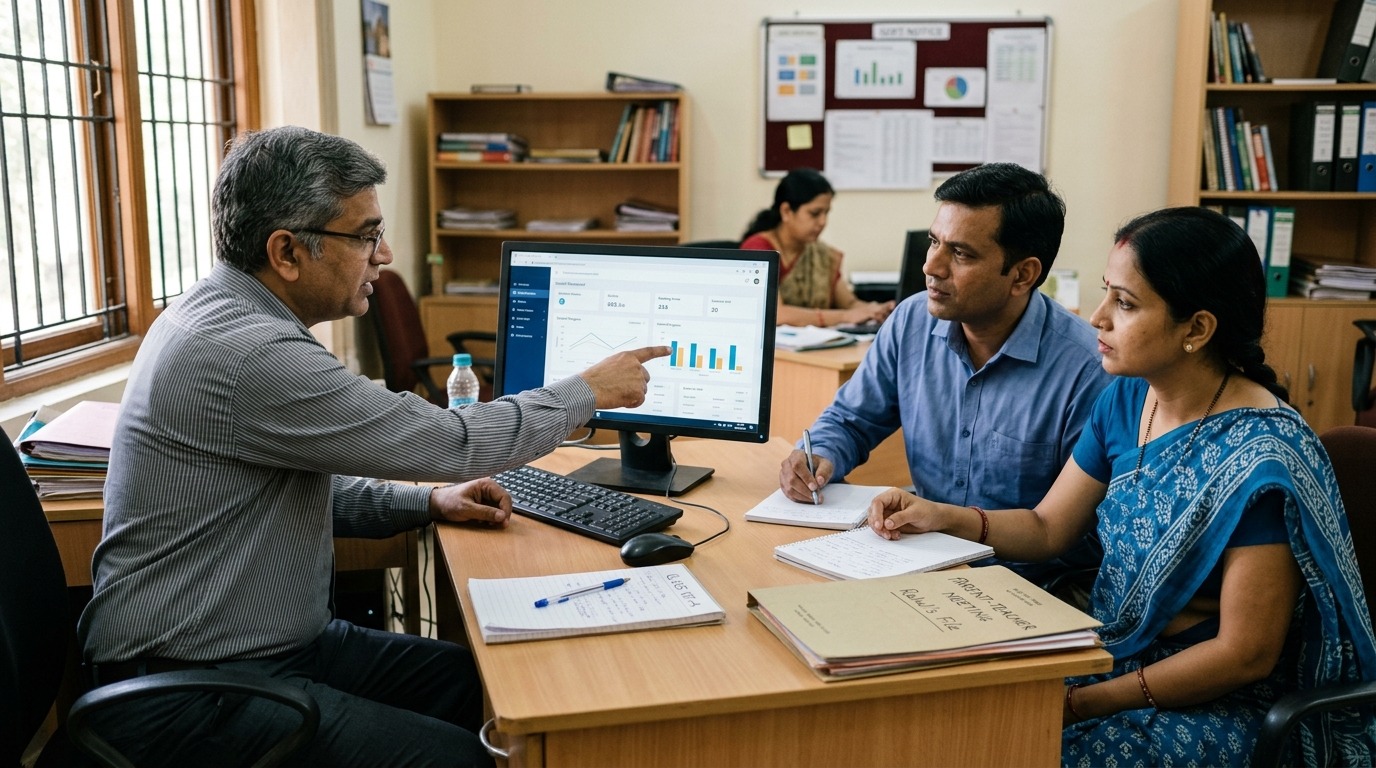
The parent review meeting should not depend only on marks. Marks matter, but they do not show confidence, communication, or digital capability. A review station gives the meeting a stronger rhythm.
Open the child’s folder. Show one early work sample and one improved work sample. Ask the child to explain what changed. Let the parent see the file structure, the saved output, and the next task. This can be done in five minutes, but it feels more real than a generic progress update.
The same system works in different settings. A school can use it during monthly parent meetings. A tuition teacher can show value beyond textbook help. A TeachToEarn POD owner can use it during demos and admissions conversations. An edupreneur can build a stronger local brand by showing discipline, output, and care.
Give AI Learning Visible Discipline
AI is already entering student life. Some children use it to understand topics. Some use it to copy answers. Parents are confused because they cannot always tell the difference. Schools that ignore this confusion lose authority. Schools that create visible AI discipline turn it into an advantage.
The rule is simple: do not let AI hide the learning process. Ask students to create a first attempt, then use AI for feedback, structure, vocabulary, examples, or revision. Save both versions. During review, ask the child what changed and why.
Now AI becomes a learning conversation, not a shortcut. The parent can see effort, correction, and explanation. The teacher can see whether the student understood the feedback. The school can say, with confidence, that technology is being used with guidance. Government platforms like DIKSHA already support structured digital learning that schools can integrate with their proof systems.
Track the Proof That Matters
A school does not need a complex dashboard to begin. Track basic signals that matter to parents and owners. How many students completed a saved digital output this month? How many presented their work? How many improved from first draft to final draft? How many parents reviewed the work?
These signals help the school improve. If students are not completing outputs, the activity may be too difficult. If students can create work but cannot explain it, they need more presentation practice. If parents do not attend reviews, the school needs a better invitation format.
The Ministry of Education emphasizes measurable learning outcomes, and your proof wall directly aligns with that vision. Parents who understand digital learning are more likely to engage with your school’s proof system.
Your Next Step Is Not Another Brochure
If your school, tuition centre, or POD wants stronger parent trust in 2026, do not start with another brochure or generic social media post. Start with proof. Set up one APNA PC learning proof station. Create student folders. Save weekly outputs. Run one monthly parent review where children explain their own work.
APNA PC gives you the practical foundation to begin now. Bring it into your school or TeachToEarn POD workflow, turn student work into parent-visible proof, and make your next admission conversation stronger. Explore APNA PC here: https://www.teachtoearn.in/apna-pc/.