
Board Exam Preparation Tips That Actually Work
Your child is studying 8 hours a day but still scoring below expectations. You’re confused. The tuition teacher says they’re doing fine. The textbooks are completed. So why isn’t the board exam preparation translating into results?
Here is the truth: Most people don’t realise that studying harder isn’t the same as studying smarter. Board exam preparation tips floating around social media focus on motivation and time management, but they miss the real game-changer: strategy. The right study hacks for exams can shift your child’s performance from average to exceptional in weeks, not months.
We’ve worked with thousands of students across India, and we’ve identified the patterns that separate toppers from the rest. This isn’t theoretical. This is what works in real classrooms, real homes, and real learning centres.
The Core Study Hacks for Exams That Deliver Results
Stop passive reading. Your student opens the textbook, reads a chapter, highlights key points, and feels productive. They’re not. Passive reading creates an illusion of learning. The brain doesn’t retain information this way.
- Active recall instead: Read a section, close the book, and write down everything you remember. Check what you missed. This single shift transforms board exam success strategies from wishful thinking into measurable progress.
- Spaced repetition works: Don’t cram all subjects on Sunday. Review Mathematics on Monday, Science on Tuesday, Social Studies on Wednesday. Then repeat the cycle. Your brain consolidates information better with gaps between sessions.
- Practice papers are non-negotiable: Solving previous years’ board exam papers under timed conditions isn’t optional. It’s essential. Your student needs to know the question pattern, the marking scheme, and their own weak spots before the actual exam.
- Teach someone else: Ask your student to explain a concept to you, their sibling, or a friend. If they can’t explain it clearly, they don’t understand it. This accountability forces deeper learning.
- Create visual summaries: Mind maps, flowcharts, and diagrams aren’t just pretty. They’re how your brain actually stores complex information. One page of visuals beats ten pages of notes.
- Remove digital distractions during study hours: Phone in another room. Not on silent. In another room. Your child’s willpower isn’t strong enough to resist notifications. Don’t test it.
These study hacks for exams work because they align with how human memory actually functions. According to Student learning research, spacing and active retrieval dramatically improve retention. Your board exam preparation should be built on this science, not on guesswork.
The Environment Matters More Than You Think
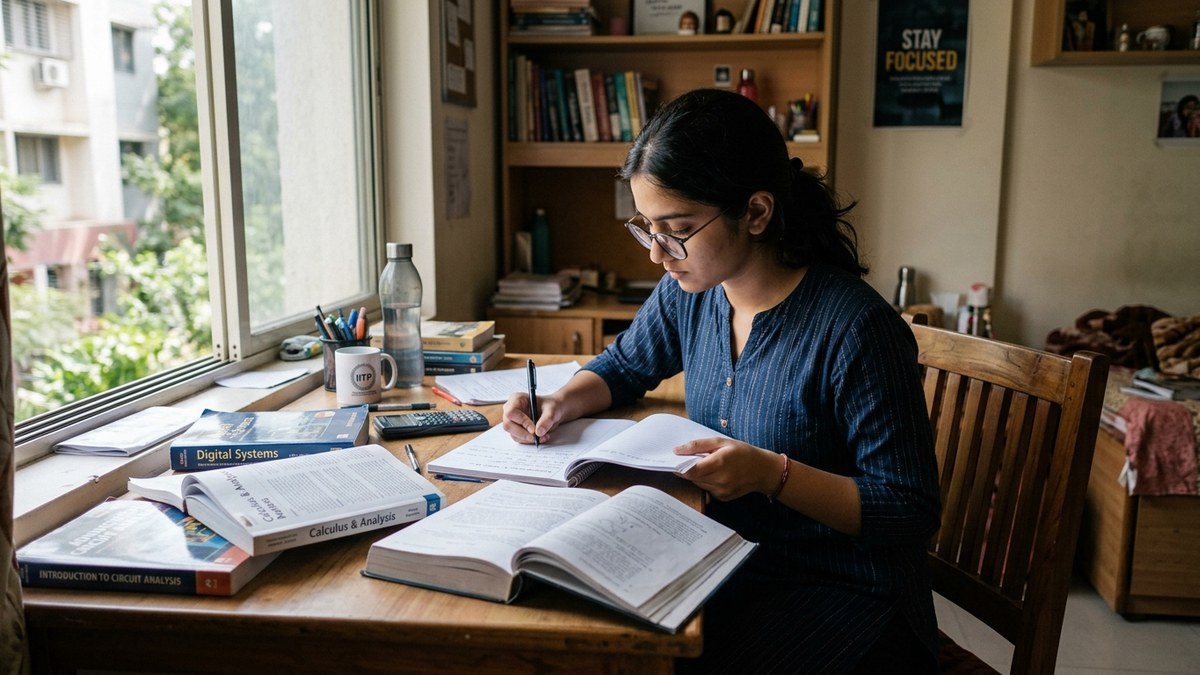
Let’s be honest: Most students prepare for board exams in chaotic environments. TV in the background. Family members interrupting. Uncomfortable chairs. Inadequate lighting. Poor internet connection for online resources.
Your study environment directly impacts your ability to focus and retain information. A dedicated learning space with proper equipment changes everything. This is why many successful students study at structured learning centres rather than at home.
If you’re running a tuition centre or considering starting one, investing in proper infrastructure is not optional. A computer with reliable software, a good internet connection, proper seating, and lighting can boost your students’ board exam preparation by 30-40%. This is where tools like APNA PC become valuable. The complete bundle includes everything: the Mini PC (i3 7th Gen, 8GB RAM, 128GB SSD), monitor, keyboard, mouse, webcam, and headset. At Rs.30,000 with a 3-year warranty and installation, it’s the infrastructure investment that pays dividends. Your Point of Digital Learning (POD) becomes a genuine competitive advantage.
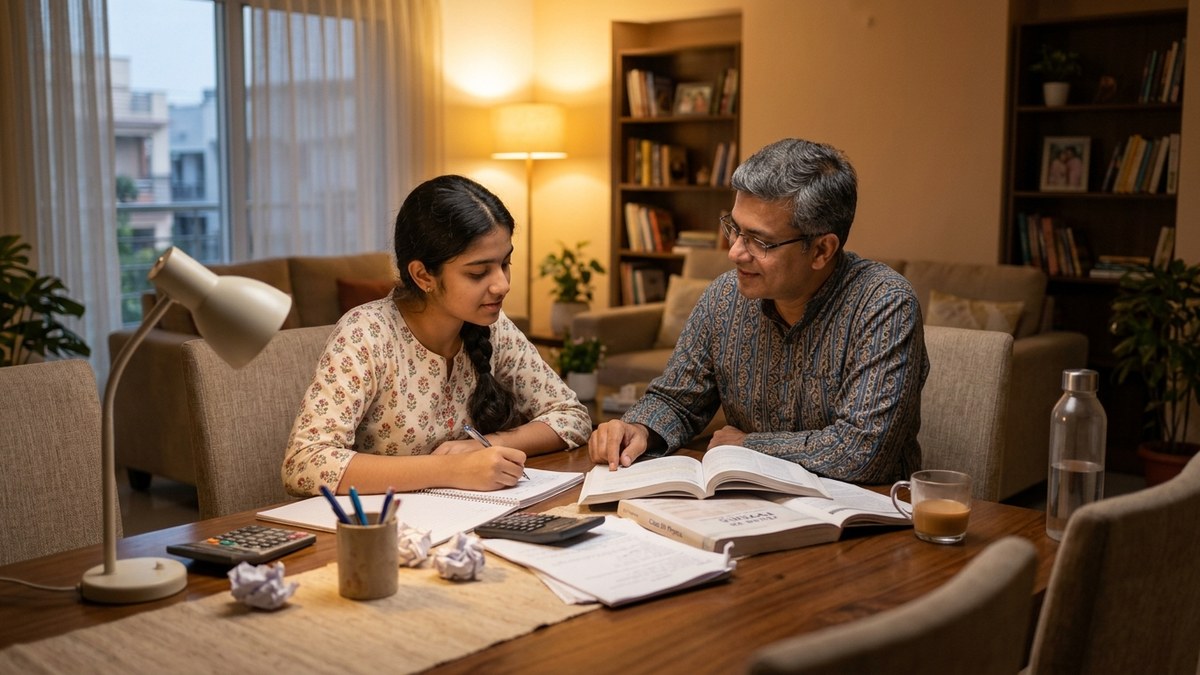
For parents, this means creating a proper study corner at home. Not the dining table where everyone eats. A dedicated space. For educators, it means your learning centre needs to look and feel professional. Students take their board exam preparation seriously when their environment reflects that seriousness.
The Role of Consistent Feedback and Tracking
Your student completes practice papers but doesn’t review them. They get a score, feel good or bad, and move on. This is wasted effort.
Every practice paper should trigger a detailed analysis. Which topics had errors? Was it a concept gap or a careless mistake? What’s the pattern across multiple papers? This data-driven approach to board exam preparation separates students who improve from those who plateau.
Teachers and parents should maintain a simple tracking sheet. Subject, date, score, error analysis, and action taken. Over 4-6 weeks, patterns emerge. Your student consistently struggles with organic chemistry? Extra focus there. Calculation errors in physics? Different strategy needed. This isn’t complicated. It’s just systematic.
Check out our proven exam preparation guide for a detailed framework on tracking progress effectively.
Why Board Exam Success Strategies Fail
Most board exam preparation tips fail because they treat all students as identical. One study schedule for everyone. One note-taking method. One revision approach. This doesn’t work.
Your visual learner needs diagrams. Your auditory learner needs to discuss concepts aloud. Your kinesthetic learner needs to solve problems hands-on. The best study hacks for exams are personalized. They account for your child’s learning style, their current level, and their specific weak areas.
This is why one-on-one tutoring or small group learning centres outperform large classrooms for board exam preparation. The educator can adapt. They can see which student is struggling and adjust immediately.
If you’re an educator, this is your edge. Personalization. Flexibility. Real-time feedback. When you start a TeachToEarn learning POD, you build exactly this model. Small batches. Personalized attention. Proper infrastructure. Your students don’t just pass board exams. They excel.
Parents can implement this too. Work with your child’s tuition teacher to understand their specific gaps. Customize the study hacks for exams to match their needs. Review progress weekly, not monthly.
The Final Word on Board Exam Preparation
Board exam success strategies aren’t secrets. They’re not hidden in expensive coaching classes. They’re based on fundamental principles: active learning, spaced repetition, proper environment, and consistent feedback.
Your child can score 85% or 95% on their board exams. The difference isn’t intelligence. It’s strategy. It’s environment. It’s consistency. Start implementing these study hacks for exams today. Track progress weekly. Adjust based on results. You’ll see measurable improvement within 3-4 weeks.
For educators and parents serious about supporting students through board exam preparation, build strong study habits at home or in your learning centre. The infrastructure, the strategy, and the support system matter. That’s how you create lasting results.
And if you’re considering starting your own learning centre, remember: proper equipment and structured methodology are your foundation. The rest follows.