
Why Financial Literacy Should Be Taught in Every Indian School
Your child can solve complex math problems but cannot open a bank account or understand what compound interest means. This is the reality in most Indian schools today.
Financial literacy in Indian schools is not a luxury subject. It is survival. Yet our education system treats it like an optional add-on, something nice to know but not essential. Here is the truth: we are failing our students by not teaching them how to manage money.
Walk into any classroom across India. Students learn algebra, history, science. They memorize formulas and dates. But ask them about budgeting, debt, investment, or how to avoid financial fraud, and you get blank stares. This gap between what schools teach and what life demands is costing Indian families real money, real stress, and real opportunities.
Let’s be honest. Most parents don’t have the confidence to teach financial concepts themselves. Many homemakers manage household budgets brilliantly but never learned the principles formally. Senior citizens often fall victim to financial scams because they lack digital and financial awareness. Tuition teachers see the demand but lack structured curriculum to teach money management to students in India.

Key Takeaways
- National surveys on financial literacy in India, including work by the National Centre for Financial Education (NCFE), have repeatedly found large gaps in basic money-management knowledge among adults.
- Financial literacy taught early builds lifelong habits around saving, budgeting, and avoiding debt traps.
- A practical financial education curriculum should cover budgeting, saving, basic banking, and understanding debt/credit, not just theory.
- Communities and schools without formal financial education programs can start with simple, structured lessons rather than waiting for policy change.
The Cost of Not Teaching Financial Literacy in Indian Schools
Most people don’t realise how early financial habits form. By age 7, children develop money attitudes that stick with them into adulthood. By 18, they are making real financial decisions without any formal training. The result? Young adults in India graduate with zero understanding of credit, loans, taxes, or investment.
Look at the data. India’s personal savings rate is high, but financial planning is weak. People save but don’t invest wisely. They borrow without understanding terms. They fall for schemes promising unrealistic returns. A young professional earns well but lives paycheck to paycheck because nobody taught them budgeting. A widow loses her late husband’s insurance money to a fraudster because she never learned to verify financial claims.
Financial literacy in Indian schools would prevent this. It would create:
- Better decision-making about loans and credit
- Protection against fraud and financial scams
- Confidence to use banking services and digital payments
- Understanding of savings, investment, and retirement planning
- Reduced financial stress and anxiety in families
- Economic independence, especially for women
When digital skills drive employability, financial literacy drives stability. You cannot build a strong economy on financially illiterate citizens.
Why this is urgent: national financial literacy surveys conducted by bodies like the National Centre for Financial Education (NCFE) have found that a large share of Indian adults lack even basic financial literacy — a gap that starts because personal finance is rarely taught as a structured school subject.
What Financial Education Curriculum Should Look Like
Money management for students in India must be practical, not theoretical. Not textbook definitions of economics. Real skills. Real scenarios.
A good curriculum teaches:
- Pocket money management and basic budgeting
- Understanding different types of bank accounts and services
- How loans work and why interest matters
- Introduction to stocks, mutual funds, and long-term investing
- Tax basics and why governments collect taxes
- Digital payment safety and fraud prevention
- Insurance and why it exists
- Difference between needs and wants
This is not complex. It does not require advanced mathematics. But it requires trained educators who understand both finance and how to teach young people. Here is where the gap widens in India.
Many schools lack teachers qualified to teach financial concepts. Curriculum is outdated or missing entirely. India’s education system is built around traditional subjects. The Ministry of Education has started recognizing this need, but implementation is slow.
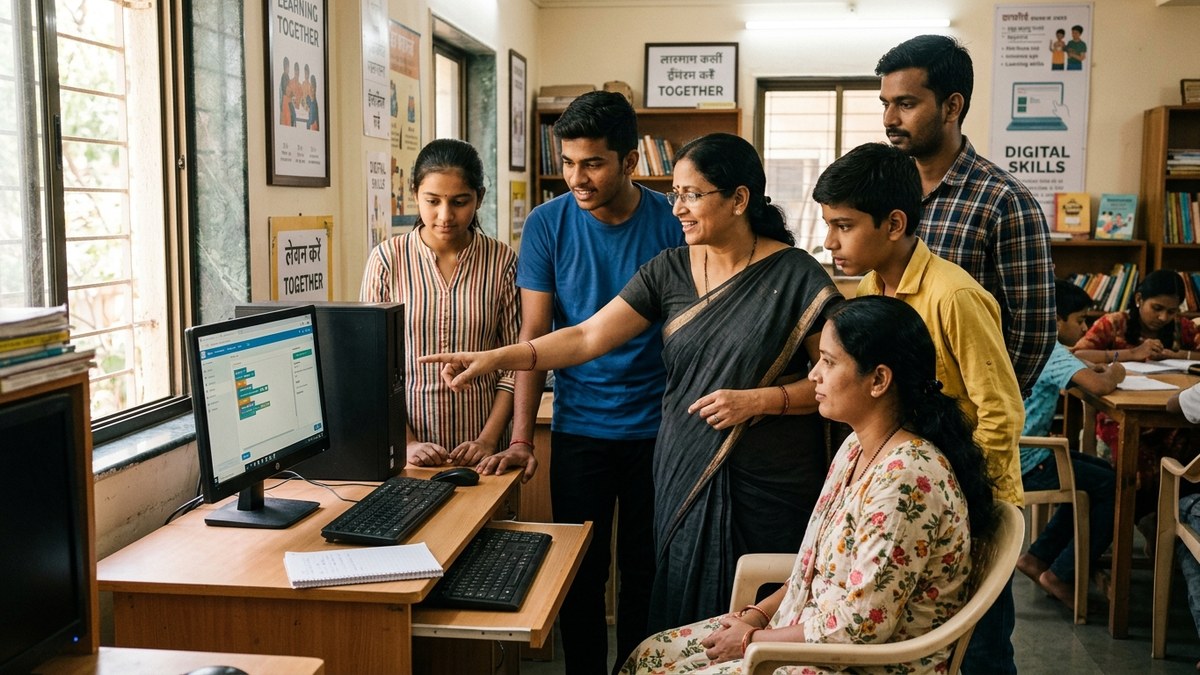
This is where educators and tuition teachers step in. You don’t need to wait for the system to change. You can start teaching financial literacy now. Through tutoring centers. Through community learning groups. Through digital literacy as the foundation for understanding modern financial tools.
Who Benefits Most From Financial Literacy Education
Every student benefits. But some groups need it urgently.
First generation earners in India often lack financial guidance from their families. They earn well but make poor decisions because nobody taught them. Girls and women face particular barriers. In many households, financial decisions are made by men. Teaching young women about money gives them agency and independence.
Rural students have less access to financial services and more vulnerability to exploitation. Urban students have access but lack wisdom. Senior citizens are targets for scams because they lack digital awareness. Homemakers manage money but often lack formal understanding of investment and financial planning.
Financial literacy curriculum benefits all these groups. It democratizes financial knowledge. It prevents exploitation. It builds confidence.
Frequently Asked Questions
Why isn’t financial literacy already part of the Indian school curriculum?
Personal finance has traditionally been treated as something families teach informally rather than a structured academic subject, which is a key reason national surveys keep finding low financial literacy rates among adults.
What topics should a financial literacy curriculum cover?
Practical basics: budgeting, saving habits, how banking and interest work, understanding debt and credit, and the fundamentals of financial planning — not abstract economic theory.
At what age should financial literacy education start?
Basic concepts like saving and budgeting can be introduced as early as primary school, with more advanced topics like credit and investing layered in through secondary school.
Who benefits most from financial literacy education?
Students from families with limited exposure to formal banking and financial planning benefit most, since school may be their only structured source of this knowledge.
Can a community start teaching financial literacy without waiting for a national curriculum change?
Yes. Local schools, tutors, and learning centers can introduce structured financial literacy modules independently, without needing to wait for a formal national policy update.
How to Start Teaching Financial Literacy in Your Community
If you are a tuition teacher, add this to your offerings. Parents will pay for it. Demand is real. If you are a homemaker interested in edupreneur work, this is a strong niche. If you are a senior citizen wanting to help younger generations, you have wisdom to share.
You need two things. First, structured curriculum that works for Indian context. Second, the right tools to deliver it. A Point of Digital Learning (POD) setup makes this possible. Whether you run a home-based tutoring center or a community learning space, you need reliable technology.
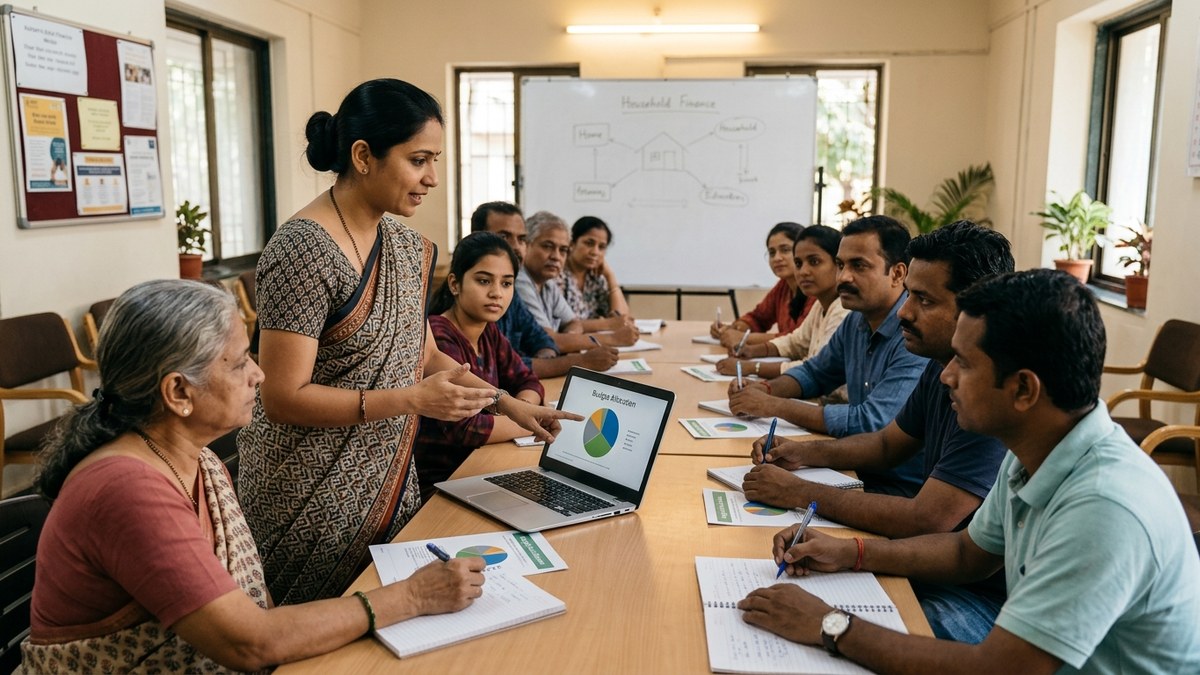
This is where APNA PC comes in. A complete bundle at Rs.30,000 gives you everything. Mini PC with i3 7th Gen processor, 8GB RAM, 128GB SSD. Monitor, keyboard, mouse, webcam, headset. Three year warranty. Professional installation. You set up your Point of Digital Learning and start teaching. Whether financial literacy or any other skill, you have the infrastructure.
The investment is small. The impact is massive. One trained educator with APNA PC can reach dozens of students and families with financial literacy education. That is scalable change.
Financial literacy should not be optional in Indian schools. It should be mandatory, starting from middle school. Until the system catches up, educators like you need to fill the gap. You have the opportunity to teach money management to students in India and transform their financial futures.
Ready to start? Get your APNA PC setup today and launch your financial literacy teaching program.